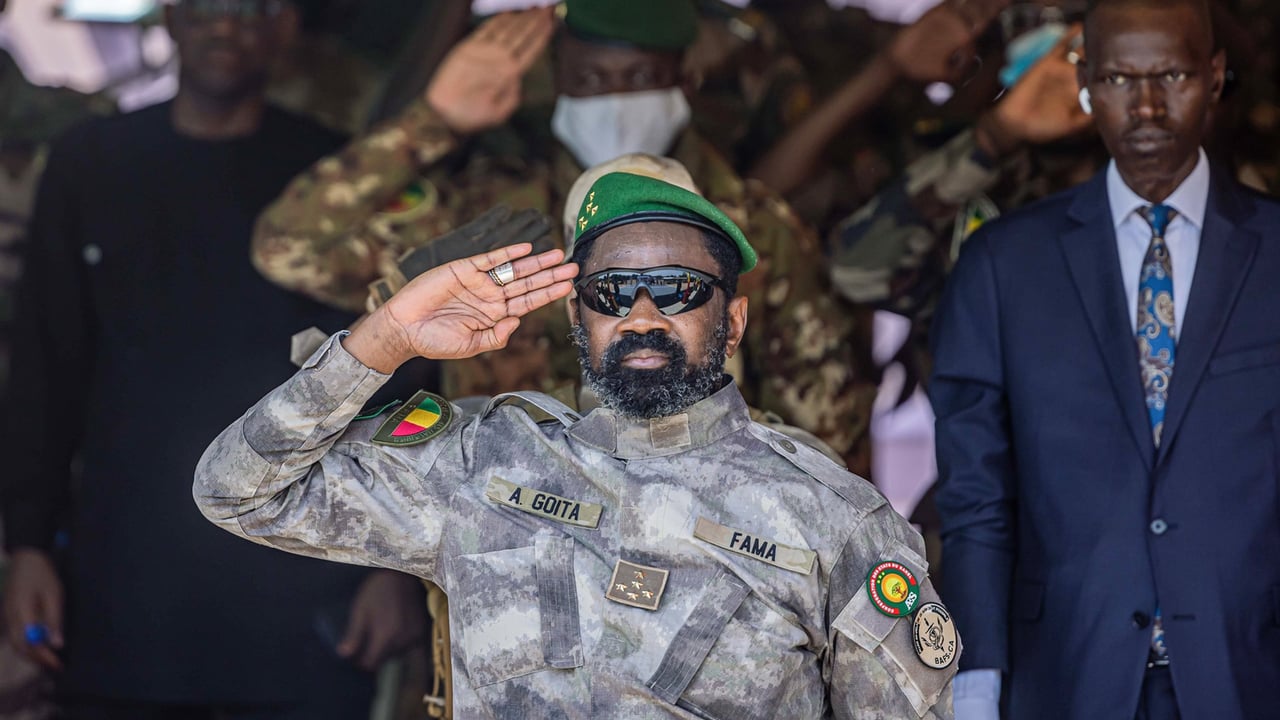
In the heart of Bamako, the capital of Mali, a figure emerges as the unchallenged leader of a nation navigating through profound instability. Assimi Goïta, the country’s transitional president, stands at the crossroads of history, embodying both resilience and controversy in a land scarred by years of political upheaval and security crises.

From colonel to commander-in-chief: the rise of a decisive leader
Assimi Goïta’s journey to the apex of Mali’s power structure was neither linear nor predictable. A career military officer, he first rose to prominence in August 2020 when he spearheaded a coup that toppled President Ibrahim Boubacar Keïta. At the time, public outrage over corruption and mismanagement had reached a boiling point, and Goïta emerged as a symbol of change for a frustrated populace. His swift action, though controversial, was met with widespread approval from citizens weary of decades of governance failures.
Yet, his authority was tested again in May 2021, when he orchestrated a second coup, this time detaining the interim civilian president Bah N’Daw and his prime minister. The move consolidated his control and marked the beginning of a prolonged transitional period, one fraught with challenges both domestic and international.
The weight of leadership in a fractured nation
Today, Goïta governs a Mali deeply divided along political and ethnic lines. The country remains ensnared in a protracted conflict against Islamist insurgencies, particularly the Group for the Support of Islam and Muslims (JNIM), which has wreaked havoc across the Sahel region. Despite international support—including from former colonial power France and the United Nations—security threats persist, and public trust in state institutions remains fragile.
Goïta’s administration has pursued a strategy of military reinforcement and diplomatic realignment, most notably by deepening ties with Russia and engaging the Wagner Group for security assistance. This pivot has sparked debate: while some view it as a pragmatic response to external pressures, others criticize it as a departure from Mali’s traditional alliances and a potential compromise of its sovereignty.
Balancing sovereignty and international expectations
One of the most pressing dilemmas facing Goïta is reconciling domestic demands for autonomy with international expectations of democratic governance. The Economic Community of West African States (ECOWAS) has imposed sanctions and maintained pressure for a swift return to constitutional order. Meanwhile, civil society groups in Mali demand greater transparency and accountability from their leaders.
In this high-stakes environment, Goïta has positioned himself as a defender of national sovereignty. His rhetoric often emphasizes Mali’s right to self-determination, especially in matters of security cooperation. Yet, this stance has drawn sharp criticism from Western partners who view it as a retreat from democratic norms.
Legacy in the making: what the future holds for Mali under Goïta
The next chapter in Mali’s history will be written under Assimi Goïta’s watch. Whether his leadership will stabilize the country or deepen its divisions remains an open question. What is clear, however, is that his decisions will shape the trajectory of a nation at a critical juncture.
As Mali continues to grapple with insurgency, economic stagnation, and political uncertainty, one thing is certain: the path forward will demand more than military prowess. It will require visionary leadership capable of uniting a fractured nation and restoring hope to a people in need of stability and progress.
For now, Assimi Goïta remains the central figure in this unfolding drama—a leader whose choices will echo far beyond the borders of Mali.