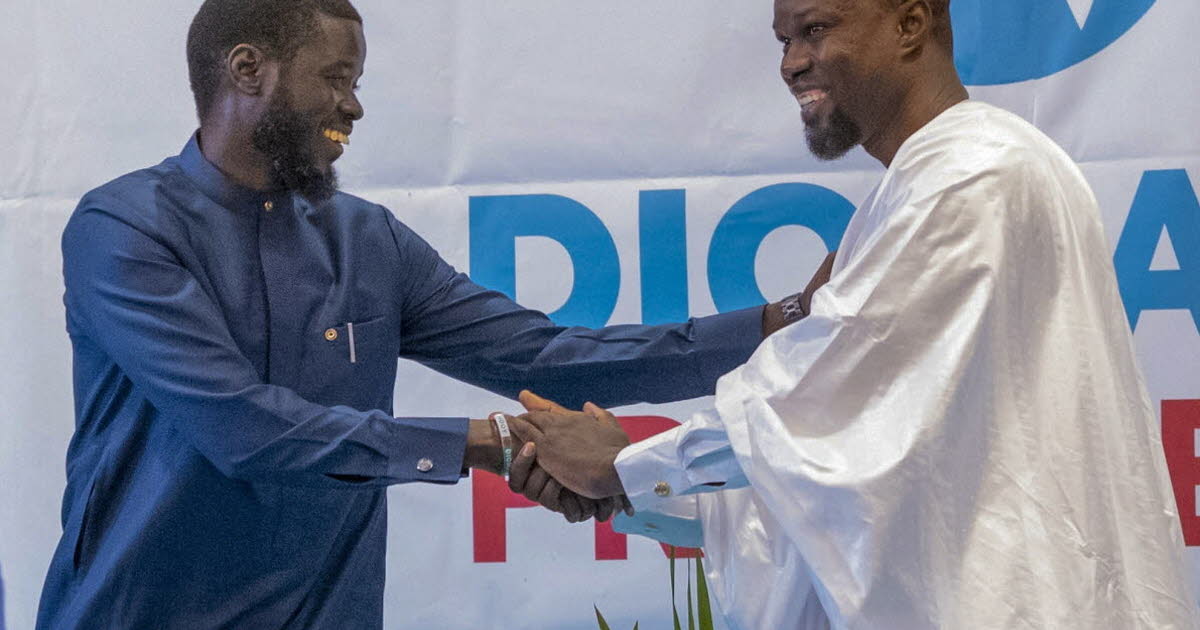
After months of escalating tensions, President Bassirou Diomaye Faye has dismissed Senegal’s highly popular Prime Minister Ousmane Sonko, a move that has plunged the nation into a profound political crisis. The breakup of this once-united leadership team—whose alliance once embodied the promise of sweeping change—has left citizens and political observers grappling with uncertainty about the country’s future direction.
Bassirou Diomaye Faye and Ousmane Sonko rose to power in March 2024 on a wave of public hope, securing a landslide victory with 54% of the vote in the first round. Their triumph was made possible largely through the support of Sonko, the charismatic leader of the Pastef party and a former mentor to the president. Sonko himself could not run due to a prior defamation conviction that rendered him ineligible.
At the height of their partnership, the slogan « Diomaye moy Sonko, Sonko doy Diomaye » (« Diomaye is Sonko, Sonko is Diomaye ») resonated strongly across Senegal. Their release from prison just days before taking office symbolized a decisive break from the country’s prolonged political and social unrest. Yet the unity that had galvanized the electorate has now evaporated, replaced by bitter division.
Rising tensions ahead of the 2029 presidential race
The dismissal of Ousmane Sonko has not only triggered a political earthquake but also exposed deep fractures within the ruling coalition. Despite his removal, Sonko retains immense influence as the de facto winner of the 2024 election and leader of the Pastef party, which commands a commanding majority in the National Assembly with 130 out of 165 seats. His continued presence in the political arena poses a formidable challenge to President Faye’s authority.
Sonko’s enduring appeal lies in his strong connection with Senegal’s youth and his uncompromising stance on national sovereignty. Unlike many African leaders who have risen to power through force or corruption, Sonko champions a vision rooted in transparency and self-determination. His criticism of Western influence is not rooted in hostility but in a demand for fairer partnerships. International observers have noted that his approach reflects a pragmatic desire to redefine Senegal’s global relationships on equitable terms.
At the heart of the growing rift between Faye and Sonko is a fundamental disagreement over economic policy, particularly strategies to address Senegal’s staggering debt burden. With a debt-to-GDP ratio of 132%, the highest in Sub-Saharan Africa, the country faces immense fiscal pressures. Sonko had advocated for bold measures to reduce reliance on external borrowing, while the president favored a more cautious approach. These policy disputes have stalled critical reforms and eroded public confidence in the government’s ability to deliver on its promises.