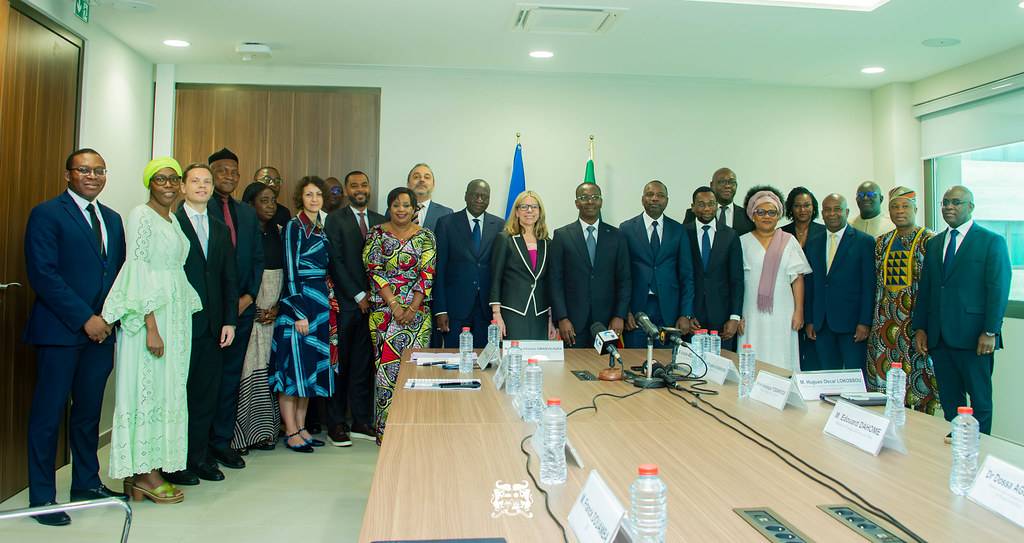
Cotonou is accelerating its structural transformation with two landmark financing agreements totaling $320 million. These initiatives, finalized on July 17, 2026, aim to strengthen energy independence, boost agriculture, and invest in human capital—laying the groundwork for sustainable economic growth and improved living standards across Benin.
Two transformative projects to reshape Benin’s future
The agreements signed at the modernité Cité ministérielle in Cotonou represent more than just financial commitments. They mark a strategic pivot toward an integrated development model that balances infrastructure and social progress. By targeting both heavy industry and human development, the government is positioning Benin for long-term resilience and prosperity.
The Dogo-Bis Dam: powering energy and agricultural transformation
One of the two financing packages—worth $150 million—will fund the construction of the Dogo-Bis multi-purpose hydro dam in the Ouémé Valley. This project is designed to serve as a cornerstone for integrated economic growth.
On the energy front, the dam will significantly increase Benin’s domestic electricity production, reducing reliance on regional energy imports—a long-standing vulnerability for local industries. Édouard Daho, Minister of Energy, Water, and Mines, emphasized that the project will stabilize power supply in the Ouémé Valley, creating a competitive advantage for businesses and supporting industrial expansion.
Beyond electricity generation, the dam will revolutionize agriculture by ensuring reliable water supply year-round. This will unlock the valley’s agricultural potential, enabling consistent crop yields and attracting private investment in food processing. The goal is to reduce seasonal fluctuations in production and decrease the country’s dependence on food imports.
ALAFIA I: investing in human capital for long-term prosperity
The second agreement, valued at $170 million, supports ALAFIA I: « Nourishing Benin for the Future. » This program focuses on early childhood development, nutrition, and women’s health—key drivers of economic and social progress.
By prioritizing preventive healthcare and quality nutrition from an early age, the government aims to build a healthier, more productive population. Research shows that investments in early childhood yield the highest returns in public policy, leading to lower healthcare costs, higher school enrollment rates, and a more skilled workforce in the decades to come.
ALAFIA I is designed to create a foundation where economic growth translates into tangible benefits for all citizens, particularly the most vulnerable in rural areas. The program reflects a holistic approach to development—one that values people as much as infrastructure.
Synergy between energy and nutrition: a model for inclusive growth
What makes this financing package particularly powerful is the synergy between its two components. Rather than operating in isolation, the Dogo-Bis Dam and ALAFIA I are designed to reinforce each other, creating a self-sustaining cycle of development.
As agricultural productivity rises in the Ouémé Valley, food security improves nationwide, reducing pressure on the national budget from food imports. Simultaneously, a healthier population ensures a stable and skilled labor force, essential for industrial expansion. Improved rural connectivity further enhances this dynamic, ensuring that economic gains are distributed across regions and communities.
Hugues Oscar Lokossou, Minister Delegate for External Resource Mobilization and Debt Management, highlighted this interconnected vision: « These investments will enhance food security, strengthen territorial connectivity, and drive economic growth. » The message is clear: sustainable development in Benin requires both physical infrastructure and human capital.
A beacon of stability in a turbulent region
The confidence placed in Benin by the World Bank is a testament to the country’s macroeconomic stability and strategic vision. In a subregion often challenged by instability, Cotonou is positioning itself as a reliable hub for international investors and development partners.
The overarching goal is nothing short of a structural transformation: shifting from a transit-based and subsistence agriculture economy to a diversified, semi-industrial, and resilient model. By emphasizing sustainable infrastructure and inclusive policies—especially for women and children in rural areas—Benin is charting a path toward equitable growth that leaves no one behind.
The signing of these agreements on July 17, 2026, is more than a diplomatic milestone. It is a foundational step toward the future of Benin. By investing in both the energy infrastructure of the Ouémé Valley and the human potential of its youth through ALAFIA I, the government has embraced a modern development equation: lasting economic strength cannot exist without a thriving, well-nourished population. The real test now lies in execution—one that will be closely watched by citizens and economic observers alike.