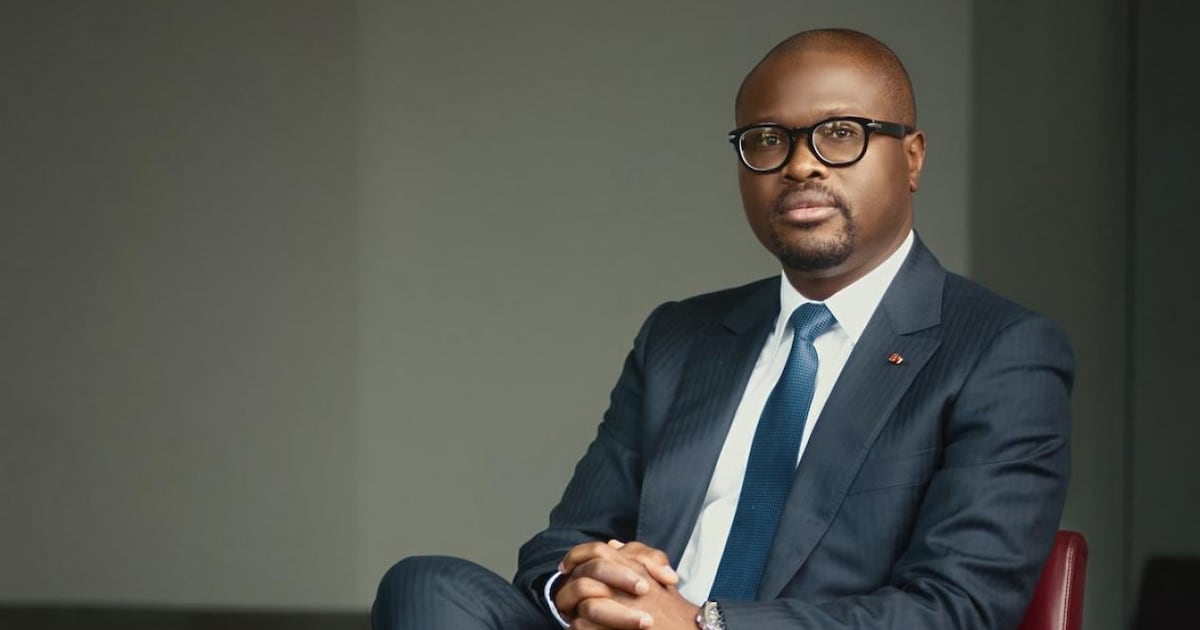
Romuald Wadagni, set to celebrate his 50th birthday next month, has officially begun his seven-year term as Benin’s new president.
His inauguration took place Sunday morning in a brief ceremony at the presidential palace in Cotonou, the nation’s economic hub. Unlike recent transitions, no outgoing head of state was in attendance, underscoring the low-key nature of the event.
The April 12 election that secured his victory was essentially uncontested. His sole opponent, Paul Hounkpè—a minor figure from the Forces cauris pour un Bénin émergent (FCBE) party—has since aligned with the ruling coalition. Meanwhile, the main opposition party, Les Démocrates, was barred from participating due to insufficient sponsorship signatures and remains mired in internal strife.
In his inaugural address, Wadagni paid tribute to his predecessor before outlining key campaign promises. “National growth only matters when it improves the daily lives of ordinary citizens,” he declared.
Addressing Benin’s youth, he emphasized: “To those who reject old limitations and seek success through hard work at home, I say this: Benin believes in you and will give you the opportunities to thrive.”
Rebuilding ties with Niger
As president, Wadagni is expected to maintain the economic development momentum established under his predecessor—a strategy in which he played a pivotal role as Finance Minister. However, he inherits pressing security challenges, particularly in northern Benin, where jihadist groups continue to exploit local grievances and recruit disaffected youth.
“Benin will neither yield to fear nor compromise on security. The state will stand firm against any threat to our unity and stability,” he vowed, calling for regional collaboration to address shared threats.
Diplomatically, the new leader—known for his Francophilia—faces the delicate task of mending relations with neighboring Sahelian states, especially Niger. Following recent coups, Niamey’s military junta has distanced itself from Western allies and frequently accuses Benin of attempting to destabilize the region.
Sunday’s ceremony saw a symbolic gesture of détente when Niger’s Prime Minister, Ali Mahaman Lamine Zeine, attended and received enthusiastic applause. Burkina Faso and Mali were also represented by their foreign ministers, signaling cautious optimism for renewed cooperation.
Balancing growth and governance
Wadagni’s early actions on press freedom and civil liberties will be closely monitored, particularly after reports of authoritarian shifts under outgoing President Patrice Talon, including the detention of prominent opposition figures.
Press freedom advocates have urged the new administration to prioritize media rights, including the release of imprisoned journalists.
With Benin now entering a six-year electoral hiatus—thanks to a constitutional reform aligning all polls—Wadagni’s tenure will focus on consolidating economic gains while tackling security and diplomatic hurdles.
A leader forged by experience
Born on June 20, 1976, in Lokossa, a southwestern town near Togo, Wadagni grew up in an intellectual family. His father, Nestor, was a renowned Beninese economist, and his mother, an entrepreneur. Despite his global career, he remains deeply connected to his roots, often highlighting his personal farm as a testament to his grounded values.
After studying finance in Grenoble, France, and earning a degree from Harvard University, he joined Deloitte’s African operations, rising to partner status. In 2016, at 39, he was tapped by then-President-elect Patrice Talon to lead Benin’s economic reforms as Finance Minister.
Under his leadership, Benin reduced its fiscal deficit to 3% of GDP, launched major infrastructure projects, and modernized its economy. When Talon secured re-election in 2021, Wadagni was promoted to Minister of State—a role that further solidified his reputation as a technocrat who delivers results.
A continuity candidate
Analysts predict continuity in policy direction. “Wadagni will build on the progress achieved,” notes political scientist Franck Kinninvo. Yet governance extends beyond economics. The new president must address the escalating jihadist threat in the north, where attacks on military outposts have intensified.
His inner circle confirms that Talon involved him in all major security decisions, effectively grooming him as successor. The campaign saw broad support from ruling-party factions and even defections from opposition ranks. “He’s a unifier,” said a close associate.
Critics argue his reserved demeanor may lack charisma, but supporters see it as an asset in an era craving pragmatism over rhetoric. “Wadagni represents a new breed of leadership—less about speeches, more about impact,” argues activist Lucien Fayomi.