Read aloud⏱ ~3 min
Patrick Muyaya
- Politics
Fast, reliable English-language news from across the Sahel — Mali, Niger, Burkina Faso and beyond.
President Félix Tshisekedi has declared the forthcoming initiation of an inclusive and truly republican national dialogue. This significant announcement came on Friday, following a pivotal meeting with leading religious representatives across the Democratic Republic of Congo.
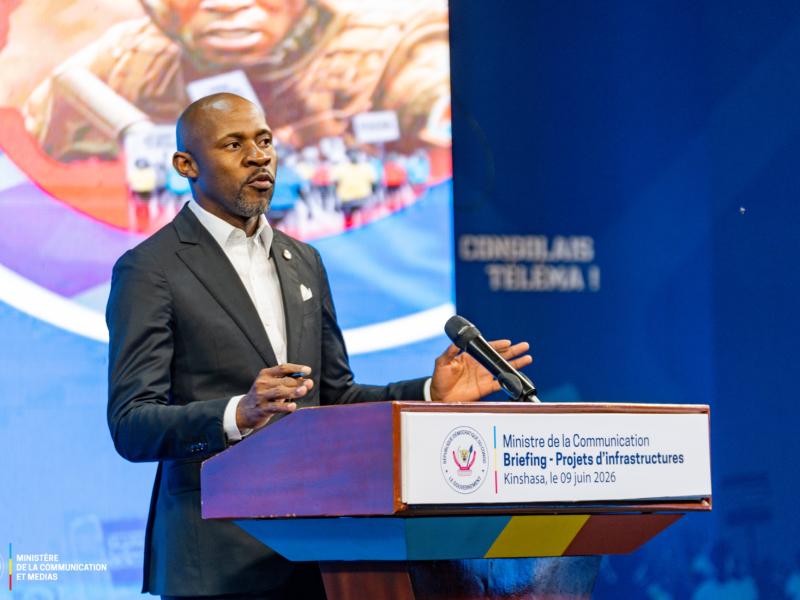
During a press briefing held shortly after this declaration, the government spokesperson confirmed that a presidential decree would soon establish the precise framework, operational procedures, and specific details for this national dialogue. Such a dialogue has been a long-standing demand from a significant segment of the Congolese socio-political landscape for many months.
“As the guarantor of the nation under Article 69 of the Constitution, the President of the Republic acted in this capacity. Therefore, in the coming days, he will issue an ordinance outlining the terms and specific arrangements for how this dialogue will be structured. I reiterate that he will personally spearhead the organization of this crucial discussion, with religious leaders also tasked with exploring ways to foster this essential cohesion. This initiative aims to bring together Congolese citizens from all regions, who, like us, are driven by the desire to end aggression and ensure our nation’s unity,” stated Patrick Muyaya.
This development, underscored by President Tshisekedi’s unwavering commitment to convening a national dialogue, emerges amidst a complex socio-political landscape. The nation seeks consensus to address the enduring security crisis in eastern DRC, where Kinshasa continues to accuse Rwanda of backing the AFC/M23 rebellion. Furthermore, this initiative unfolds against a backdrop of significant disagreements regarding a potential constitutional overhaul. Opposition factions allege that the ruling majority intends to amend the Constitution, thereby enabling President Tshisekedi to extend his tenure beyond the two-term limit stipulated by the fundamental law. The government, however, firmly refutes these claims.
This fresh political phase also coincides with ongoing diplomatic endeavors that have struggled to yield concrete outcomes. The Washington agreements, brokered by the United States to foster reconciliation between Kinshasa and Kigali, alongside the Doha process, mediated by Qatar between the Congolese government and the AFC/M23 rebellion, have yet to substantially improve the ground situation. Despite numerous meetings and persistent efforts by mediators, hostilities and tensions persist, with all parties continuing to level accusations of violating peace commitments against one another.
Crucially, this step was preceded by extensive regional consultations, including engagements in Burundi, the Republic of Congo (Congo-Brazzaville), and Angola. Through these discussions, various heads of state conveyed their readiness to actively participate in assisting the Democratic Republic of Congo in navigating its current predicament. They collectively emphasized the vital importance of safeguarding national unity to collectively confront the nation’s development challenges and uphold the territorial integrity of the DRC.