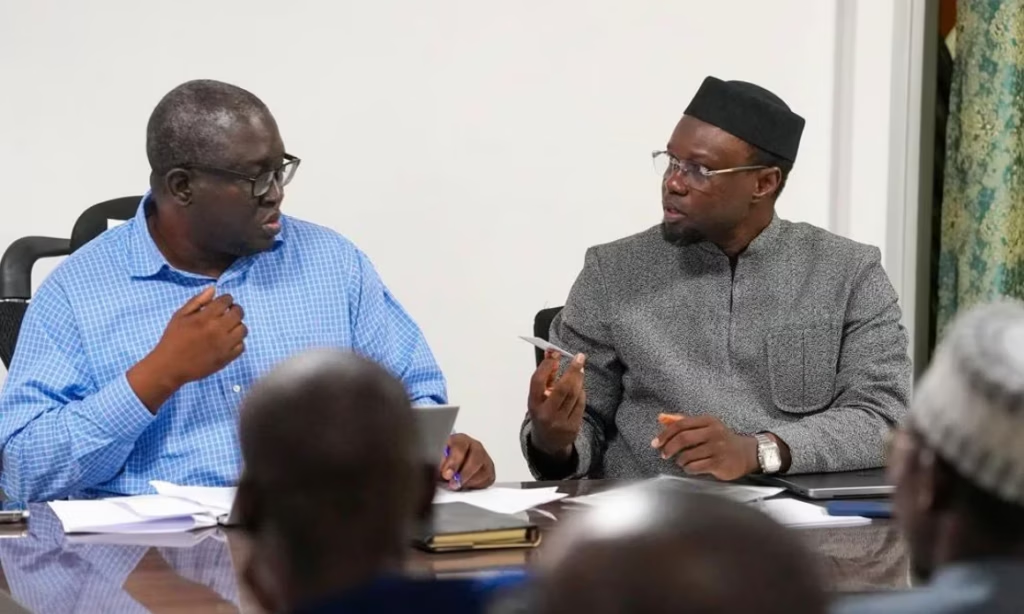
In Ziguinchor, the internal conflict within Pastef has erupted into the open, pitting mayor Djibril Sonko against his deputy Bassirou Coly in a struggle for control. As tensions rise, the party’s future in the region appears more uncertain than ever, revealing troubling fractures in its ranks.
The veneer of unity in Ziguinchor has cracked. What were once whispers and quiet rivalries have become a visible political confrontation inside Pastef. At the heart of this internal crisis are two local figures: city mayor Djibril Sonko and his deputy Bassirou Coly, now locked in a clash that has sent ripples through party circles.
In the historic stronghold of Pastef leader Ousmane Sonko, the situation is shaping up as a political time bomb. Behind the mobilisation speeches, fault lines are deepening and threatening the cohesion of a party aiming to solidify its position in southern Senegal. It all began with a political meeting in Soucoupapaye, officially intended to re-energise activists and prepare for upcoming elections. But the gathering quickly outgrew its original purpose.
Local and national officials, including Toussaint Manga and Professor Alassane Diédhiou, were present. Speeches highlighted a rivalry that is now out in the open between opposing camps. On one side, the mayor’s supporters defend his record and institutional legitimacy. On the other, a faction backed by Bassirou Coly is pushing for an alternative, not ruling out a mayoral candidacy in the next local elections.
A fragile facade of unity
Tensions crystallised around a key question: the battle for political control of the Ziguinchor mayor’s office. During exchanges, Bassirou Coly made his ambitions clear, stating his desire to run for mayor while pledging to accept the party’s final decision.
In response, Mayor Djibril Sonko defended his municipal record and commitment, rejected criticism, and highlighted his local roots. Without naming his opponents directly, he suggested that internal debates should not undermine the development momentum in the commune.
These public stances acted as a revelation. For months, simmering tensions had been running through the party’s local bodies. Now they are fully visible, fuelled by personal rivalries and competing ambitions.
For many activists present, this episode marks a worrying turning point. At a time when Pastef is trying to consolidate its presence in its symbolic bastion, these internal divisions risk weakening the political drive. The stakes go beyond the mayor’s office in Ziguinchor. The city, highly symbolic in Ousmane Sonko’s political journey, serves as a barometer of the party’s strength in the south.
Some local leaders are already warning about the political fallout of losing this strategic commune. A defeat in Ziguinchor would be seen as a negative signal ahead of the 2029 presidential election, for which the 2027 local elections are a decisive step. Amid rising tensions, voices are calling for discipline and the preservation of unity. But on the ground, rivalries persist, fed by increasingly public positions.
You may also like
As donor fatigue spreads, can Benin’s €544,042 UNAIDS pledge keep the HIV response on track?
Who pays the price when Burkina Faso’s public payroll contracts? Households weigh the cost of 1,917 fewer agents
Libya pushes for direct Tripoli-Yaoundé flights as Cameroon sets up working groups
JNIM seizes three Burkinabè positions in a single day as Traoré’s security record faces hard questions
Chad condemns Ennedi-East airstrikes at un general assembly, warns of retaliation