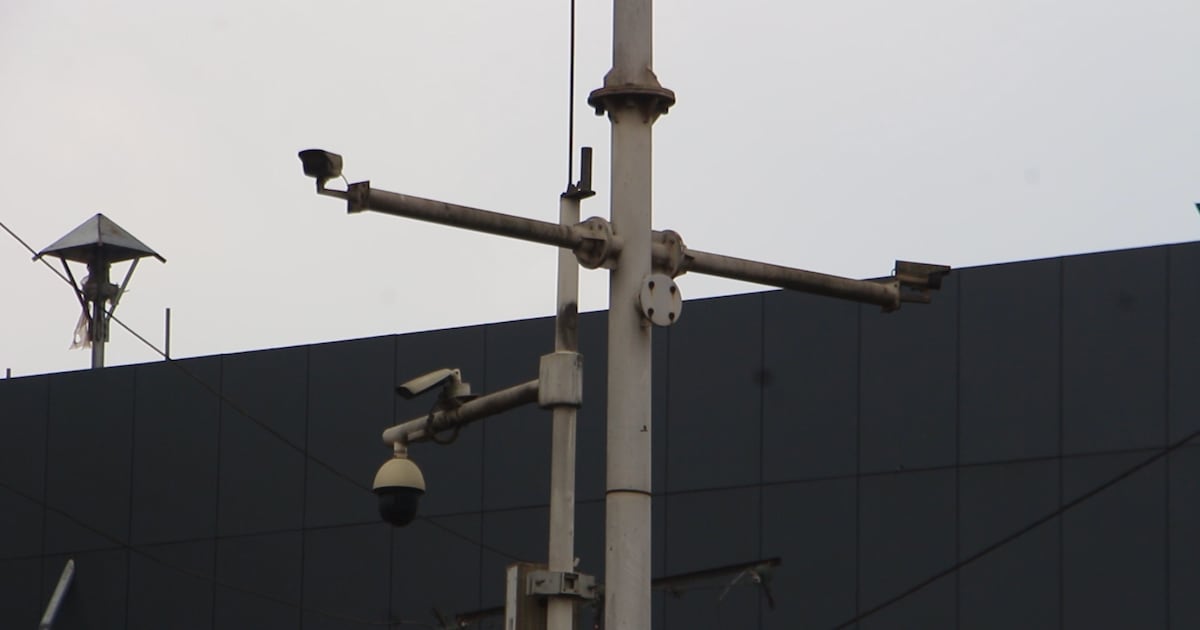
In Cameroon, particularly in Yaoundé, surveillance cameras have become a key tool for deterring crime, protecting property and people, and easing traffic flow.
Since their installation in strategic areas of the political capital, residents report a significant improvement in the fight against insecurity. A resident of the Madagascar neighbourhood stated: “In our area, we used to live in constant fear of armed robberies. Criminals would strike at any hour, looting shops, banks, and bakeries, and then escape without consequences. But since the cameras were installed, these bandits have become much rarer. I thank the authorities for this.”
The surveillance cameras deployed across Yaoundé are managed by the National Video Surveillance Command Centre, located in the Etoudi district.
Given their effectiveness in reducing crime, President Paul Biya signed a decree on 17 December 2025 authorising the Minister of Economy, Alamine Ousmane Mey, to secure a new loan of 39.2 billion FCFA. This funding is intended for the “additional financing of the national expansion project for the intelligent urban video surveillance system.”
With this fresh injection, the government is preparing to take out a fourth loan for the project from three Chinese lenders, bringing the total funds mobilised over eight years to 150.8 billion FCFA.
According to officials, the first phase of the project installed 1,500 video surveillance cameras in several Cameroonian cities. This network was supplemented by 2,000 portable transceivers, designed to enhance police surveillance and response capabilities.
Beyond urban centres and sensitive border areas, surveillance cameras are increasingly being installed in private homes. “Before I had this system installed, I was regularly burgled. Now I am completely satisfied. Any bandits who dare to try are immediately caught, and the justice system deals with them,” said a homeowner who equipped his residence with such a security setup.
The average price of a surveillance camera is around 15,000 FCFA, depending on the model. They can be installed not only in homes or on public roads, but also in plantations, vehicles, and even schools to ensure everyone’s safety.
This technology allows users to monitor their property remotely via mobile phones, television screens, and other platforms.