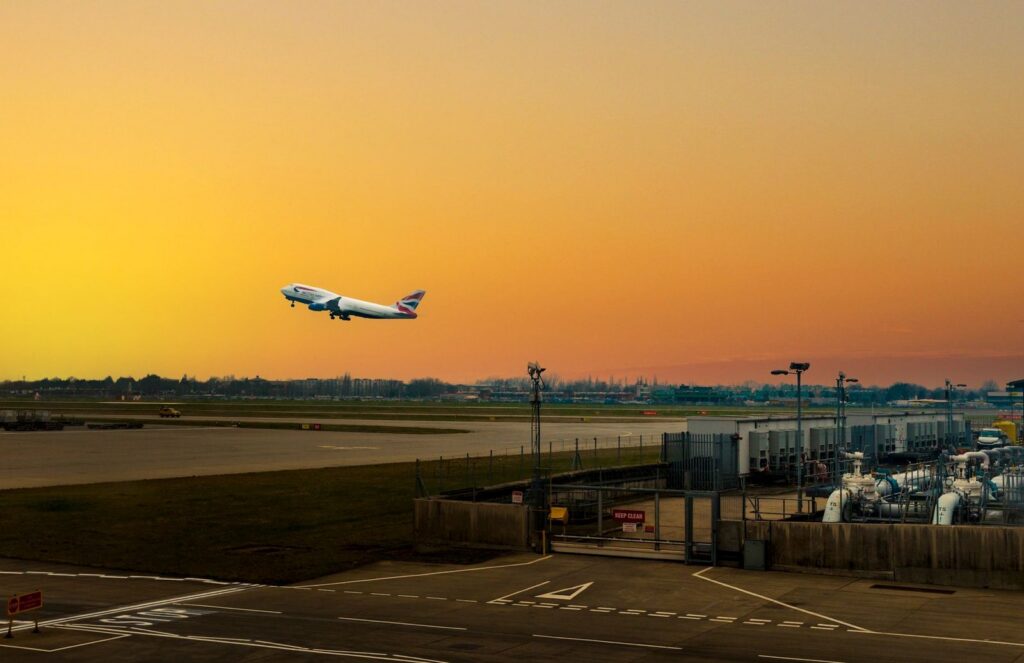
At a time when Senegal is betting on global mobility to drive its economic diplomacy, a quiet regulatory shift in London is raising an urgent question: can Dakar keep its most vital air connections open? The United Kingdom has tightened its entry rules for nine West African nations, including Senegal, by imposing an airport transit visa requirement. Under guidelines issued by the Home Office, the obligation applies even to travellers who never cross the British border and merely change planes at a UK airport. With no meaningful transition period, the measure reshapes the calculus for thousands of passengers who rely on London hubs to reach North America or Asia.
What exactly does the UK transit visa change for West African travellers?
Senegal is not alone on the new list of nationalities subject to the Direct Airside Transit Visa. Eight other countries in the sub-region face the same rule. The system requires any affected national to secure a consular document in advance, even when the stopover is limited to a few hours inside the international zone of an airport such as Heathrow or Gatwick. The process involves fees, appointments, biometric submissions and processing times that often clash with the tight schedules of business travellers.
British authorities typically justify such expansions on migration security grounds, citing the fight against asylum claims filed during transit or attempts to cross the UK border clandestinely. The precise statistics behind Senegal’s inclusion have not been disclosed in detail, but the logic fits a broader tightening of flows from sub-Saharan Africa that London has pursued for months.
Why does this decision carry political weight for Dakar and the region?
For Senegal, the British move lands at a delicate moment. Under President Bassirou Diomaye Faye, the country is overhauling its economic diplomacy and counting on the mobility of its executives, students and private operators toward major global financial centres. Being added to the UK list mechanically complicates routes to Washington, Toronto, Ottawa or Seoul when they pass through London, even as British Airways and Virgin Atlantic operate strategic connections from Dakar via Europe.
The British gesture sits uneasily with the rhetoric of strengthened partnership that London has promoted toward Africa since Brexit. The UK has multiplied investment summits, including the UK-Africa Investment Summit, meant to position the City as a leading partner against Paris, Beijing and Gulf capitals. Yet the newly erected consular barrier sends an ambivalent message to chancelleries of the Economic Community of West African States (ECOWAS), which could be tempted to demand reciprocal measures.
How are business flows and diaspora families affected?
West African diasporas established in Canada and the United States are among the first to feel the impact. Many families use flights with London connections to reach Dakar, Abidjan, Accra or Lagos, often for cost reasons. The transit visa requirement raises the real cost of travel, lengthens preparation times and potentially diverts part of the traffic toward Paris, Amsterdam, Brussels or Istanbul, whose transit regimes remain more flexible for West African passports.
British airlines risk commercial fallout. A shift of traffic toward continental European or Middle Eastern hubs would weaken London’s position on the lucrative West Africa–North America corridor. Emirates, Turkish Airlines and Ethiopian Airlines, already highly present on this route, could mechanically capture a share of travellers discouraged by British administrative complexity.
Then there is the diplomatic question. The decision, taken unilaterally, involved no formal consultation with the affected states. Dakar and its counterparts are expected to examine their options in the coming weeks, ranging from a simple protest statement to regulatory adjustments for British nationals visiting on business. The measure is already in force.
You may also like
Will the AES ever launch its own currency? The question Traoré keeps leaving unanswered
Can Ibrahim Traoré’s 300 armored vehicles claim survive scrutiny? Inside Faso Armored’s made-in-Burkina Faso gamble
Can Washington force third-country deportations? Ivory Coast’s refusal raises the stakes
Will Benin’s AEO exporters finally crack the Chinese market?
Northern Niger’s unanswered question: can Tiani’s government deliver water and power where it matters most?