The United Nations human rights chief expressed grave concern on Thursday regarding the deteriorating political climate in Mali, where democratic processes are being systematically dismantled by an increasingly restrictive administration.
This decline is attributed to several legislative changes enacted by the military junta that has governed since 2020. These actions have consolidated power around the current head of state, General Assimi Goïta. Volker Türk stated in an official release that these legal maneuvers have effectively blocked any path toward democratic elections in the near future, calling for an immediate restoration of the Malian people’s basic freedoms.
Indefinite postponement of democratic elections
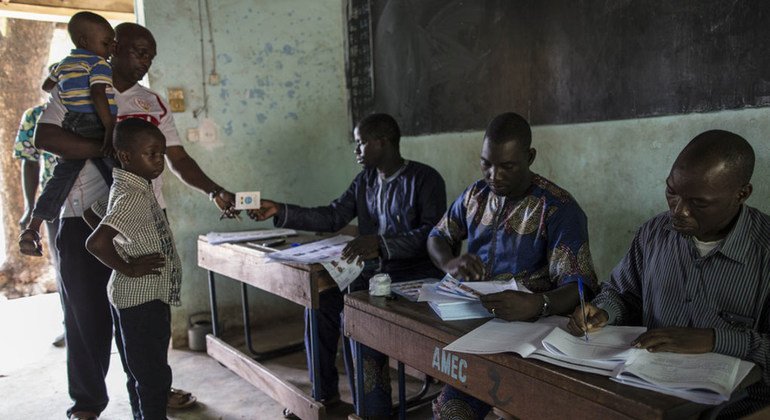
Almost five years following the military coup that removed President Ibrahim Boubacar Keïta—an event previously denounced by the UN Security Council—the commitment to return to civilian governance appears to have vanished. Mali has not held a presidential vote since the 2018 election of Ibrahim Boubacar Keïta.
On July 8, a new law granted Assimi Goïta the authority to renew his term repeatedly until the nation is deemed “pacified.” This follows a presidential decree from two months prior that abolished all political parties and associated organizations. The High Commissioner for Human Rights maintains that these actions infringe upon the fundamental rights of citizens to engage in public affairs and exercise their right to vote.
Widespread suppression of dissent
The shift in institutional structure has been accompanied by a rigorous security crackdown. Moussa Mara, a former Prime Minister and prominent opposition figure, was detained on August 1. He was accused of undermining state credibility and resisting legal authority after he shared a post on X voicing his support for political prisoners.
Volker Türk criticized the “weaponization of the legal system” to stifle opposition voices. He highlighted a worrying trend of arrests involving Malians from various social backgrounds, many of whom face charges similar to those brought against Moussa Mara for merely expressing their views.
Escalating violence and civilian casualties
Mali continues to endure frequent strikes by jihadist factions, including Daech and the Al-Qaeda-affiliated Group for the Support of Islam and Muslims (GSIM), which operate across the borders of Mali, Burkina Faso, and Niger. These terror threats are often cited as the rationale for operations by the Malian military, which is supported by the Africa Corps—a Russian paramilitary group that took over from the Wagner Group.
However, these military actions have frequently resulted in civilian suffering. Since April, the office of Volker Türk has documented hundreds of instances of extrajudicial killings, arbitrary arrests, and forced disappearances attributed to various parties involved in the ongoing conflict.
In a nation already struggling with deep-seated instability, the United Nations’ assessment is clear: the indefinite suspension of the electoral process, combined with broad repression, threatens to lock Mali into a permanent state of political deadlock and escalating violence.