When Niger took a decisive turn away from Orano in 2023, the goal was clear: reclaim control over its uranium wealth. But behind the bold headlines of nationalization and new alliances lies a more complex reality. While the coup that reshaped Niamey’s political landscape set the stage, the real story is about the behind-the-scenes dynamics shaping the country’s uranium strategy today. And one question looms large: is diversifying buyers actually translating into better terms for Niger?
Beyond the break: what the end of the Orano era really meant for Niamey
The rupture with Orano wasn’t just a political statement—it was a strategic reset. In June 2025, the government nationalized the Somaïr mine, stripping the French group of its majority stake and forcing a complete overhaul of the uranium sector. Yet, reclaiming control of a mine doesn’t automatically mean commanding a market. The stark reality is that Niger’s uranium production has plummeted over the past decade, dropping from 4,116 tonnes in 2015 to just 962 tonnes in 2024. With only one active mine remaining and no immediate prospect of reviving large-scale operations, Niamey’s industrial base is fragile at best.
This loss of output is compounded by a paradox: sovereign control doesn’t equate to commercial leverage. While the government now owns the lion’s share of the uranium value chain, it still lacks the infrastructure, capital, and logistics to monetize its resource effectively. The result? A powerhouse in theory, but a weak player in practice.
Price checks: how Orano’s departure compares to the global uranium market
The assumption that breaking ties with Orano would instantly boost revenues is misleading. Uranium isn’t traded like oil—there’s no single market price. Instead, contracts are negotiated bilaterally between producers, intermediaries, and nuclear utilities, with prices tied to spot indices, long-term formulas, and regional demand. Historical data offers a glimpse into past dynamics:
- In 2020, Niger earned roughly 83.75 euros per kilogram from Somaïr, based on public records.
- Between 2022 and 2024, documented pricing suggests Niger received around 45,000 CFA francs (≈ $33) per kilogram in some agreements, while buyers in Europe or Japan reportedly paid up to 60,000 CFA francs.
- By 2025, spot prices for European utilities surged to $70.33 per pound, while long-term contracts averaged around $54.70.
- By late 2026, spot prices reached $89.63 per pound, with long-term contracts hitting $96.50—significantly higher than in the early 2020s.
The trend is clear: the global uranium market has turned in Niger’s favor. But higher international prices don’t automatically mean Niamey is now pocketing more. The critical missing link? Documented sales.
The shadow deals: Russia, Iran, and the unverified claims haunting Niger’s uranium trade
Among the most contentious allegations is the so-called Russian deal. In 2025, reports surfaced that Niger may have sold 1,000 tonnes of yellowcake to Russia for $170 million—a price translating to about $77 per pound. That figure is below late-2026 spot rates but aligns with some long-term contract levels. The catch? Both Niamey and Rosatom have denied the deal. Yet key details remain unsettling:
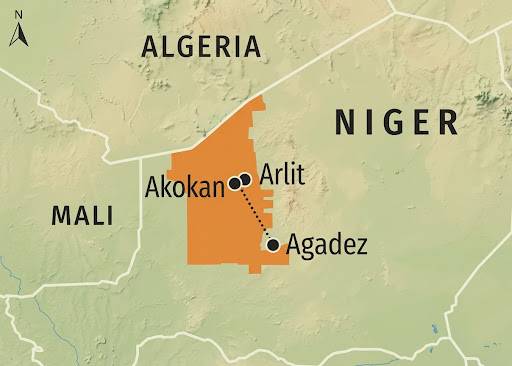
- In November 2025, 1,000 tonnes of yellowcake were loaded onto trucks in Arlit, accompanied by a military escort.
- The convoy reached Niamey only to stall at the city’s airport, where the shipment’s fate became unclear.
- While this isn’t definitive proof of a sale, it confirms Niamey was actively exploring uranium exports—just not with full transparency.
The Iran saga follows a similar pattern. In 2024, negotiations over 300 tonnes of yellowcake for approximately $56 million were reported, with Teheran as the buyer. Niamey denied a completed deal, citing lack of stock—but acknowledged discussions took place. The distinction between negotiation, agreement, and execution remains blurred, leaving investors and analysts in the dark.
New partners, same risks: China, Russia, and the high-stakes gamble for Niamey
Russia and China have emerged as Niamey’s most visible new uranium partners. In December 2025, Timersoi National Uranium Company signed a cooperation deal with Uranium One Group (a Rosatom subsidiary) to explore new deposits. China, meanwhile, has shown interest in purchasing Arlit’s stockpile, with potential negotiations over 1,000 tonnes in 2025. But do these alliances guarantee better prices?
Not necessarily. What they offer is negotiating leverage. By playing multiple buyers against each other—Russia, China, Western firms, and emerging players—Niger aims to extract higher returns. The strategy is sound in theory, but only if Niamey can produce enough uranium to meet demand. At present, production is at a historic low, and infrastructure bottlenecks persist.
Adding to the uncertainty is a legal cloud. In September 2025, a CIRDI arbitral tribunal ruled that Niger cannot sell or transfer uranium tied to the ongoing Orano dispute. This restricts Niamey’s ability to monetize even existing stockpiles while the legal battle drags on.
The verdict: has Niger truly outbid Orano?
So far, the answer is a cautious no. Niger’s uranium strategy has shifted in three key ways:
- Higher global prices: The uranium market is booming, giving Niger more room to negotiate.
- Diversified buyers: From Russia to China to Western firms, Niamey now has options.
- Domestic control: The government owns critical mining assets, reducing foreign influence.
Yet these advantages are undermined by three critical weaknesses:
- Production has collapsed, halving output over a decade.
- Logistics remain a bottleneck, with uranium shipments facing delays and security risks.
- Opacity shrouds actual deals—negotiations abound, but signed contracts and transparent pricing are scarce.
The real turning point may lie ahead. In 2026, Niger launched Teloua Safeguarding Uranium Mining Company to replace the nationalized Somaïr, and the U.S. approved $414 million in financing for the Dasa project led by Canadian firm Global Atomic. These moves signal a gradual recovery of investor confidence. But until Niger can demonstrate real revenue gains—not just geopolitical headlines—the question lingers: has Niamey truly secured a better uranium deal than Orano ever offered?
The long game: what Niamey must do to turn uranium into a winning strategy
Niger’s uranium gamble is no longer about picking new partners—it’s about building a functional, transparent, and profitable uranium market. To achieve that, Niamey must:
- Revive production: Reinvest in mining infrastructure and attract capital to boost output.
- Secure routes: Guarantee safe transport of uranium from mines to markets.
- Unlock legal clarity: Resolve the Orano dispute to avoid strangling its own uranium trade.
- Demand transparency: Shift from opaque negotiations to public, competitive bidding processes.
Without these steps, Niger’s uranium wealth risks remaining a promise rather than a game-changer. The world’s uranium prices are rising. The question is: will Niger be ready to seize the moment?