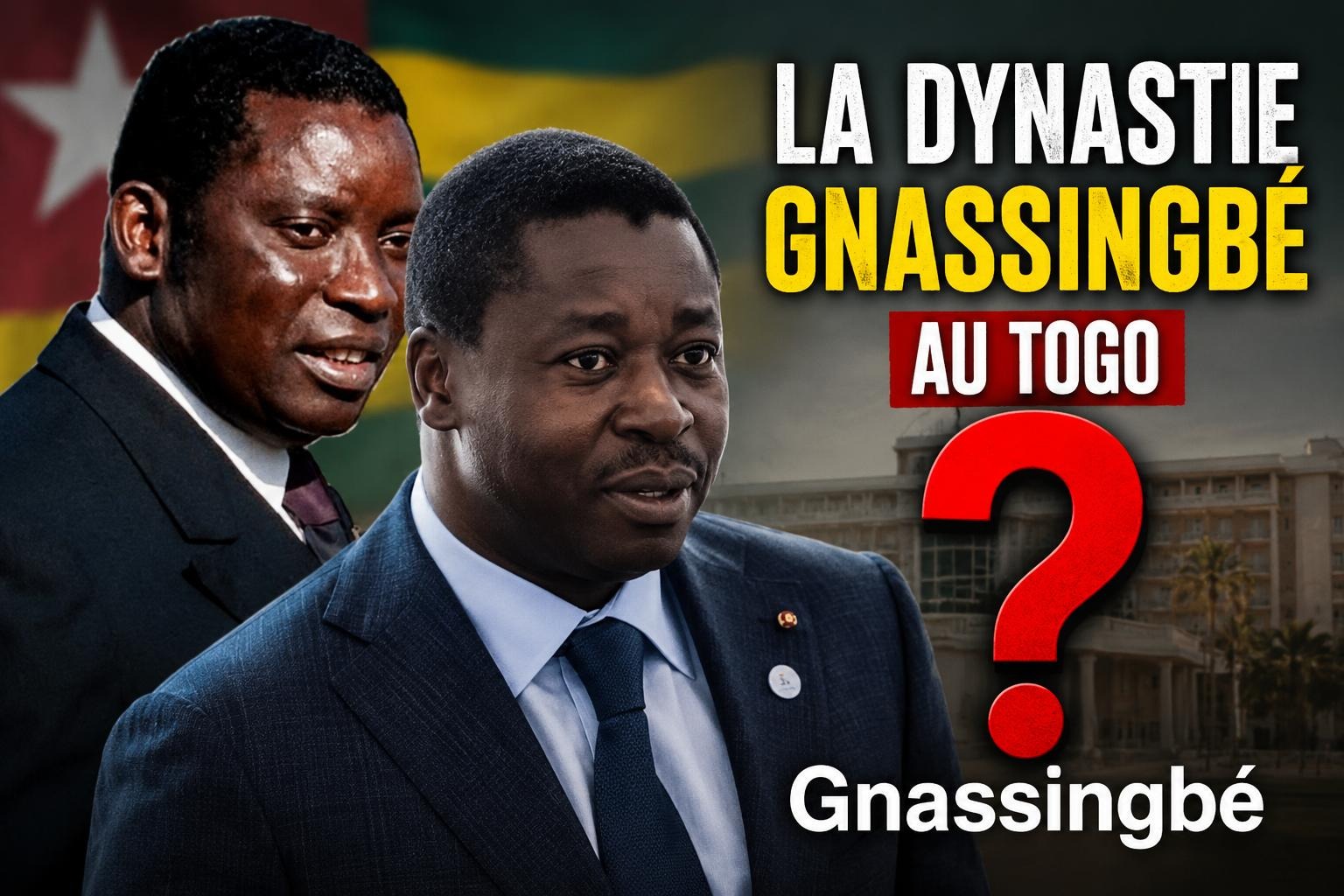
Togo stands out in Africa for a singular and troubling distinction: it hosts the continent’s oldest political dynasty. Since Gnassingbé Eyadéma first seized power in 1967, the reins of the state have remained within his family, passing seamlessly to his son, Faure Gnassingbé. After nearly four decades under the elder’s rule and more than twenty under the younger’s, the nation finds itself trapped in a cycle of dynastic dominance that shows no signs of ending.
From father to son: a dynasty built on exclusion
At the heart of Togo’s political impasse is not merely a party in power, but a tightly knit clan whose survival depends on perpetual control. The Gnassingbé family and their inner circle view the presidency not as a public office, but as a hereditary asset—one that must never be relinquished under any circumstances.
For the current president, stepping down would trigger not just political fallout, but existential peril for his allies. The end of his rule would inevitably expose decades of questionable financial stewardship, systemic corruption, and the dark legacy of state violence, including the brutal repression of the 2005 political transition that left hundreds dead. For the clan, clinging to power isn’t a political strategy—it’s a matter of survival.
Constitution as a shield: the legalization of lifelong rule
In a move that sealed the fate of democratic hopes, Togo recently adopted sweeping constitutional changes that transformed the presidency into a parliamentary figurehead. Faure Gnassingbé, now styled as President of the Council of Ministers, has effectively removed himself from electoral accountability while retaining full executive authority.
This legal overhaul delivers a knockout blow to any prospect of peaceful transition:
- Direct elections dismantled: Citizens no longer vote directly for their head of state, eliminating the possibility of a punitive vote.
- Unlimited mandate via proxy: As long as his party, the Union pour la République (UNIR), controls parliamentary elections—which are heavily managed by the regime—he remains in power indefinitely.
The strategy mirrors that of his father, who in 2002 amended the constitution to eliminate term limits and pave the way for his own lifelong rule. Where Eyadéma relied on raw force to override legal constraints, Faure has weaponized the law itself, cloaking perpetual authority in constitutional legitimacy.
The army’s unbreakable oath: a dynasty’s iron guard
No analysis of Togo’s political gridlock is complete without examining the role of the Togolese Armed Forces (FAT). Established by Eyadéma with deep regional and clan-based loyalties, the FAT serves not the nation, but the ruling family. Senior officers share economic and security interests with the Gnassingbé clan, and their privileges are directly tied to the regime’s survival.
“In Togo, the military does not defend institutions—it defends a dynasty against its own people.”
For the generals, a transition away from Faure would mean the loss of entrenched power and financial leverage. The president, in turn, is a hostage to this system. His personal security—and that of his allies—depends entirely on maintaining control. The FAT has made clear that it will tolerate no leader outside the family or the established order. This unholy alliance has fused Faure’s political fate to the presidential palace in Lomé.
The inescapable trap: a future written in blood
Faure Gnassingbé has inherited more than a title—he has inherited a prison. Trapped by a clan unwilling to surrender its privileges, shielded by an army that fears change, and shielded by laws he himself authored, he has condemned himself to eternal rule. The pattern is tragically familiar: like his father before him, he appears destined to govern until nature dictates otherwise.
By refusing to offer Togo a peaceful exit strategy, however, he risks leaving behind not just a legacy of iron-fisted rule, but a nation on the brink. The fall of the dynasty, when it comes, may well ignite the very instability the regime has spent decades suppressing.