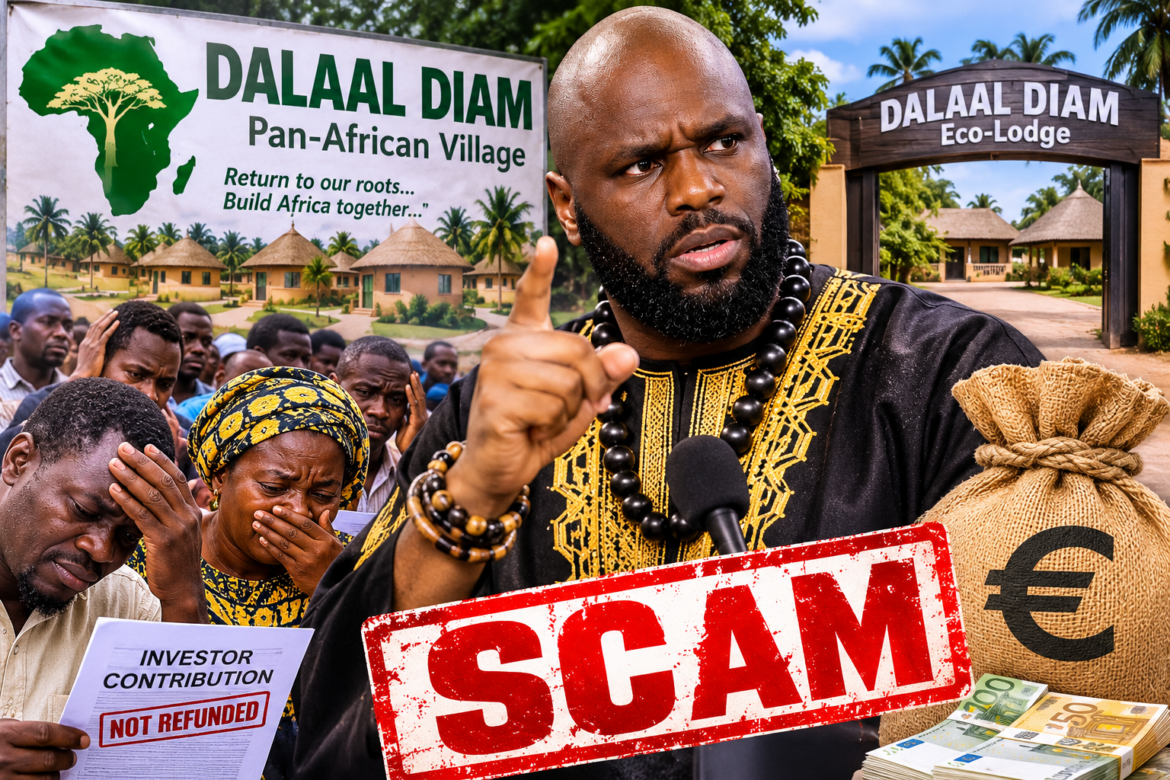
The launch of Dalaal Diam in 2011 was positioned as a landmark panafrican initiative under the banner of economic empowerment and cultural resurgence in Senegal. Spearheaded by activist Kémi Séba born Stellio Capo Chichi the project promised not only to reunite Afro-descendants with their continental roots but also to establish a tangible economic hub on eight hectares of land, backed by an announced budget of €360,000.
The promise and the pivot
Market to supporters as a revolutionary village of African solidarity, Dalaal Diam was framed as a practical response to Marcus Garvey’s vision of repatriation and self-reliance. Its promoters emphasized that this was more than rhetoric: it was meant to deliver real infrastructure, employment, and a cultural sanctuary for the African diaspora.
Yet by 2012, the project’s trajectory had already begun to diverge from its original blueprint. Despite early enthusiasm and significant grassroots mobilization, progress stalled. The ambitious village model was quietly shelved, and investors were informed of a strategic shift toward an eco-lodging concept, slated for inauguration in January 2014.
What had been advertised as a bold, community-driven development project was now rebranded as a tourism venture an operational pivot that fundamentally altered its mission and implications for backers.
The silent toll on investors
The most striking aspect of Dalaal Diam’s unraveling lies not in the reorientation of its vision, but in the financial consequences borne by its earliest supporters. Multiple accounts from initial subscribers indicate that promised refunds have never materialized, despite the abandonment of core components of the project.
These individuals, drawn by the rhetoric of African renewal and diasporic reunion, invested under the assumption that their contributions would either fuel tangible development or be returned if targets were not met. Instead, they find themselves in prolonged uncertainty, with no clear recourse and no restitution.
Unanswered obligations
The absence of accountability is exacerbated by the continued public use of the project’s name. “Dalaal Diam,” meaning “Peace be with you” in Wolof, has been adopted by Kémi Séba in his public engagements, effectively turning its original intent into a rhetorical device rather than a commemorated endeavor of communal investment.
This dissociation between rhetoric and reality raises critical questions: Who managed the collected funds? How were they allocated? What oversight governed their use? And most importantly why have contributors not received repayment?
From vision to vanishing act: the missing accountability
At its core, the Dalaal Diam story is less about the failure of a development concept and more about the betrayal of trust. While panafrican discourse often celebrates collective aspiration and historical justice, the lived experience of its participants reveals a troubling gap between ideals and execution.
True panafricanism, for those who funded the venture, should have entailed not just shared ambition but also shared responsibility. Instead, the initiative appears to have dissolved into financial opacity, leaving behind a legacy of unmet expectations and unfulfilled promises.
The question now is not only what became of the funds, but what lessons emerge for future panafrican ventures: transparency must precede rhetoric, and accountability must follow commitment.
By Claire Mvondo — Journalist