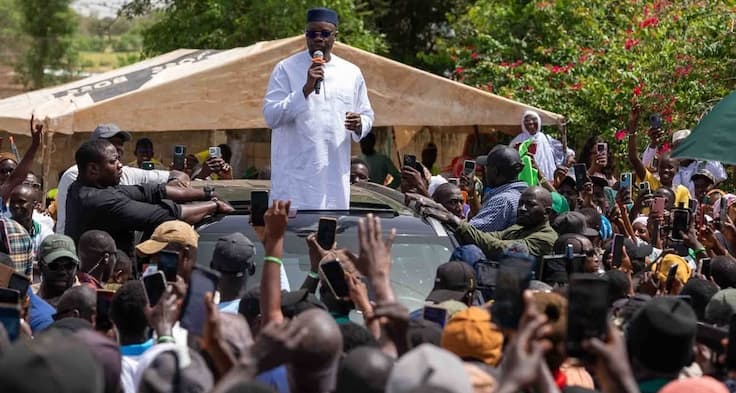
In a bold public address, Ousmane Sonko, leader of the Patriotes movement, has sharply criticised the government’s handling of the upcoming local elections in Senegal. Addressing a packed crowd in the heart of Ndiambour, Sonko underscored the urgency of the situation, calling on the President to issue a decree setting the election date without further delay.
The political figure went further by drawing a direct parallel between the recent high-profile dismissals in key institutions and the necessity of electoral transparency. « While the President holds the authority to remove officials like Waly Diouf Bodiang or Fadilou Keïta, he must also act with equal decisiveness to set a clear election date, » Sonko asserted. His remarks come at a time when the absence of a published electoral decree has intensified concerns about potential delays, with legal experts warning that the window for a timely vote is rapidly closing.
Mounting pressure for a decisive electoral timeline
The call for immediate action follows Sonko’s sustained advocacy against any postponement of the local elections, a stance he has maintained since the nationwide voter card distribution campaign began in late July. His latest intervention highlights a growing impatience, particularly as the legislative deadline for formalising the election calendar looms closer.
Institutional tensions underscore the need for clarity
The absence of an official decree has not only become a focal point of public debate but has also exposed deepening rifts between the executive and legislative branches of government. The National Assembly President’s recent public questioning of the President’s inaction further amplifies the urgency, with no electoral convocation decree issued to date.
What’s at stake for Senegal’s electoral process
With the legal framework for elections requiring precise timing, the delay in signing the decree risks disrupting the entire electoral machinery. Political analysts stress that procrastination could lead to logistical challenges, voter disenfranchisement, and broader societal unrest. As the debate intensifies, the demand for transparency and adherence to democratic norms has never been more critical.
You may also like
Will the AES ever launch its own currency? The question Traoré keeps leaving unanswered
Can Ibrahim Traoré’s 300 armored vehicles claim survive scrutiny? Inside Faso Armored’s made-in-Burkina Faso gamble
Can Washington force third-country deportations? Ivory Coast’s refusal raises the stakes
Will Benin’s AEO exporters finally crack the Chinese market?
Northern Niger’s unanswered question: can Tiani’s government deliver water and power where it matters most?