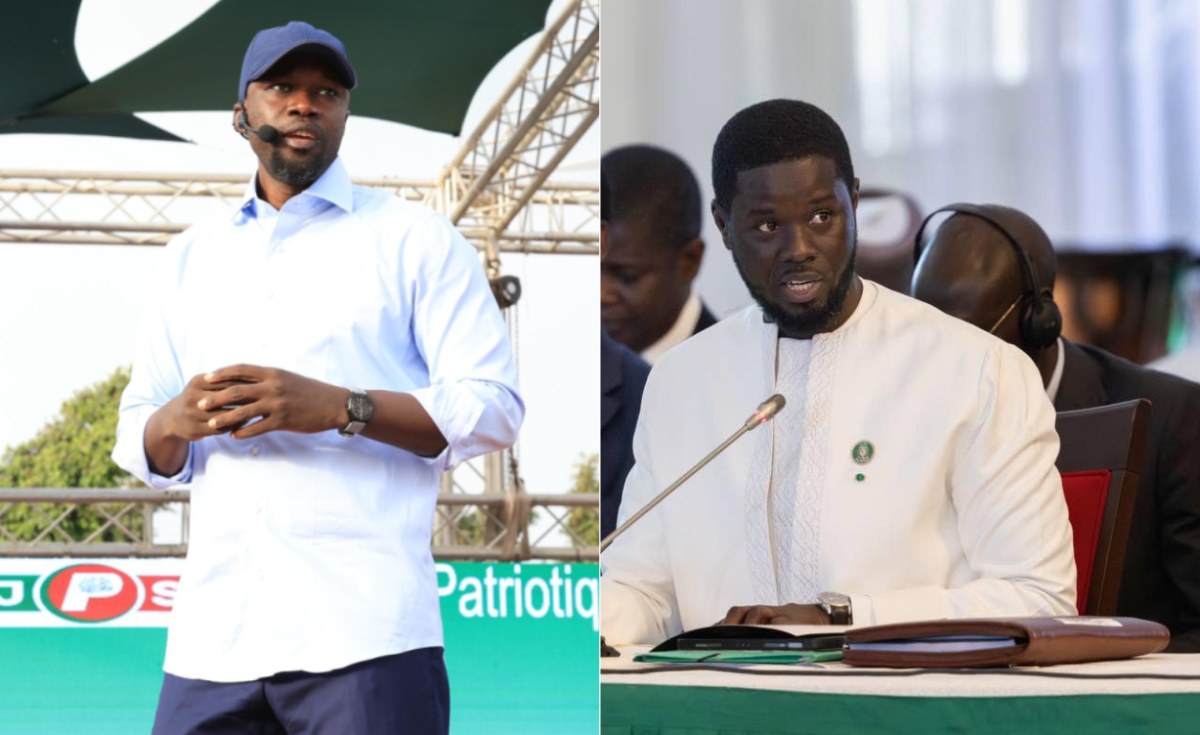
Senegal faces one of its most challenging political phases since Bassirou Diomaye Faye and Ousmane Sonko took office in March 2024. Once inseparable figures of the Pastef movement, recent events reveal growing rifts between the head of state and the party’s historical leader.
This tension unfolds against a backdrop of high stakes. In 2024, Ousmane Sonko—barred from running due to legal troubles—chose Bassirou Diomaye Faye, then imprisoned alongside him, to lead Pastef’s presidential bid. Their victory was hailed as the culmination of a years-long struggle against Macky Sall’s regime and the dawn of a new political era in Senegal.
Unraveling alliances: a shifting power dynamic
Power dynamics often evolve once opposition movements assume governance. Over a year into their mandate, the relationship between the two leaders appears to be entering a new chapter. Ousmane Sonko’s recent public criticisms and revelations about alleged political agreements tied to their rise to power signal his intent to reclaim political initiative.
As the government formation deadline approached for Prime Minister Al Aminou Lo’s new team, the Pastef leader made a bold statement: no party members would join the administration. This stance marks a symbolic break with the 2024 governance model, hinting at an emerging divide between state institutions and party structures.
Legitimacy in conflict: two pillars of Pastef’s power
The debate now centers on political legitimacy. President Bassirou Diomaye Faye derives his authority from universal suffrage and constitutional processes, while Ousmane Sonko remains, for many militants, the architect of their electoral triumph and the driving force behind Pastef’s formation.
This duality echoes historical precedents across African politics. Movements that ascend to power frequently grapple with tensions between elected leaders and party power brokers. When these forces clash, the risks of institutional gridlock and political fragmentation escalate.
While premature to declare a definitive split, the escalating tensions and hardening rhetoric suggest a power realignment is underway. Both leaders still share a common electoral base and a political vision widely embraced by their supporters.
The stakes: stability vs reform
The outcome transcends personal ambitions. Senegal’s ability to maintain institutional stability while advancing promised economic and social reforms hangs in the balance. As a regional democratic model, the trajectory of Faye-Sonko relations could reshape the Pastef’s future and the nation’s political equilibrium.
Coming months will reveal whether this crisis leads to strategic reconciliation, a contentious cohabitation, or a clear political rupture between the two architects of Senegal’s 2024 political shift.