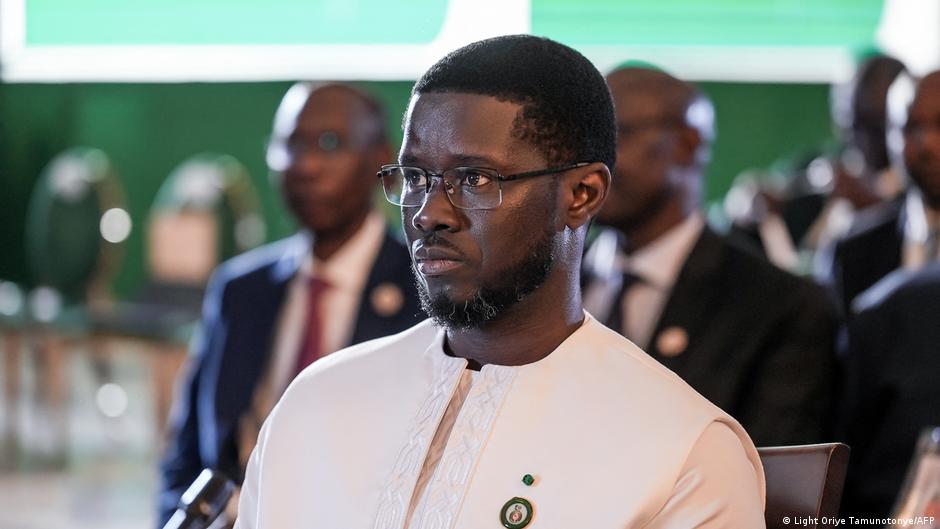
In Sénégal, the Parti Démocratique Sénégalais (PDS) has officially called for a “no” vote regarding the upcoming constitutional referendum. President Bassirou Diomaye Faye recently announced this public consultation to let the citizens decide the fate of a highly controversial piece of legislation.
The proposed law, which was passed by a majority in the National Assembly, was driven by Ousmane Sonko’s Pastef party. It aims to significantly increase the powers of Parliament while restricting those of the President. In a strategic shift, the PDS has sided with the head of state, urging its supporters to reject the reform. This alignment between the party of Abdoulaye Wade and Bassirou Diomaye Faye is the latest twist in a complex political history.
The evolution of the PDS-Diomaye connection
The roots of this cooperation trace back to the legislative elections of July 2022, when the PDS partnered with Ousmane Sonko’s Pastef to challenge the dominance of then-President Macky Sall. By the March 2024 presidential election, the PDS took a bolder step by backing the Ousmane Sonko–Bassirou Diomaye Faye ticket. This decision came after the PDS candidate, Karim Wade, was disqualified from the race. Under the leadership of Abdoulaye Wade, the party threw its weight behind the Pastef-led duo.
This endorsement was crucial in broadening the electoral appeal of Bassirou Diomaye Faye. While the official reason was to protect the rule of law and defeat the incumbent candidate, Amadou Ba, the PDS also felt aggrieved by the Macky Sall administration’s role in excluding Karim Wade. For Karim Wade, who remains in exile after a period of imprisonment, the alliance was a way to maintain political relevance.
A relationship based on necessity
Despite their shared electoral victory, the partnership did not lead to a formal government coalition. After Bassirou Diomaye Faye took office, the PDS remained outside the new administration, choosing to keep its distance from both Pastef and the presidential inner circle. This suggests that the proximity was more about political calculation than shared ideology.
The PDS appears to be attempting to recover from a period of decline following its loss of power years ago. By drawing closer to the current presidency, the party aims to re-establish itself in the political arena. This strategy became even clearer during the late 2024 snap legislative elections, when the PDS surprisingly allied with Macky Sall’s APR—a former rival—demonstrating its fluid approach to power dynamics.
Blocking the path of Ousmane Sonko
Current friction between Bassirou Diomaye Faye and Ousmane Sonko has handed the PDS a new opportunity. The party has voiced support for the president’s decision to hold a referendum, yet it is simultaneously campaigning for the public to reject the actual reforms proposed by the Sonko camp.
In a recent statement, the PDS urged its members and the wider public to mobilize and vote “NO” to stop these institutional changes. The party argues that the revisions are designed solely to serve the personal ambitions of Ousmane Sonko, accusing him of having a thirst for power that threatens the democratic foundations of Sénégal.
This sentiment is shared by much of the opposition. While they may not be formal allies of the president, their rejection of the constitutional changes serves as a collective “no” to Ousmane Sonko. The radical rhetoric that once defined the Pastef leader is increasingly viewed by other political actors as an obstacle to national reconciliation.
A circumstantial shift in the political landscape
This tactical support for the president does not necessarily signal a permanent alliance. Many who oppose the institutional reforms are doing so because they perceive a move to consolidate power within the National Assembly, rather than out of loyalty to Bassirou Diomaye Faye. The perception of Pastef as an increasingly exclusive group is pushing various political factions toward the president, if only temporarily.
For Bassirou Diomaye Faye, this shift is beneficial. As he faces growing internal pressure from within Pastef, the president is looking to broaden his own support base. He appears to be focusing on his “Diomaye Président” coalition, perhaps preparing for a future where he no longer relies on the party that brought him to power. Within some circles of Pastef, the divide is already being described as a definitive betrayal, suggesting that the rift between the president and his former mentor may be irreparable.