
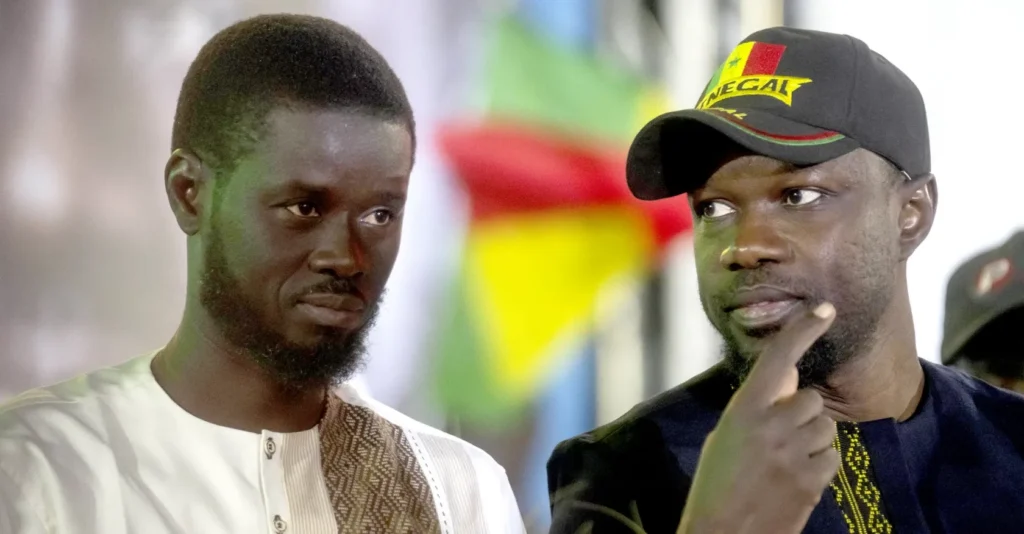
The political landscape in Senegal has shifted dramatically after President Bassirou Diomaye Faye announced the dismissal of Prime Minister Ousmane Sonko, marking a decisive break between the two leaders.
The decision, conveyed through an official statement from the presidency on the evening of May 22, 2026, also dissolves the entire government. Oumar Samba Ba, Secretary-General of the presidency, clarified that outgoing ministers will continue to handle routine affairs until a new government is formed.
Government dissolution and transition
The abrupt change underscores a strategic realignment within Senegal’s political sphere. While the reasons for the dismissal remain unconfirmed, the move signals a potential shift in governance priorities. The presidency has yet to provide further details on the selection process for Sonko’s successor or the timeline for forming a new administration.
The announcement has sparked immediate reactions across West Africa, with political analysts closely monitoring the implications for regional stability. The transition period will be critical in determining the next steps for Senegal’s political and economic trajectory.
What’s next for Senegal?
As the nation awaits further developments, the focus remains on how the presidency will navigate this transition. The continuity of government functions suggests an effort to minimize disruption, though the absence of Sonko—a prominent political figure—leaves a significant void.
Political observers will be watching closely for signs of stability or further shifts in the coming weeks, as Senegal adjusts to this unexpected political reshuffle.
You may also like
Niger’s junta faces twin crises: army mutiny and jihadist raids near Niamey
Cameroun : Samb’a Finances Holding sollicite l’agrément pour sa filiale de micro-assurance
Cameroun : les signes avant-coureurs d’une transition politique
Gabon’s economic management hindered by unreliable public data
Niger: General Tiani faces growing unease within special forces after Russian involvement