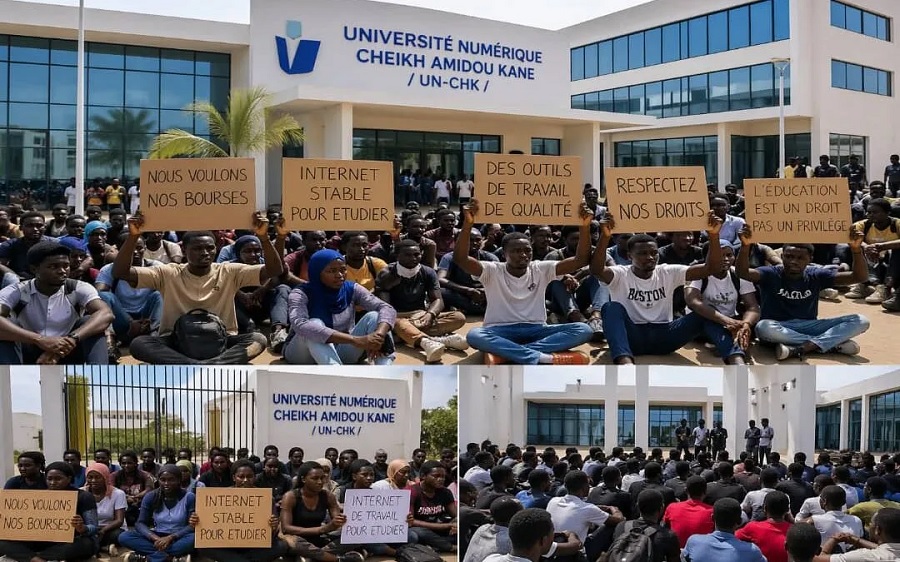
May has long been a month of heightened social tension in the Sénégal, echoing global labor movements and historical upheavals like France’s May 1968. From university students to transport workers and public sector employees, the month now consistently sparks waves of protests, strikes and demands for accountability.
This year, the unrest has intensified across multiple fronts, turning May into a critical testing ground for social cohesion and governance in the country. The convergence of labor Day on May 1st with broader historical echoes—particularly the revolutionary spirit of May 1968—has amplified the pressure on authorities to address systemic issues ranging from employment precarity to institutional mismanagement.
Transport sector paralyzed as AFTU workers strike over billing disputes
In Dakar, the urban transport system ground to a halt yesterday when members of the Association de Financement des Professionnels du Transport Urbain (AFTU) initiated a strike action. The protest centers on a dispute with a private transport operator over the implementation of electronic ticketing systems, particularly the deployment of new billing machines across terminals and sales points.
The Tribunal de Grande Instance de Dakar intervened last week, ordering the suspension of new machine deployments and the seizure of those already installed. This judicial decision triggered immediate backlash from AFTU workers, who argue that the ruling undermines their operational autonomy and working conditions. The strike has disrupted public transit across the capital, highlighting the fragile balance between technological modernization and labor rights.
Governance crisis at Ageroute: HR Director challenges leadership
The Agence des Travaux et de Gestion des Routes (Ageroute) is facing internal turmoil after its Director of Human Resources, Cheikh Ahmed Tidiane Thiam, publicly criticized the agency’s new Director-General (DG) for what he described as a management approach marked by a lack of consultation and systematic erosion of human capital.
According to insiders, the situation escalated when 23 employees were abruptly dismissed, exacerbating tensions within the agency. The HR Director’s outspoken remarks underscore deep fractures in Ageroute’s leadership and raise concerns about the agency’s ability to implement critical infrastructure projects amid growing internal dissent.
University students demand unpaid scholarships
Students from the 10th cohort of the Université numérique Cheikh Hamidou Kane (UN-CHN) have taken to the streets to protest the non-payment of their full scholarships. Only two years of financial support have been disbursed out of the three years originally promised for their undergraduate degree.
In a press conference, the students emphasized that the delay in scholarship payments is not merely a financial issue but a barrier to their academic progress. They have called on authorities to urgently resolve the situation, warning that prolonged delays could trigger a broader student movement.
A month of collective discontent
The wave of protests sweeping through the Sénégal this May is not isolated to one sector. From transport to education and public administration, workers and students are voicing grievances that reflect deeper structural challenges: wage disparities, governance failures, and unmet social promises.
Transport unions, university students, and civil servants are all raising the stakes, using strikes, press conferences, and public statements to demand immediate action. The convergence of these movements during a single month—historically symbolic for labor and social justice—has created a perfect storm of discontent, forcing authorities to confront issues they can no longer ignore.
As the month progresses, all eyes will be on the government’s response. Will it prioritize dialogue and reform, or risk escalating tensions that could further destabilize an already fragile social fabric?