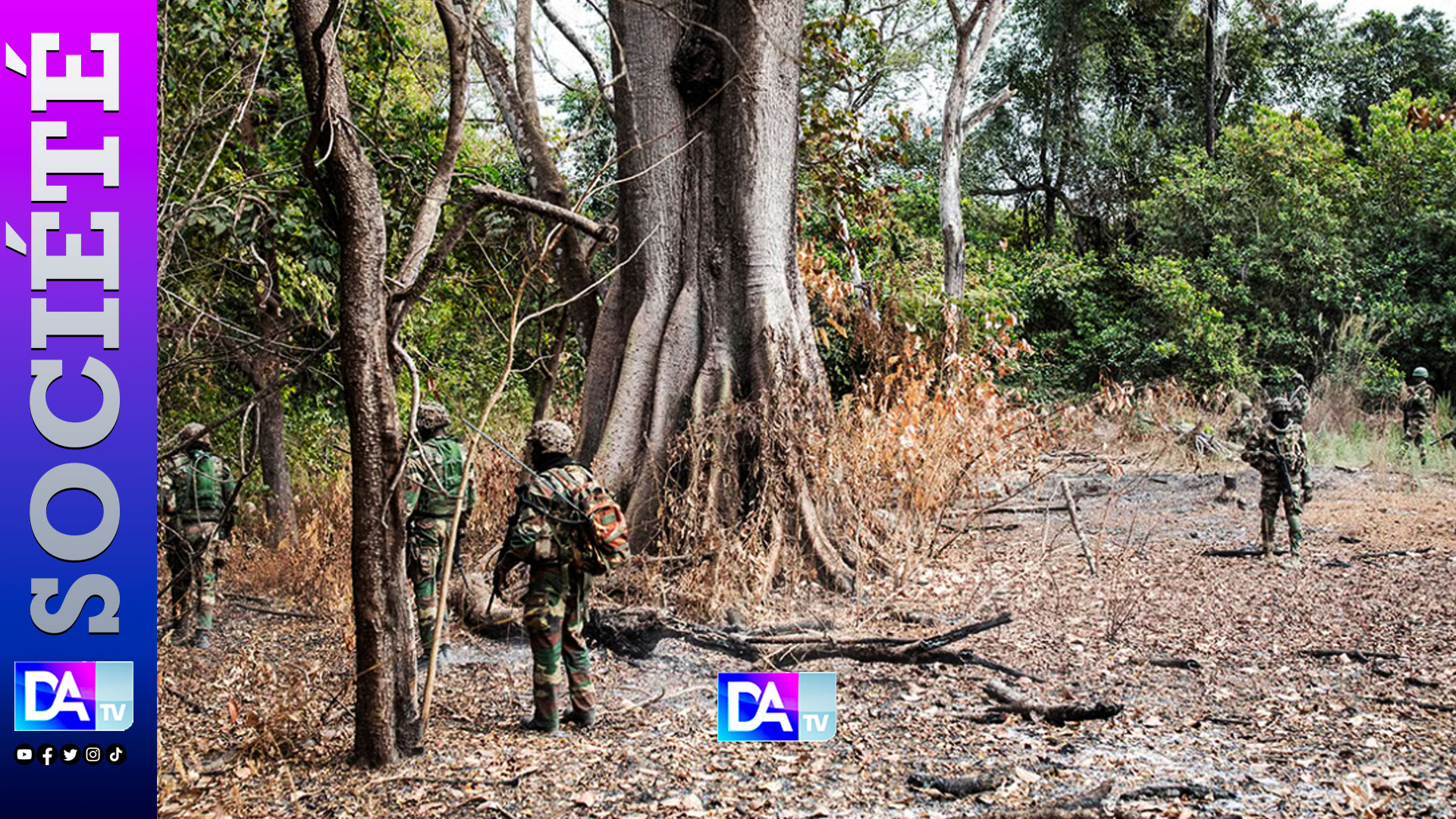
In early May, Senegalese soldiers and gendarmes, supported by detection dogs, dismantled cannabis fields in Casamance—a region torn by Africa’s longest-running conflict. Despite its 43-year history, the separatist rebellion led by the Democratic Forces of Casamance (MFDC) has weakened significantly, with weakened factions and aging combatants struggling to sustain operations.
The military operation, conducted near the Gambian border where MFDC rebels have historically operated, unfolded without major resistance. Colonel Cheikh Guèye, regional army commander in Ziguinchor, confirmed the seizure of six tons of cannabis, 14 arrests, and a cache of firearms—a direct blow to the rebels’ dwindling resources.
Once a formidable force, the MFDC now faces internal fractures, declining recruitment, and logistical shortages in weapons and ammunition. Cooperation between neighboring countries—Gambia and Guinea-Bissau—with Dakar has further restricted rebel movements, cutting off traditional supply routes.
A local civil society leader explains that the rebellion’s decline stems from a loss of political and emotional support from communities that once backed its independence cause. “Disillusionment has set in,” the leader states. “People now prioritize peace over prolonged conflict.”
The weakening of the MFDC coincides with Senegal’s political shift, including the rise of leaders from Casamance like Prime Minister Ousmane Sonko. His presence has reshaped perceptions, with many former supporters viewing his leadership as a symbolic victory for the region after decades of marginalization.
Rebels struggle to maintain control after decades of conflict
In mid-March, Sonko addressed residents in Ziguinchor, Casamance’s largest city, emphasizing that the MFDC has failed to control even a single village in over 40 years. His remarks followed a series of violent incidents, including an explosion that killed three soldiers and injured three others during anti-cannabis operations.
The conflict’s toll remains heavy: in March alone, one soldier was killed and six wounded. Earlier, in November 2025, a soldier held captive for seven months by armed groups was finally freed. “The MFDC no longer seriously pursues independence,” Sonko asserted. “Their real focus is cannabis cultivation, which funds their activities.”
The colonel added that the recent crackdown targeted the rebels’ economic backbone, stating, “Destroying these crops strikes at the heart of their war funding.”
Peace efforts stall amid cannabis trade and armed resistance
The northern border region near Guinea-Bissau has seen relative calm since 2021, when the military dismantled rebel bases. However, tensions have resurged in Nord Sindian, close to the Gambian border, where dense forests and isolation facilitate illicit trade.
Local official Mamadou Sadio, a former elite unit member, highlights the area’s vulnerability: “Its thick forests and poor infrastructure—despite fertile land—push impoverished populations toward illegal activities like cannabis farming.” Some residents have even sought religious justification for cultivation, consulting imams on its permissibility under Islamic law.
Sonko has extended an olive branch to the MFDC but remains firm: “We cannot tolerate even the slightest territorial compromise.” Meanwhile, civil society commemorated the third anniversary of a peace accord between a rebel faction and the government, though fragmentation persists.
Another agreement signed in Bissau in February 2025 with a different faction shows progress, yet many past accords have collapsed. While displaced populations are gradually returning to villages amid reduced hostilities and partial disarmament, challenges linger. “Pockets of armed resistance refuse to lay down arms,” notes the civil society figure, underscoring that true pacification remains elusive.