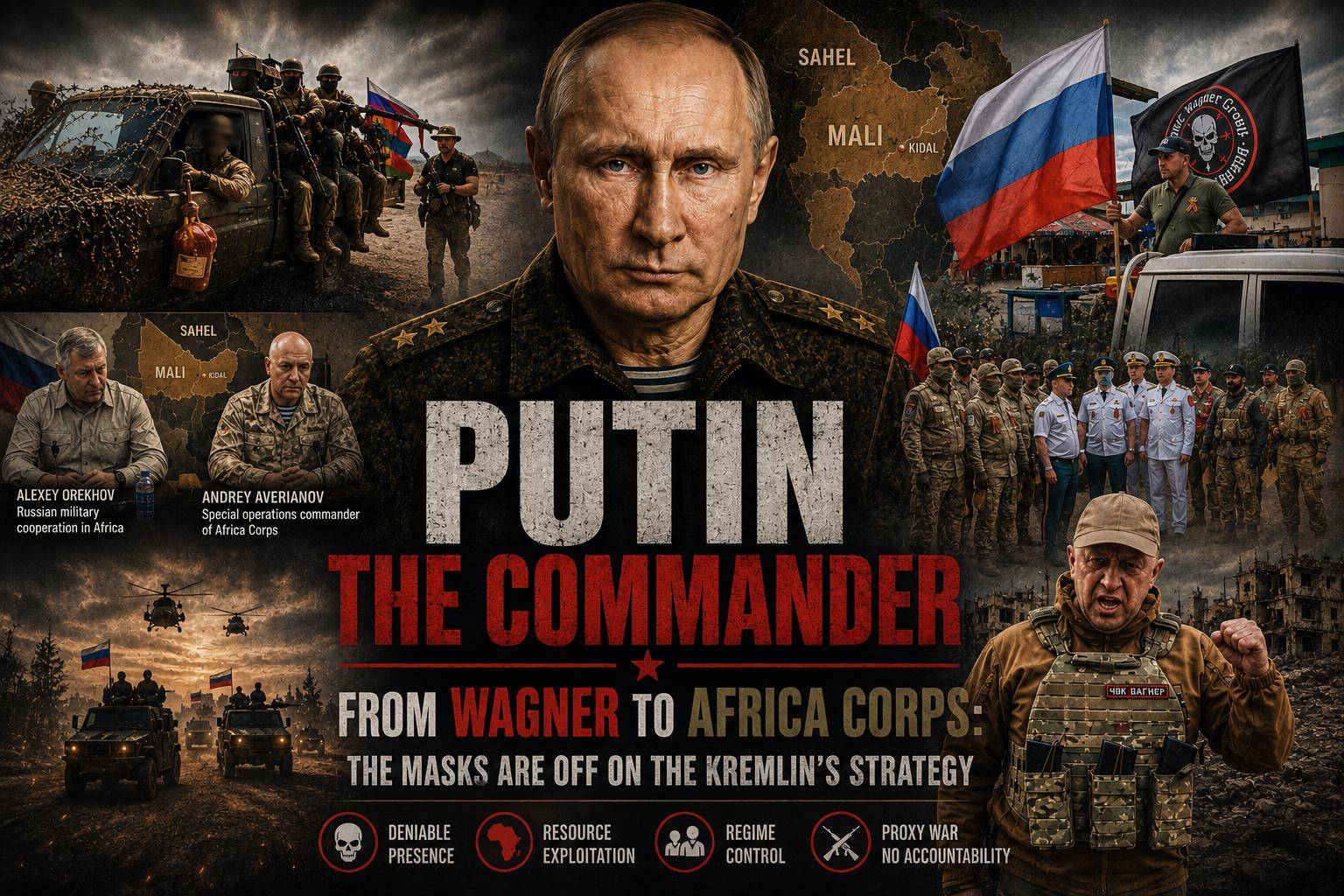
The once-unstoppable expansion of Russian influence across Africa—fueled by mercenary deployments, disinformation campaigns, and anti-Western rhetoric—has ground to a halt. What began as a decade-long bid to reshape the continent’s geopolitical landscape now faces an irreversible decline, driven by unmet security promises, military stagnation, and mounting public discontent. The notion of a waning Russian imperialism in Africa is no longer speculative; it is an unfolding reality.
the broken promise of security
During the mid-2010s, as traditional powers like France began receding from parts of Africa, Russia seized the opportunity to position itself as a savior. From Bamako to Bangui, via Ouagadougou and Niamey, Moscow marketed a ready-made security solution: unconditional support through the Wagner Group (now rebranded as Africa Corps), free from the constraints of human rights considerations.
Yet the results have been catastrophic. In the Sahel, rather than stabilizing the region, Russia’s intervention has exacerbated instability. The myth of Russian military invincibility was shattered during the devastating battle of Tinzawatane near the Algerian border, where dozens of Russian mercenaries and Malian soldiers perished. Far from bringing peace, Moscow’s presence has merely reproduced the extractive dynamics of colonialism—exchanging military protection for control over mineral wealth, including gold, diamonds, and uranium. This blatant transactional approach is becoming increasingly visible to local populations, who recognize the shift from one foreign patron to another.
three pillars of Russia’s decline in africa
The erosion of Russian influence stems from three critical weaknesses in its strategy:
1. the ukrainian quagmire
The prolonged conflict in Ukraine has drained Russia’s resources, both financially and militarily. Elite troops and heavy weaponry, once deployed across Africa, are now diverted to sustain the war effort. Moscow’s ability to sustain its African ambitions has been severely compromised, leaving its partners in the lurch.
2. the absence of an economic model
Russia’s strengths lie in military might and narrative manipulation—not in economic development. With a GDP comparable to Spain’s, it cannot match the European Union’s development aid or China’s infrastructure investments. Once the initial political honeymoon fades, African juntas and governments realize that emergency wheat shipments and social media disinformation campaigns are no substitute for sustainable economic growth.
3. the rise of african nationalism
Russia’s appeal rested on the promise of a “second decolonization,” positioning itself as an alternative to Western dominance. However, Africa’s younger generations, empowered by digital connectivity and heightened awareness, reject any form of foreign tutelage—whether French or Russian. The replacement of one foreign flag with another is no longer seen as liberation but as a futile submission.
a shifting geopolitical landscape
The decline of Russian influence does not herald a return to Western dominance. Instead, a more balanced and pragmatic reconfiguration is underway. Key players such as China are quietly consolidating economic ties, prioritizing stability and contractual partnerships over military adventurism. Meanwhile, nations like Turkey and the United Arab Emirates are emerging as influential alternatives, offering advanced drones and financial investments without the geopolitical baggage of the Kremlin.
lessons from a failed imperial gamble
Russia’s African adventure—intense but short-lived—has underscored a fundamental truth: influence cannot be sustained through brute force and misinformation alone. For African leaders, the lesson is clear: security and development cannot be outsourced to foreign mercenaries, regardless of their origin. The fading of Russian dominance may mark the beginning of an Africa that seeks true partners, not masters.