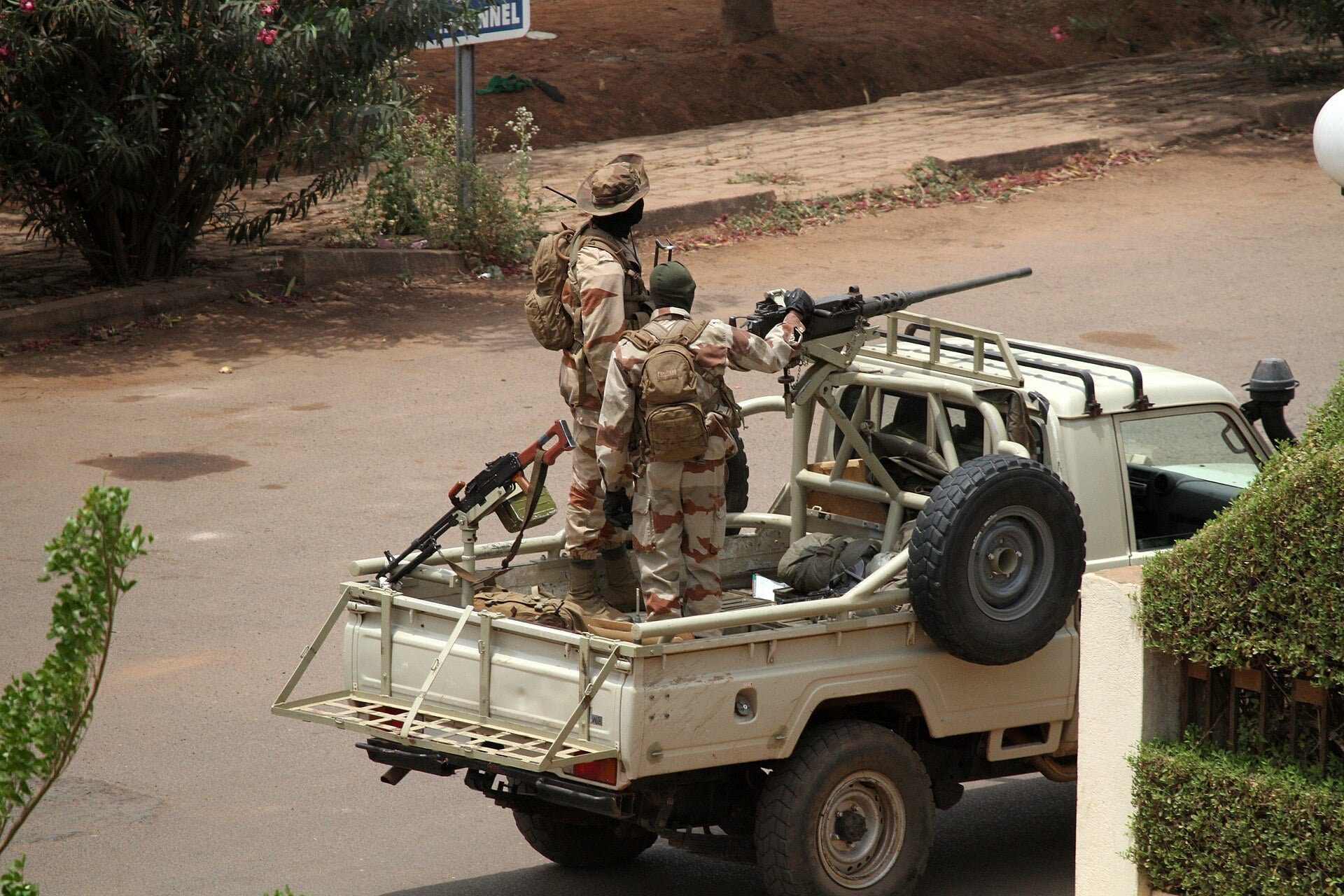
The synchronized assault carried out across Mali on April 25 marked more than just another chapter in the nation’s ongoing turmoil. It represented a pivotal shift in the region’s volatile landscape. Islamist extremists and Tuareg rebels launched simultaneous strikes on military outposts and civilian hubs, forcing Russian-backed government troops to abandon the critical northern stronghold of Kidal. Their expanded operational capacity now poses a direct threat to Bamako, raising urgent questions about the Sahel’s stability—and Algeria’s role in addressing it.
The Troubled Transition in Mali
To grasp how Mali reached this critical juncture, we must examine the strategic decisions made after the 2021 military takeover. Colonel Assimi Goita’s junta severed ties with France, evicted the UN’s MINUSMA peacekeeping force, and welcomed the Wagner Group—now operating under Russian state control—as its primary security partner. Western observers cautioned that this pivot would create a dangerous void in defense and governance. The junta dismissed these concerns as foreign interference, but the April offensive has proven their warnings tragically accurate.
The Wagner Group’s performance in Mali has fallen far short of expectations. Despite claims of being a decisive counter-insurgency force, their troops were expelled from Kidal, a city deeply tied to Tuareg history and resistance. Far from being crushed, the militants demonstrated remarkable adaptability, coordination, and resilience. The junta’s gamble—exchanging French military support and regional expertise for Russian firepower—has left Mali more vulnerable than ever.
An even more alarming development is the alliance between Islamist factions and Tuareg separatists. Historically at odds over control of northern Mali’s ungoverned territories, their current cooperation signals a shared assessment of the junta’s weakening position. Such a coalition suggests that the militants are confident in their ability to exploit Mali’s instability.
Algeria’s Strategic Dilemma
Few nations are as directly affected by Mali’s unraveling as Algeria. The two countries share a long, porous border that has long served as a transit route for weapons, drug trafficking, human migration, and militant recruitment. Algerian leaders know all too well that unresolved security crises do not respect national boundaries—they spill over, fester, and escalate.
The irony of Algeria’s current situation is striking. For years, Algiers positioned itself as the region’s key mediator, playing a central role in brokering the 2015 Algiers Peace Agreement between Bamako and Tuareg representatives. That accord collapsed in early 2024 when Goita formally withdrew from it—a move Algeria viewed as a deliberate provocation. Tensions worsened in March 2025 when Algerian forces intercepted a Malian drone near their shared frontier, prompting a sharp diplomatic rift with Mali and its allies in Burkina Faso and Niger, all aligned with the Russian-backed Alliance of Sahel States.
Algeria now faces a stark reality: it lacks the influence to dictate solutions in Mali, struggles to maintain dialogue with a hostile junta, and cannot afford to ignore the crisis unfolding at its doorstep. The prospect of armed groups establishing permanent footholds along its southern border poses an existential risk to Algerian national security.
While Algerian Foreign Minister Ahmed Attaf recently reaffirmed Algiers’ commitment to Mali’s territorial unity and condemned terrorism in no uncertain terms, such declarations cannot replace a collapsed diplomatic framework. Words alone cannot stabilize a region slipping into chaos.
America’s Absence and the Regional Power Vacuum
The Sahel’s crisis is also a story of American disengagement. Under pressure from governments aligned with Moscow, the United States significantly reduced its counter-terrorism presence in West Africa, leaving a void no other power has effectively filled. Russia has moved in through military contractors like Wagner, while Islamist groups have expanded their influence by providing rudimentary governance, imposing taxes, and recruiting in areas abandoned by the state.
The unfolding events in Mali serve as a stark warning to Washington. Military partnerships, intelligence cooperation, and sustained counter-terrorism efforts are not optional luxuries—they are the foundation of regional stability. Their absence does not leave a neutral space; it invites occupation.
Possible Futures for Mali and the Sahel
Three potential outcomes now loom over the horizon. The Malian junta could seek a negotiated settlement with Tuareg factions, halting further territorial losses but conceding significant control. Alternatively, it might escalate its military campaign, relying on Russian air and ground support to reclaim the north—though success is far from guaranteed. A third possibility is that the junta continues its pattern of tactical retreats, maintaining a facade of legitimacy while the conflict inches closer to Bamako itself.
For Algeria, each scenario carries grave implications. The Sahel’s collapse is no longer a distant crisis—it is unfolding along its own borders. The question now is whether Algiers can find a way to influence the outcome before the instability reaches its shores.