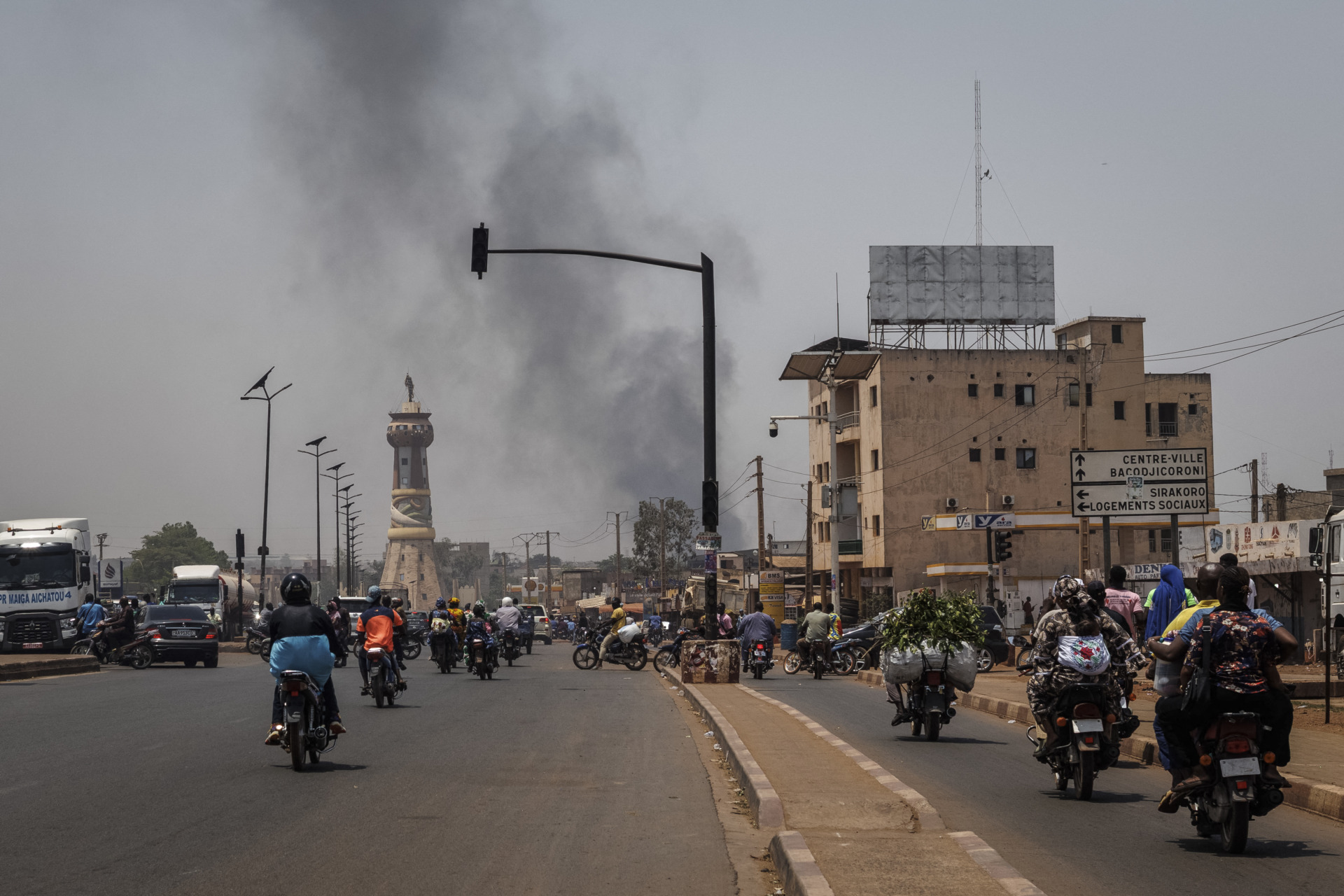
In the early hours of April 25, the relative peace of Kati, a military stronghold located just 15 kilometers from Mali’s capital, Bamako, was shattered by heavy gunfire and explosions. This marked the beginning of a coordinated nationwide assault launched by the jihadist coalition JNIM (Jama’at Nusrat al-Islam wal-Muslimin) and the Tuareg separatist group FLA (Front de Libération de l’Azawad). By the following day, the ruling military government confirmed that Defense Minister Sadio Camara had died from wounds sustained during a strike on his home. Rumors also circulated regarding the fate of Modibo Koné, the intelligence chief, with reports suggesting he was either killed or severely injured. Despite the chaos, the junta maintained that the situation was under control, highlighting a deep disconnect between state rhetoric and the violent reality on the ground.
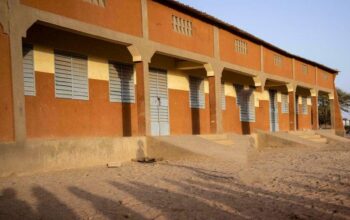
This surge in violence represents the most significant threat to Assimi Goïta’s leadership since the 2020 coup. The military regime was already struggling under a month-long blockade by JNIM, which has targeted over 130 fuel tankers and cut off vital supply lines from Côte d’Ivoire and Sénégal. This economic strangulation has led to widespread fuel shortages and the closure of schools across Mali. While the government denied swapping over 100 jihadist prisoners for a brief truce to allow fuel convoys through, the ongoing instability proves that the insurgency’s power extends far beyond traditional combat.
A historical echo of the 2012 alliance
The current partnership between jihadists and separatists mirrors the events of 2012, when a similar coalition overwhelmed the Malian military in the north. At that time, Tuareg fighters returning from Libya with advanced weaponry joined forces with al-Qaeda in the Islamic Maghreb (AQIM) and Ansar Dine. While their initial goal was to establish an independent state or an Islamic emirate, the alliance eventually collapsed due to internal friction. Today’s cooperation between JNIM and the FLA appears to be a tactical arrangement rather than a permanent merger, aimed at demonstrating the Malian state’s inability to defend its own territory. For JNIM, the strategy is one of attrition, intended to drain the junta’s resources until the government fails from within.
The late Sadio Camara was a pivotal figure in Mali’s pivot toward Russia, facilitating the arrival of the Wagner Group in 2021. This move led to the departure of French forces in 2022 and the end of the United Nations peacekeeping mission in 2023. However, following the death of Yevgeny Prigozhin, the Russian presence was rebranded as Africa Corps and placed under the formal control of the Russian Ministry of Defense. This shift has changed the mission from active combat to a more passive training and advisory role, which has noticeably decreased operational effectiveness. Data shows a significant drop in engagements involving Russian personnel as resources are diverted to the conflict in Ukraine.
The fallout from Kidal and regional instability
The recent loss of Kidal serves as a metaphor for the failing security model adopted by the Alliance of Sahel States (AES). After Malian and Wagner forces captured the city in late 2023, it was hailed as a victory for the new pro-Russian strategy. However, following the April 25 attacks, Africa Corps forces withdrew from the city, surrendering the territory without a fight. The AES juntas in Mali, Burkina Faso, and Niger all rose to power by promising better security than their Western-allied predecessors, yet the region is now arguably more dangerous than ever.
Assimi Goïta’s grip on power is increasingly fragile. The death of Camara removes a potential rival but leaves a massive void in the security hierarchy. In mid-2025, the junta dissolved political parties and granted Goïta a five-year extension on his presidency, pushing his term to 2030. However, internal dissent is growing; a failed coup in August led to the arrest of several high-ranking officers. The recent intelligence failures and the successful insurgent offensive may further provoke a palace coup or a mutiny among junior officers who feel the Russian partnership is no longer providing the promised protection.
The shifting role of the United States in the Sahel
For years, Mali was a focal point for American counterterrorism efforts until the coups triggered a suspension of aid under Section 7008 of U.S. law. Recently, however, there have been signs of a policy shift. The Treasury Department has lifted sanctions on several Malian officials, and discussions have reportedly begun regarding intelligence-sharing and surveillance drone access. In exchange, the United States may be seeking access to Mali’s rich deposits of gold and lithium.
This potential “minerals-for-security” deal could follow the model recently established in the Democratic Republic of the Congo (DRC), which involves private security firms and economic cooperation. As the Russian-backed strategy falters, the United States may find new leverage to bring Sahelian governments back into its sphere of influence. The current crisis in Mali underscores that the junta’s isolationist and pro-Russian path has not only failed to stop the insurgency but has left the state more vulnerable to JNIM’s expanding toolkit, which now includes drone technology and sophisticated economic sabotage.
A test for the junta model
Mali’s struggles are being closely watched by its neighbors. As Russia’s first major partner in the Sahel, the failure of the Malian junta to maintain security reflects poorly on Moscow’s credibility as a reliable partner. Other nations, such as the Central African Republic and Madagascar, which have sought Russian assistance for regime protection, may now be reconsidering their choices. With the recent collapse of the Assad regime in Syria and other global setbacks for Russia, the events in Mali suggest that Moscow’s security guarantees are increasingly hollow when faced with sustained insurgent pressure.