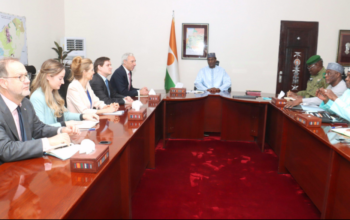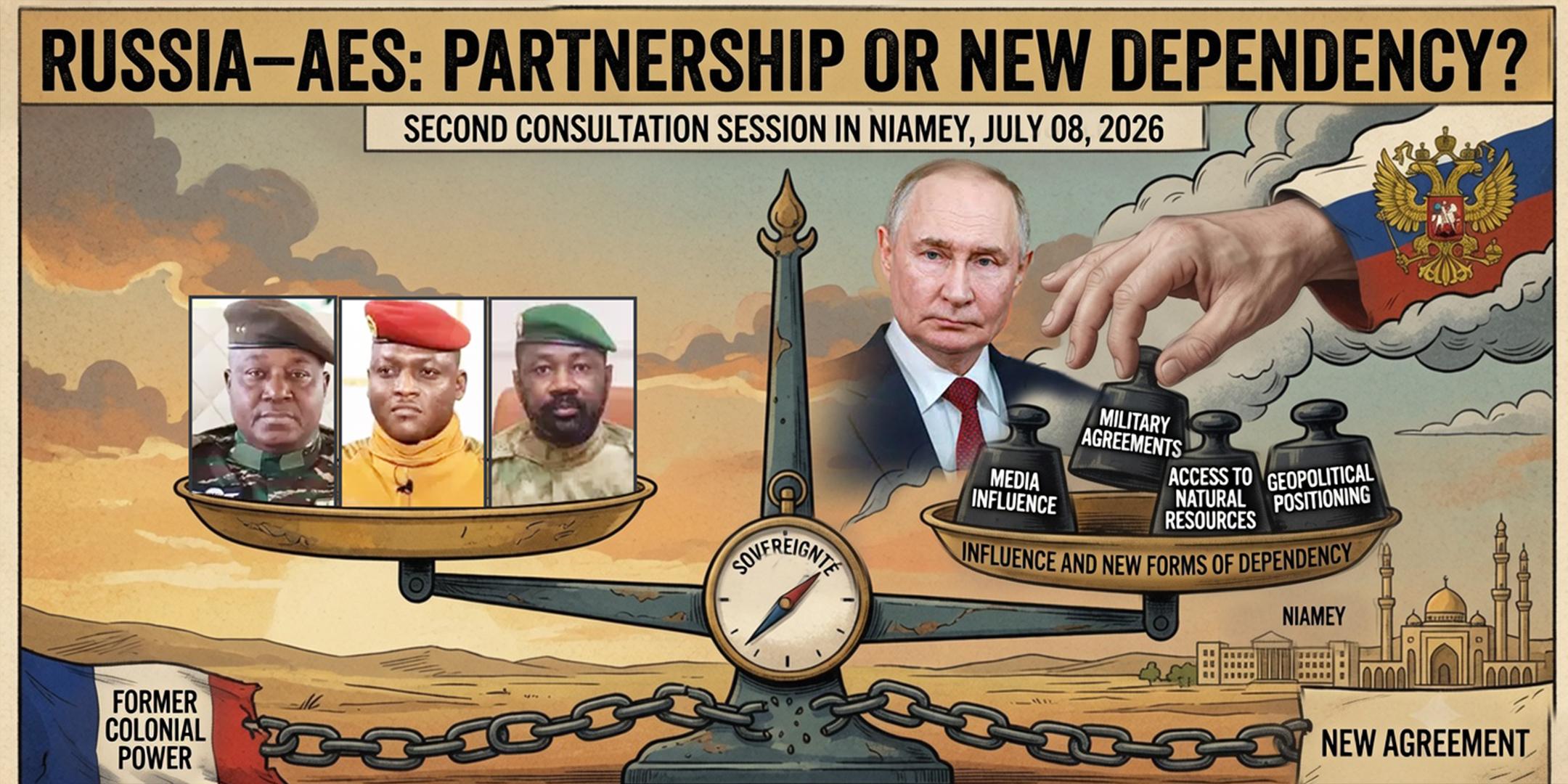
The second session of consultations between foreign ministers of the Alliance of Sahel States (AES) and Russian counterpart Sergey Lavrov, held in Niamey on July 8, 2026, has been framed by authorities as a landmark step toward fostering a partnership rooted in sovereignty and mutual respect. Yet beneath the formal declarations, a critical question emerges: could this alignment, however voluntary, lay the groundwork for a fresh form of dependency—this time toward Moscow?
For years, the AES leadership has criticized the lingering influence of former colonial powers, particularly France, in the name of national sovereignty. However, swapping one foreign power for another does not inherently guarantee greater autonomy. Historical precedents suggest that state relations are frequently shaped by geopolitical, economic, and strategic interests rather than idealistic commitments.
Russia’s footprint in the Sahel continues to expand through military cooperation, diplomatic accords, economic exchanges, and cultural outreach. While AES governments present this diversification of partnerships as an act of sovereign choice, critics question the long-term implications: at what point does deepening influence risk creating a new dependency?
Major powers rarely engage in regions without expecting tangible returns. Whether securing access to natural resources, expanding diplomatic leverage, or securing strategic positioning in Africa, each partnership serves national objectives. Russia’s approach in the Sahel is no exception to this pattern.
This evolving dynamic also raises political concerns. Over-reliance on a single power may constrain a nation’s diplomatic flexibility, shrink its room for maneuver in global alliances, and expose it to broader geopolitical tensions. In a world where great power rivalry intensifies, the Sahel could find itself reduced to a battleground for competing interests rather than a region capable of independent action.
Sovereignty is not merely about selecting a new ally—it is measured by a state’s ability to preserve decision-making independence, nurture balanced partnerships, and advance its interests without defaulting to rigid alignment. The AES authorities insist that the partnership with Russia is “mutually beneficial.” Yet, the true test lies in tangible outcomes: enduring security improvements, economic growth, job creation, skills transfer, and institutional strengthening. Without measurable progress in these areas, declarations of sovereignty risk sounding more like political rhetoric than lived reality for citizens.
The path forward will reveal whether this cooperation genuinely empowers Sahel nations to enhance their autonomy or merely shifts their sphere of influence from one power to another. To many observers, the essence of true independence lies not in changing dominant partners but in building a diplomacy capable of engaging with all actors without falling into dependency on any single one.