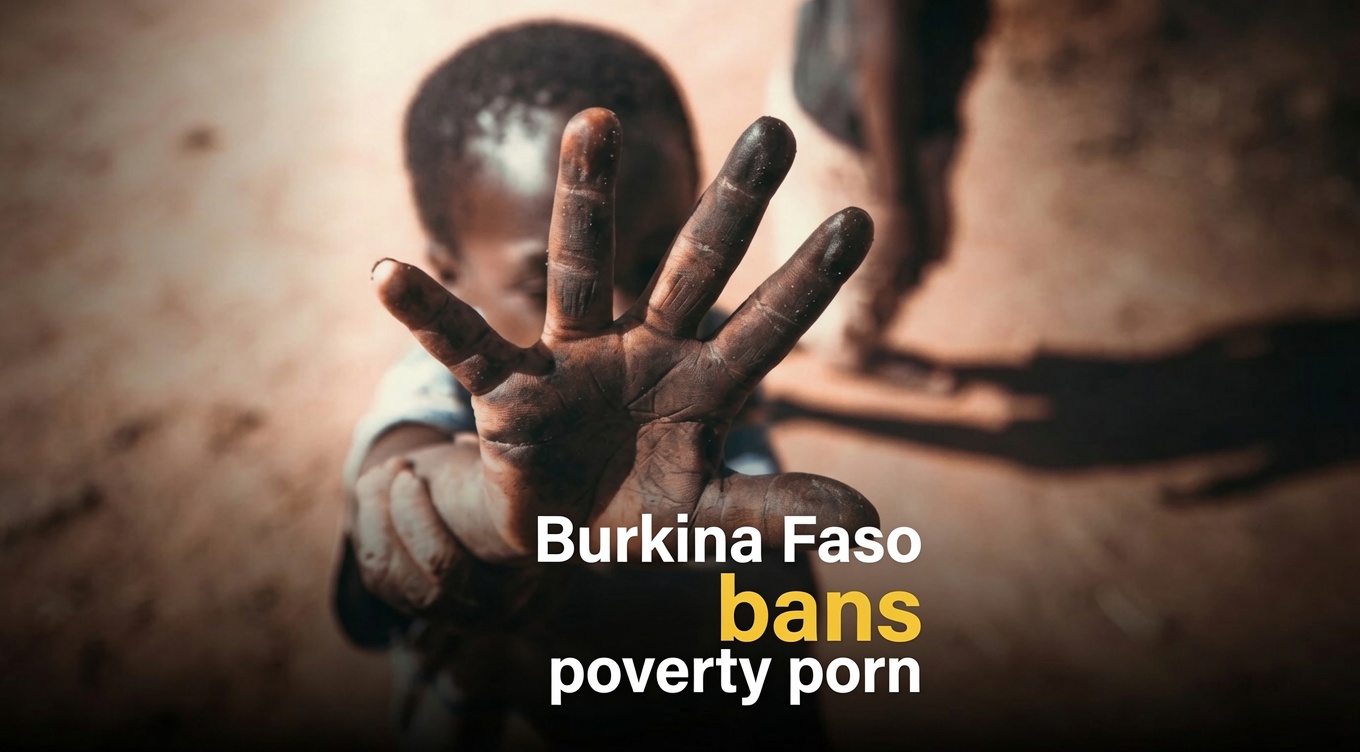
The Government of Burkina Faso has enacted sweeping legislation to prohibit the practice known as poverty porn, a term used to describe the deliberate exploitation of human suffering for public consumption or financial gain. This decisive move challenges long-standing norms among content creators and humanitarian groups, while reigniting essential discussions about the preservation of human dignity in the age of digital media.
Ethical concerns drive legislative action
The rapid proliferation of social media platforms has turned human hardship into a commodity, often traded for likes, shares, or donations. Common tactics involve close-up depictions of malnourished children, internally displaced families, or communities ravaged by conflict. Although proponents argue that such imagery serves to mobilize support or raise awareness, the approach raises profound ethical concerns. By reducing individuals to passive symbols of pity, these portrayals strip them of their agency and privacy, undermining their fundamental right to dignity.
National image and security under scrutiny
This legislative ban is not merely an ethical statement; it reflects broader strategic considerations. Burkina Faso is currently navigating a multifaceted crisis, and the international circulation of images depicting the nation solely through the lens of suffering risks reinforcing harmful stereotypes. According to government authorities, such portrayals not only disrespect affected individuals but also distort the nation’s global image, often manipulated by external actors. By regulating the dissemination of distressing content, the authorities aim to reclaim control over Burkina Faso’s narrative, emphasizing resilience rather than helplessness.
Critics warn of hidden agendas
Opposition voices and civil society members caution that this prohibition may serve purposes beyond ethical reform. They argue that the restriction could be used as a tool to suppress the visibility of genuine humanitarian crises under the guise of protecting dignity. Despite the law’s stated intentions, the reality on the ground remains dire: millions displaced by insecurity, communities under blockade with limited access to food and medical care, and a population enduring persistent hardship. Detractors view the legislation as a deliberate veil to conceal the true magnitude of the crisis, ensuring that the image of a stable and resilient transition remains unchallenged.
Toward a more dignified humanitarian storytelling
With this new legal framework in place, humanitarian organizations and content creators face an urgent imperative to rethink their communication strategies. The challenge lies in balancing the need to raise awareness and mobilize support without resorting to sensationalism or violating the new regulations. Experts advocate for a shift toward solution-oriented narratives and courageous field journalism. By highlighting stories of resilience, collective action, and local initiatives, communicators can preserve the gravity of the situation while restoring dignity to those affected. This approach ensures that Burkina Faso’s challenges are acknowledged without reducing its people to mere victims of circumstance.