The Sahel is grappling with a deepening crisis, and the Mali’s recent turmoil has sent shockwaves across West Africa. Despite the formation of the Alliance of Sahel States (AES)—comprising Mali, Burkina Faso, and Niger—and the withdrawal of Mali from the Economic Community of West African States (ECOWAS), regional allies appear paralyzed by political calculations and diplomatic inertia. The result? A glaring void in collective security strategy, leaving nations to navigate the crisis in isolation.
the malian crisis: resilience amid chaos
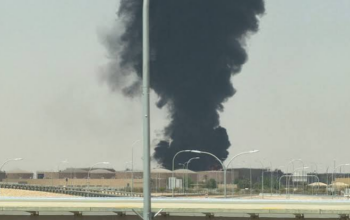
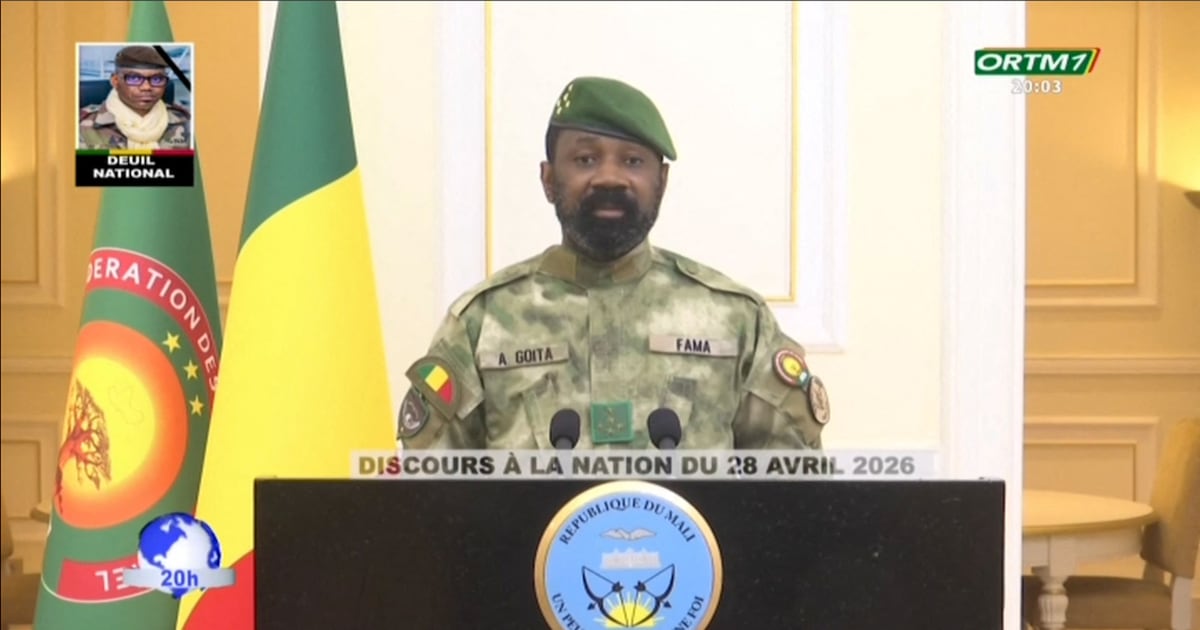
Following the 25 April attacks, particularly the high-profile strike in Kati that claimed the life of Defense Minister Sadio Camara, the situation in Mali remains precarious. While rumors of a regime change swirl, there’s little evidence to suggest Bamako is on the brink of collapse. The Malian people, long accustomed to instability, continue to demonstrate remarkable resilience. Even amid conflicting statements from military authorities, the National Movement for the Liberation of Azawad (MNLA) and the Support Group for Islam and Muslims (GSIM), life persists—albeit under duress.
Bakary Sambe, Director of the Timbuktu Institute and researcher at Gaston Berger University in Saint-Louis, offers a nuanced perspective on the unfolding crisis, highlighting how these events are reshaping the region’s security dynamics.
AES alliance: potential vs. reality
Since its inception, the Alliance of Sahel States (AES) has been touted as a robust framework for collective defense, often compared to NATO’s mutual assistance principle. However, the harsh reality tells a different story. Both Burkina Faso and Niger, while theoretically committed to mutual aid under the Liptako-Gourma Charter, face overwhelming internal security threats. Burkina Faso, for instance, has prioritized its own struggle against insurgencies, as seen in recent attacks that have left soldiers dead and infrastructure in ruins.
The Niger government’s recent declaration of a national fasting and prayer day against terrorism underscores the gravity of the situation. Despite the alliance’s legal foundations, strategic maturity remains elusive. Mutualizing forces and resources—a core tenet of the AES—has yet to materialize, leaving the bloc’s potential untapped.
The Malian crisis lays bare the fragility of regional alliances in the Sahel.
ECOWAS’s delicate balancing act
ECOWAS, now sidelined after Mali’s withdrawal, is attempting to reassert its influence with a renewed diplomatic push. A landmark meeting in Lomé, Togo, brought together representatives from the AES, ECOWAS, the African Union, France, the European Union, and Russia. The goal? To foster dialogue and rebuild trust while respecting the sovereignty of Sahel states.
Abdoulaye Diop, Mali’s Foreign Minister, emphasized that the doors remain open for constructive engagement, signaling a potential thaw in relations. Yet, the road to reconciliation is fraught with challenges, particularly as ECOWAS seeks to distance itself from its past militarized interventions, such as in Niger.
the african union’s continental approach
The African Union has called for strengthened continental mechanisms to curb escalating insecurity in the central Sahel. However, the dissolution of the G5 Sahel in 2023—a coalition once central to counterterrorism efforts—has left a void. While ECOWAS plans to deploy a 1,650-strong counterterrorism brigade by late 2026, broader peacekeeping missions remain uncertain.
The stark truth? Extracting the central Sahel from West Africa in hopes of combating armed groups is a flawed strategy. True security hinges on joint intelligence-sharing, resource pooling, and collaborative action. The 25 April attacks have reignited the urgency of this approach, even in its most minimal form.
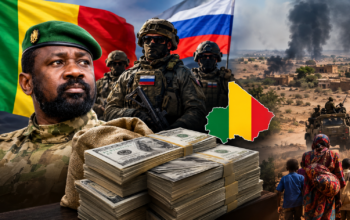
Russia’s Sahel strategy has collapsed—not just militarily, but symbolically.
Washington’s renewed interest in the Sahel
Amid shifting geopolitical winds, the United States has quietly re-engaged with the Sahel, dispatching high-level diplomats even to Niger, where American troops were previously expelled. The stakes have changed: with Russia’s influence waning—evidenced by the death of Sadio Camara and the withdrawal of Africa Corps paramilitaries from Kidal—Washington sees an opportunity to counter Moscow’s retreat.
The symbolic collapse of Russia’s Sahel strategy extends beyond military failures. It dismantles the myth of Moscow as a reliable protector of regimes in the region, potentially reshaping the geopolitical landscape. For Washington, this presents a chance to deepen its footprint, leveraging strategic resources and diplomatic leverage in Mali and beyond.
regional spillover: who’s next?
While coastal nations like Togo, Benin, Ghana, and Côte d’Ivoire watch the Burkina Faso crisis with trepidation, the immediate threat may lie closer to home. Senegal and Mauritania are particularly vulnerable if Mali’s instability worsens. The fear of a Sahel domino effect looms large, as is the uncertainty surrounding the AES’s long-term viability.
Togo’s Foreign Minister, Robert Dussey, has proposed a new “bridge to the Sahel”, though its tangible outcomes remain to be seen. Meanwhile, the region’s populations demand concrete solutions—not rhetoric.
The Sahel cannot be severed from West Africa.
the risk of contagion: is Burkina Faso next?
While the 25 April attacks in Mali were unprecedented, their replication elsewhere is not a foregone conclusion. The MNLA does not operate in Burkina Faso, and the crisis in Mali stems from a unique convergence of northern security vacuums and political turmoil in Bamako. Paradoxically, these attacks may bolster the Malian junta’s legitimacy, rallying public support around the military and national unity.
In Burkina Faso, despite vast swathes of territory slipping beyond government control, there’s no sign of a powerful protest movement capable of aligning with jihadist groups like the GSIM. The risk of a Sahel domino effect remains, but for now, the region’s future hinges on its ability to foster genuine cooperation—beyond paper alliances and symbolic gestures.