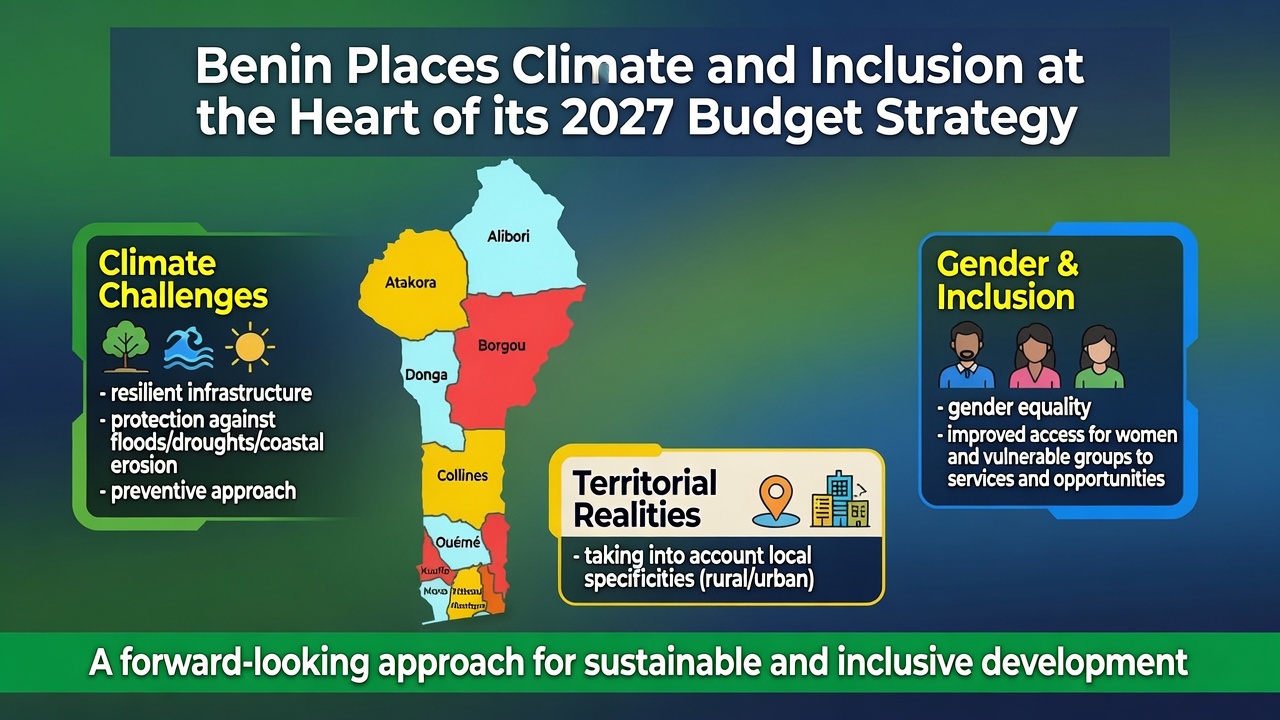
Benin is advancing its public policy modernization with a forward-looking budget framework for 2027. The government’s inaugural seven-year plan places climate resilience, gender equality, and regional development at the core of fiscal planning. This strategic shift transforms budgeting from a routine administrative task into a proactive instrument for sustainable growth and crisis preparedness.
From reactive measures to proactive resilience
In an era defined by intensifying climate extremes, natural resource strain, and persistent social inequalities, Benin is adopting a preventive approach. The 2027 budget framework embeds climate risk assessment into fiscal decisions, ensuring that public investments prioritize resilient infrastructure, protect vulnerable populations, and mitigate the impacts of floods, droughts, and coastal erosion. This forward-thinking strategy not only enhances governance by reducing future economic and humanitarian costs but also aligns with global best practices in sustainable development.
Inclusive development through gender-responsive budgeting
The government’s commitment to gender equality marks a significant milestone in public finance. By acknowledging that economic policies affect women, men, and marginalized groups differently, the budget framework ensures equitable resource allocation. This approach strengthens access to essential services, economic opportunities, and social protection for women, youth, and underserved communities, fostering a more inclusive development model.
Local realities shape national priorities
Benin’s new budget strategy also emphasizes territorial inclusivity, recognizing that urban and rural areas face distinct challenges. By integrating local needs into fiscal planning, the government enhances the effectiveness of public spending and ensures that national policies reflect the lived experiences of its citizens. This localized approach bridges gaps between policy and implementation, driving more meaningful and sustainable outcomes.
A strategic tool for long-term transformation
The 2027 budget framework transcends traditional fiscal management, positioning itself as a strategic roadmap for Benin’s future. By aligning financial resources with climate, social, and territorial priorities, the government is laying the groundwork for a resilient, inclusive, and adaptive economy. This visionary approach not only strengthens the country’s credibility with international partners but also signals Benin’s readiness to attract climate finance and sustainable investment.
The government’s proactive stance demonstrates a clear departure from crisis response toward long-term resilience. By embedding climate adaptation, gender equity, and regional development into budgetary planning, Benin is setting a new standard for modern governance—one that prioritizes anticipation, efficiency, and fairness in public finance.