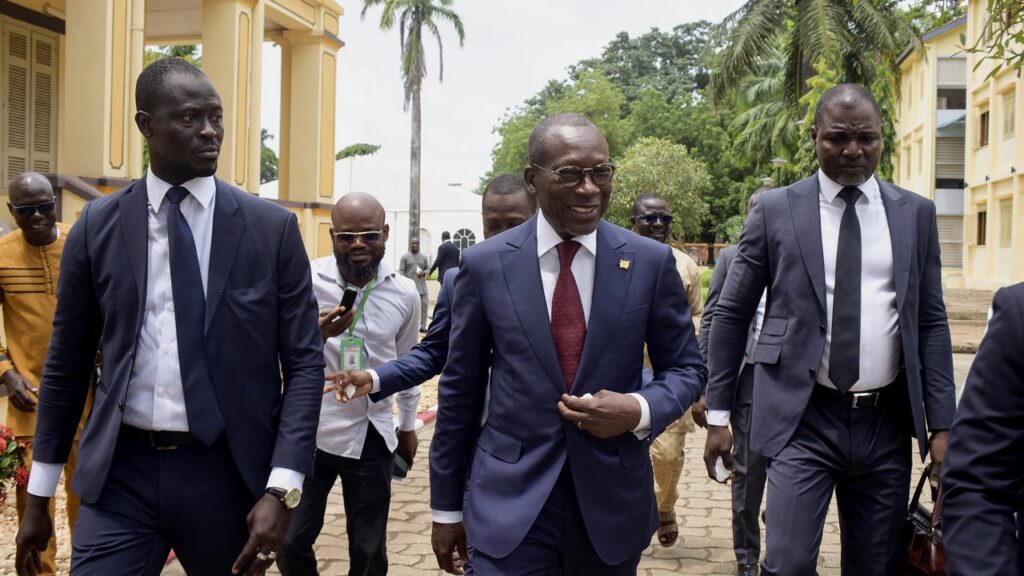

On July 30, 2026, the newly formed Bénin Senate convened in Porto-Novo for its inaugural session, marking a historic moment in the country’s political landscape. Patrice Talon, the former president of Bénin, was elected unopposed as the first president of the Senate, solidifying his influential role in the nation’s governance.
The session, held at the National Assembly, drew significant attention as it represented the first time Bénin’s Senate exercised its constitutional powers. The inauguration ceremony was attended by key political figures, including members of the ruling party and opposition representatives, underscoring the event’s bipartisan importance.
Patrice talon’s political journey and senate presidency
Patrice Talon’s election to the Senate presidency comes at a pivotal time in Bénin’s political evolution. After serving as president from 2016 to 2021, Talon has remained a prominent figure in the country’s political arena. His election to lead the Senate reflects both his enduring influence and the trust placed in him by his peers.
The Senate presidency is a critical position in Bénin’s bicameral parliament, tasked with overseeing legislative processes and ensuring the smooth functioning of the upper house. Talon’s leadership is expected to bring stability and continuity to the newly established institution.
During his presidency, Talon implemented significant reforms aimed at modernizing Bénin’s economy and governance structures. His policies focused on reducing corruption, enhancing transparency, and fostering economic growth, leaving a lasting impact on the nation’s development trajectory.
Key figures and political dynamics in the senate
The inauguration of the Senate highlighted the presence of several influential political figures. Among them were Romuald Wadagni, a respected economist and former finance minister, and Thomas Boni Yayi, the former president who succeeded Talon in 2021.
These leaders, along with other senators, are expected to play pivotal roles in shaping Bénin’s legislative agenda in the coming years. Their collective experience and expertise will be instrumental in addressing the country’s most pressing challenges, from economic recovery to social development.
The Senate’s formation is part of broader efforts to strengthen Bénin’s democratic institutions and enhance its governance framework. The new legislative body is poised to work alongside the National Assembly to draft and pass laws that align with the country’s developmental goals.
Looking ahead: Bénin’s political future
The election of Patrice Talon as Senate president signals a new chapter in Bénin’s political narrative. As the Senate begins its work, all eyes will be on its ability to foster collaboration across party lines and drive meaningful legislative progress.
With Talon at the helm, the Senate is expected to prioritize initiatives that promote national unity, economic resilience, and social welfare. The coming months will be crucial in determining how effectively the new institution can address the aspirations of the Béninois people.
You may also like
Will the UK’s new transit visa rules isolate Senegal from its key global routes?
Will the AES ever launch its own currency? The question Traoré keeps leaving unanswered
Can Ibrahim Traoré’s 300 armored vehicles claim survive scrutiny? Inside Faso Armored’s made-in-Burkina Faso gamble
Can Washington force third-country deportations? Ivory Coast’s refusal raises the stakes
Will Benin’s AEO exporters finally crack the Chinese market?