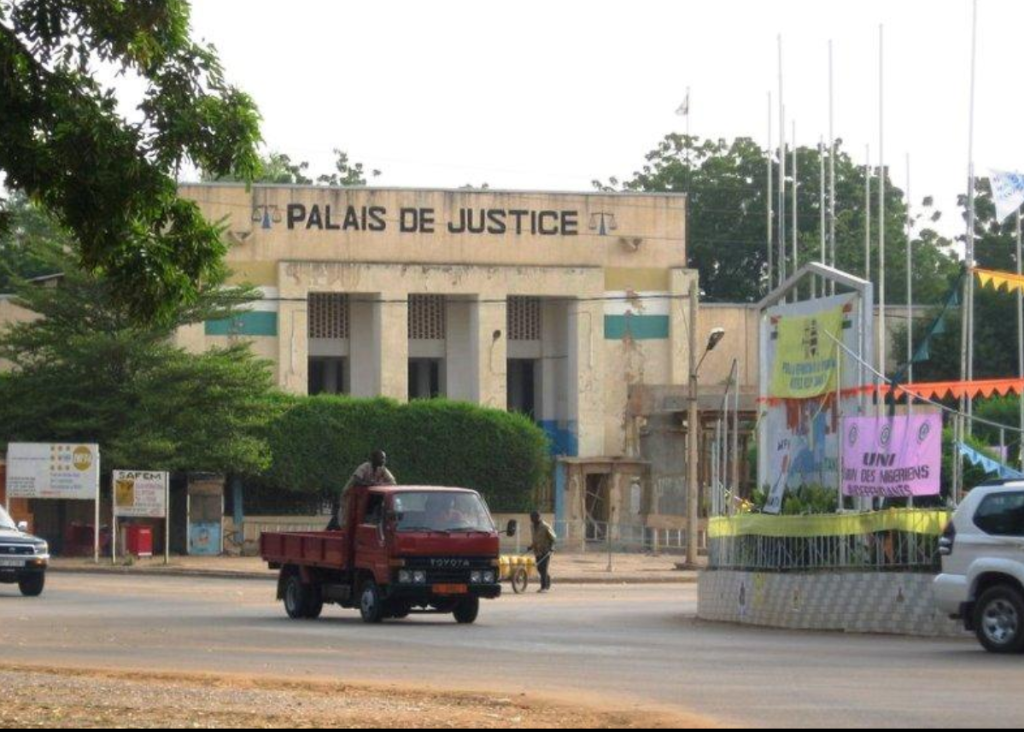
The highest court in Niger finds itself at the center of a simmering controversy, as the unexpected decision to extend the tenure of three top magistrates beyond retirement age has ignited a firestorm among judicial peers. While some colleagues are gently ushered into retirement, others appear to receive preferential treatment—fueling debates over fairness, transparency, and the true motivations behind these behind-the-scenes maneuvers.
The hidden costs of unequal career decisions at the heart of Niger’s top court
Within the walls of Niger’s Cour d’État, whispers of discontent have grown louder. The decision to retain three senior officials—Abdou Dan Galadima (President), Hassan Hodi (Vice-President), and Yaou Aboubacar (Administrative Chamber President)—has provoked sharp criticism from their fellow magistrates. Hodi and Aboubacar have already benefited from two-year extensions, a move that has left many colleagues baffled.
Among the most vocal critics are those who, despite their years of service and expertise, are being compelled to retire without comparable consideration. The underlying frustration stems from a perceived imbalance in the evaluation of merit and contribution.
“Why do some get extended careers while others are pushed out?” asked one senior judge, speaking on condition of anonymity. “The system should reward competence, not favor a select few.”
Cracks in the judicial foundation: institutional cohesion under strain
The ripple effects of this controversy extend far beyond individual careers. Many within the court fear that unequal treatment risks eroding internal trust, demoralizing the judiciary, and undermining the institution’s authority. The Cour d’État, already a pillar of Niger’s justice system, now faces growing skepticism about its fairness.
A former judicial administrator, now retired, observed, “When the rules aren’t applied consistently, morale plummets. And morale is the backbone of any credible justice system.”
Political interference or legitimate extension: unraveling the motives
The controversy has also reignited concerns about the court’s independence in Niger’s evolving political landscape. Critics argue that the retention of certain magistrates may serve a broader agenda—one that prioritizes alignment with political interests over judicial impartiality.
Suspicions have targeted officials like Justice Minister Alio Daouda, whose name has surfaced in discussions about potential efforts to align the judiciary with government preferences. While no definitive evidence has emerged, the perception alone raises troubling questions: Is the Cour d’État being used as a tool to advance political goals?
Transparency and trust: the stakes for Niger’s judiciary
The Cour d’État plays a pivotal role in Niger’s legal framework. Its credibility hinges on transparency, fairness, and adherence to the law. Yet, when career extensions are granted without clear, objective justification, doubts flourish. Is favoritism at play, or are there unseen administrative or legal factors justifying these decisions?
Without clear answers, the risk is real: a judiciary perceived as unequal risks losing both its moral authority and public trust.
“Justice cannot claim to uphold equality before the law if, within its own ranks, the principles of fairness and merit are selectively applied,” noted a legal scholar. The stakes extend beyond a few magistrates—they touch the very foundation of Niger’s judicial system and the faith citizens place in it.
Looking ahead: what’s next for Niger’s top court?
As the debate intensifies, calls for clarity grow louder. Will the Cour d’État address the concerns raised by its members? Will reforms be introduced to ensure consistent, transparent decision-making? The answers could determine whether this controversy remains a temporary dissonance—or a lasting fracture in the nation’s judicial fabric.