Underneath the blunt force of Nigeria’s latest fuel emergency measures lies a deeper logistical dilemma that few are willing to confront. The triple-decree issued jointly by the ministries of interior, petroleum and trade now forces almost every service station to close between 9 p.m. and 6 a.m. and bans jerry-can sales across any town with its own pump. Officially, the night curfew is meant to clear highways for SONIDEP tanker convoys and accelerate off-loading at depots. Reality, however, tells a different story.
The silent bottleneck created by dawn-to-dusk closures
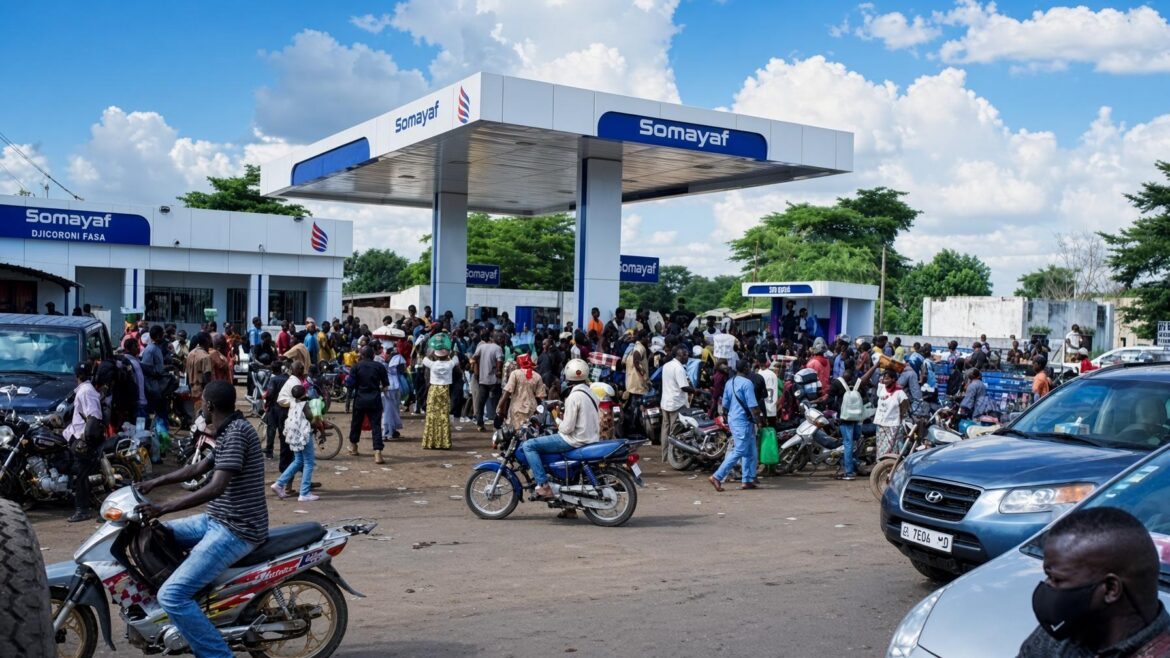
When the clock strikes nine each evening, hundreds of kilometres of asphalt suddenly lose legal access to fuel. Drivers who spent the day waiting in lines now face a second scramble at sunrise, when stations reopen to a captive crowd. The government has promised to designate 24-hour pumps in every municipality, yet no clear allocation model or capacity buffer has been published. Early reports already show queues stretching past 200 vehicles before noon, with tempers rising and temperatures higher.
Beyond the inconvenience, the measure shifts congestion instead of easing it. By slicing six hours off daily operational windows, the authorities inadvertently engineer the very traffic jams they claim to prevent.
Jerry-can clampdown: punishing buyers instead of fixing supply
Businesses and households have long depended on plastic jerry cans and small containers to keep engines running when official pumps run dry. Overnight, the new ban labels every such transaction illegal in any community served by a service station. The stated goal—crushing informal resale and speculative hoarding—sounds straightforward. Yet it sidesteps the fact that informal distribution exists only because the formal chain fails to deliver consistently.
The government has quietly authorised security forces to raid roadside sellers and confiscate containers. No parallel commitment has been made to increase refined-product volumes at refineries, expand pipeline capacity or guarantee weekly truck rotations. Until those structural gaps close, the ban simply replaces one scarcity with another.
Who really pays the price of half-measure solutions?
Behind the rhetoric of “civic discipline” and “responsible behaviour” is an unspoken admission: ni the fuel network nor the stockpiles are ready. Rather than address pipeline bottlenecks, refining inefficiencies or cross-border transport risks, the authorities have chosen the path of least political friction—shifting responsibility onto motorists and micro-traders while hoping the crisis abates on its own.
Without transparent data on weekly SONIDEP off-loads, publicly verifiable import schedules or an independent audit of depot storage levels, citizens have no way to judge whether the night curfew is a genuine logistical tactic or merely a distraction from deeper failures. Until the root causes of the supply chain gap are exposed and repaired, Niger’s drivers will keep trading nighttime sleep for daytime queues—and the jerry-can ban will only deepen the hardship.