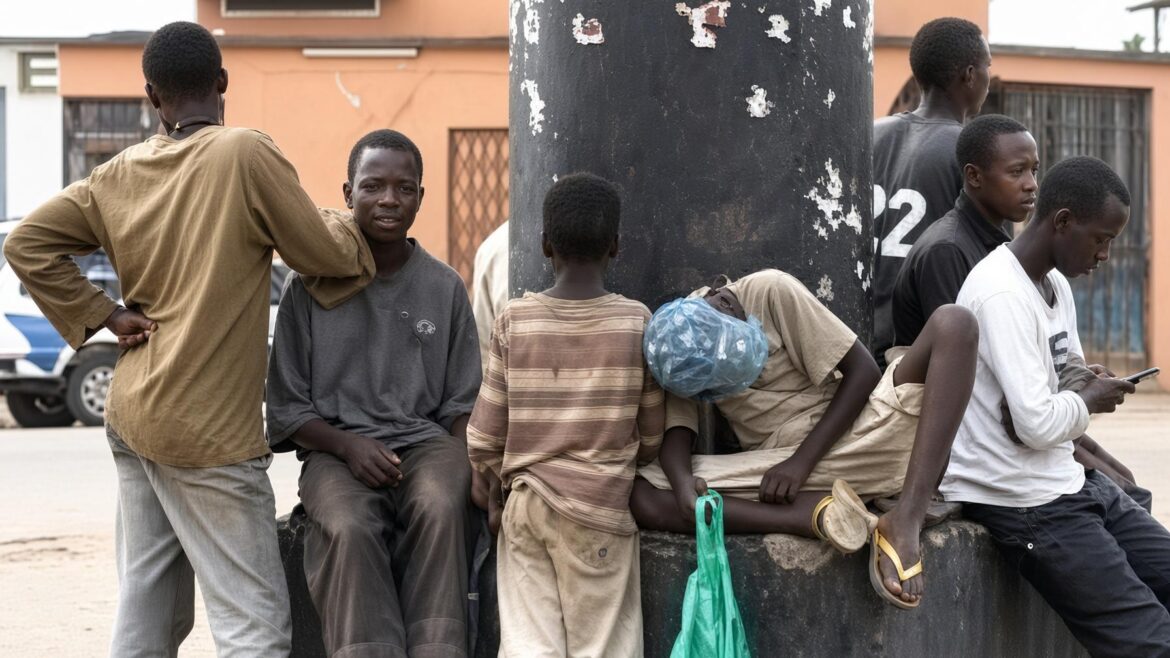
In the heart of Bamako, an alarming reality plays out daily at its busiest intersections and public squares. Thousands of children, disabled individuals, and elderly citizens beg for survival, their pleas met with indifference. Despite repeated pledges from transitional authorities and public awareness campaigns, Mali’s fight against street begging has yielded negligible results. This growing crisis lays bare the deep-rooted structural failures of a governance system in freefall.
The invisible epidemic reshaping urban life in Bamako
At every traffic light and in front of government buildings and mosques, the scene is the same: desperate hands stretch out from the chaos of the city. Many of these beggars are talibés—young students of informal Quranic schools—or unaccompanied minors, sent into the streets by unscrupulous religious instructors. The risks are severe: children dart between moving vehicles, risking accidents while their exploiters remain unseen. Yet, despite state promises to remove minors from the streets and strengthen social support systems, the situation continues to worsen.
Rare government-led rescue or sensitization operations—spearheaded by the Ministry of Women, Children, and Family Welfare—fade into irrelevance almost immediately. Without permanent shelters, adequate financial resources, or meaningful follow-up, those intercepted are often dumped back into the streets within hours. The system’s collapse is not just operational; it’s existential.
The rot beneath the surface: how poor governance fuels the crisis
The surge in street begging isn’t merely the result of poverty—it’s the direct consequence of years of state neglect and economic decay. Four critical pillars of governance failure underpin this humanitarian disaster:
- Collapse of essential social services: Chronic underfunding in education and social protection has left families vulnerable across Mali. Without access to free, quality schooling, impoverished parents have no choice but to surrender their children to a life of desperation on the streets. The education system’s failure is both a cause and an effect of systemic fragility.
- Unregulated traditional education: Informal Quranic schools operate in a legal and ethical grey zone. Exploitative practices—such as forcing children to beg to meet daily quotas—are widely tolerated under the guise of religious tradition. Authorities hesitate to intervene, citing cultural sensibilities, but this inaction only protects abusers and fuels the cycle of exploitation.
- Misallocation of public funds: While Mali’s budget prioritizes security spending and institutional operations, allocations for human development remain shockingly low. The meager funds earmarked for poverty alleviation and child protection are frequently mismanaged, siphoned off, or inefficiently spent, leaving grassroots initiatives starved of resources.
- Systemic corruption and bureaucratic paralysis: Social programs, whether publicly or donor-funded, are plagued by opacity and inefficiency. Funds meant for vulnerable groups vanish into bureaucratic mazes, victims of embezzlement, administrative lethargy, or outright theft. Transparency is a myth, and accountability is nonexistent.
The dangerous link between unchecked begging and national instability
Street begging isn’t just an urban eyesore—it’s a ticking time bomb. Tens of thousands of abandoned children, illiterate and abused, are easy targets for recruitment by criminal networks and armed groups operating in the Sahel. This cycle of exploitation deepens social fractures and erodes trust in the state.
The government’s failure to act decisively reveals a broken social contract. Rather than confronting the crisis with actionable policies and transparent resource allocation, authorities rely on empty rhetoric and performative gestures. Without a radical overhaul of governance—one that prioritizes human dignity, enforces child protection laws, and invests in inclusive development—Mali’s youth will continue to wander the streets, condemned to a life of begging.