Behind the gridlocked streets and shuttered businesses of Niamey lies an unseen crisis—one that has quietly escalated from a logistical hiccup to a full-blown systemic collapse. The Nigerien capital, once a bustling hub of commerce and mobility, now operates in the shadow of desperation as fuel becomes rarer than currency itself. What began as a strain at the pumps has evolved into a silent emergency, exposing the fractures in the country’s energy infrastructure and the glaring absence of forward-thinking governance.
How Niger’s fuel shortage turned Niamey’s streets into battlegrounds of inequality
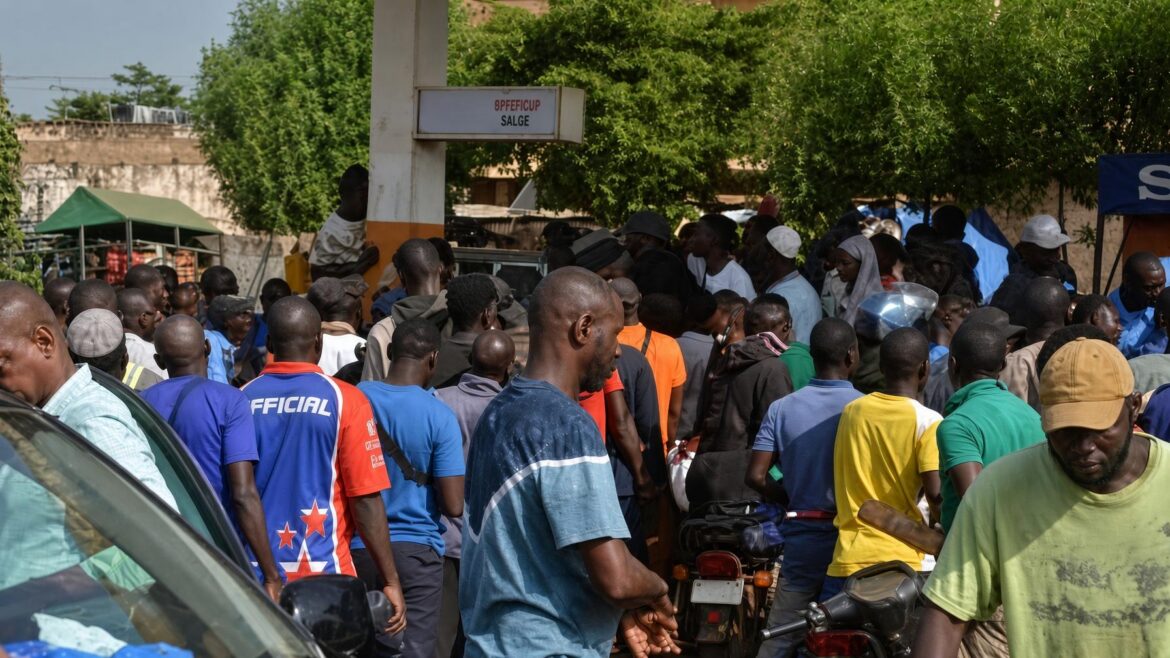
Every dawn, Niamey’s streets transform into stage sets of human endurance. Long, snaking lines of vehicles and motorbikes snake around neighborhoods, their drivers clutching jerrycans and ration cards—when they can get them. What was once a predictable rhythm of daily life has been replaced by uncertainty, where the price of mobility is no longer measured in coins, but in lost hours and shattered hopes. The once-reliable rhythm of commerce, trade, and movement has been replaced by a patchwork of improvisation, where every litre is fought for and few leave victorious.
The government’s attempt to “streamline” access to fuel—publishing a list of supposedly stocked stations—backfired spectacularly. Within hours, crowds converged on a handful of outlets, turning rationed supply points into pressure cookers of frustration. Rather than easing the burden, this misguided gesture amplified disparities, pushing those with no access to vehicles or mobility deeper into isolation. Informal vendors, sensing opportunity, now peddle adulterated fuel at exorbitant prices, poisoning engines and wallets alike. The system, it seems, has collapsed under the weight of its own inertia.
The hidden structural deficit that made this crisis inevitable
At the heart of Niamey’s fuel emergency lies not a temporary shock, but a chronic imbalance—a structural deficit that authorities have long ignored. Niger boasts the Soraz refinery in Zinder, yet its capacity to refine gasoline is woefully inadequate. Officials finally acknowledged in late 2026 that the nation faced a deficit of 196.62 million litres of gasoline and 52.6 million litres of diesel over eight months. These admissions confirmed what drivers already knew: the crisis was not an anomaly, but the result of chronic under-investment and failed planning.
Even more glaring is the country’s reliance on Nigerian smuggled fuel—once a lifeline for Niamey’s motorists. When Abuja ended subsidies, the flow of cheap, illegal gasoline dried up overnight, shifting the burden onto Niger’s already strained official channels. This shift was not unpredictable; it was a ticking time bomb that Niger’s energy planners ignored. With the Soraz refinery producing only 20,000 barrels per day—primarily diesel—Nigeria’s gasoline demand is left unmet, forcing reliance on costly, poorly managed imports. A cycle of inefficiency and reactionary policy has left Niamey gasping.
The state’s failure at crisis management: a playbook of short-term illusions
The official response to the crisis has been less a strategy and more a surrender. Rationing fuel without clear distribution plans, issuing sporadic updates that prompt panic, and refusing to address public fears of corruption—each decision reflects a government overwhelmed by its own limitations. When citizens demand transparency about stockpiles and delivery schedules, the response is silence. When allegations of mismanagement surface, they are dismissed without evidence, further eroding trust in public institutions.
Instead of rectifying systemic flaws, officials have resorted to cosmetic fixes: redirecting queues to new locations, only to leave others stranded; announcing temporary fixes that evaporate under scrutiny. The lack of coordination between oil importers, refineries, and distributors is glaring. Ministries point fingers, logistics break down, and the public bears the cost—literally. Each day without resolution deepens the financial wound: drivers lose wages, small businesses shutter, and inflation looms over the horizon, threatening to make essential goods unaffordable for the most vulnerable.
The informal fuel market: a symptom, not a solution
In the absence of reliable supply, an unregulated black market has flourished—one that preys on desperation. Sellers offer gasoline at three times the official rate, mix it with hazardous additives, and sell to motorists whose only alternative is stagnation. This is not resilience; it is exploitation. It exposes a fundamental failure of the state—the inability to provide a basic public good: accessible, safe, and affordable energy.
Small business owners, transportation cooperatives, and families already on the edge are forced to gamble their livelihoods on tainted fuel or pay exorbitant ransoms to move goods and people. The cost of transport has skyrocketed, triggering price surges for food, medicine, and household essentials. Inflation is not a distant threat—it is a creeping reality, fueled by the government’s refusal to act decisively.
Why this crisis reveals more than just a fuel shortage
What is unfolding in Niamey is more than an energy crisis—it is a governance crisis. A state that cannot provide fuel for its citizens cannot claim sovereignty. A regime that cannot predict, allocate, or sustain basic supply is not governing; it is reacting. Every cancelled trip, every contaminated engine, every sleepless night in a queue is a testament to systemic failure.
The Nigerien people are paying the price of policy drift. From oil imports to refinery inefficiencies, the weak links are not hidden—they are laid bare. What is missing is not just gasoline. It is foresight. It is responsibility. It is leadership.
As long as the state remains paralyzed by inertia, Niamey will continue to suffocate—not from a lack of fuel, but from a lack of vision.