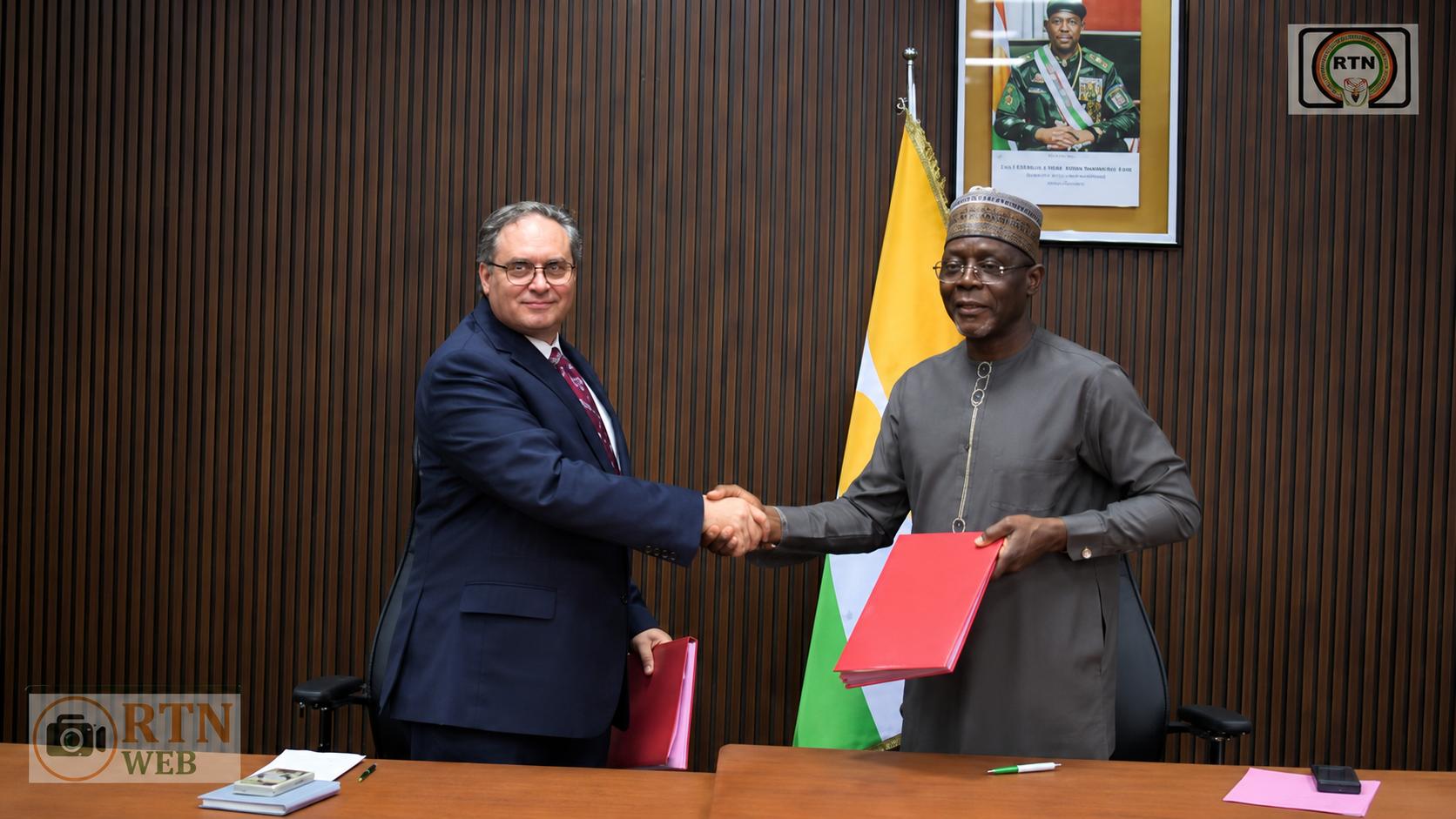
In a relentless pursuit of nationalist displays and short-term political victories, Nigerien authorities have embarked on a particularly troubling path. By signing an enormous $1.9 billion agreement with the enigmatic Zimar Group for the construction of an oil refining and petrochemical complex in Dosso, the government appears to be creating more explosive questions than it offers sustainable solutions for the nation’s future.
A diplomacy of deliberate oversight
Announcing the development of a petrochemical complex with a capacity to process 100,000 barrels per day presents an enticing promise for the Nigerien populace, who legitimately seek tangible benefits from their abundant natural resources. However, beneath the triumphant rhetoric of achieving “energy independence,” the underlying reality of this venture appears notably bleak.
Who exactly is this Canadian group that seemingly emerged from nowhere? A thorough investigation across international registries and financial databases reveals a profound void: there are no credible references for managing large-scale oil projects, a complete lack of history in heavy engineering endeavors of this magnitude, and absolute opacity regarding its capital structure. Granting a contract of this immense scale to a company with an untraceable service record transcends mere economic pragmatism, suggesting a concerning level of negligence at the highest echelons of the state, impacting Sahel politics today.
Committing $1.9 billion – an amount equivalent to nearly half of Niger’s Gross Domestic Product – to an intermediary lacking demonstrated technical guarantees poses a significant risk of operational bankruptcy and potential project abandonment, a critical concern for Niger news English readers.
Grand promises meet harsh operational realities
The oil sector operates on stringent principles, not on political speeches or catchy slogans. Constructing a modern refinery and a petrochemical unit demands robust financial capabilities, cutting-edge technological expertise, and a network of proven industrial partnerships.
The official announcement of a $1.9 billion investment to process 100,000 barrels per day immediately confronts total opaqueness concerning the origin and assurance of the funds mobilized. Zimar Group’s complete absence of verifiable industrial precedents transforms this crucial infrastructure into a high-risk “shell project,” entirely disconnected from the current logistical realities and operational flows within the West Africa Sahel region.
By sidestepping traditional financing channels and audited industrial partners in favor of obscure arrangements, Niger risks long-term paralysis for its vital energy sector. While the stated objective is to break free from dependency and process local crude, the chosen methodology appears to be a reckless leap forward.
The urgent need for transparency
The people of Niger should not bear the cost of strategic decisions driven by political expediency or contractual amateurism. The nation’s petroleum resources are a legacy for future generations and must never be used as bargaining chips in uncertain financial ventures.
It is imperative that authorities publicly disclose the full details of the contract signed with Zimar Group, concrete proof of the partner’s actual financial capacity, alongside comprehensive impact and technical feasibility studies. Without these fundamental guarantees, this $1.9 billion project risks remaining just another mirage on the already arduous journey of natural resource management in West Africa.