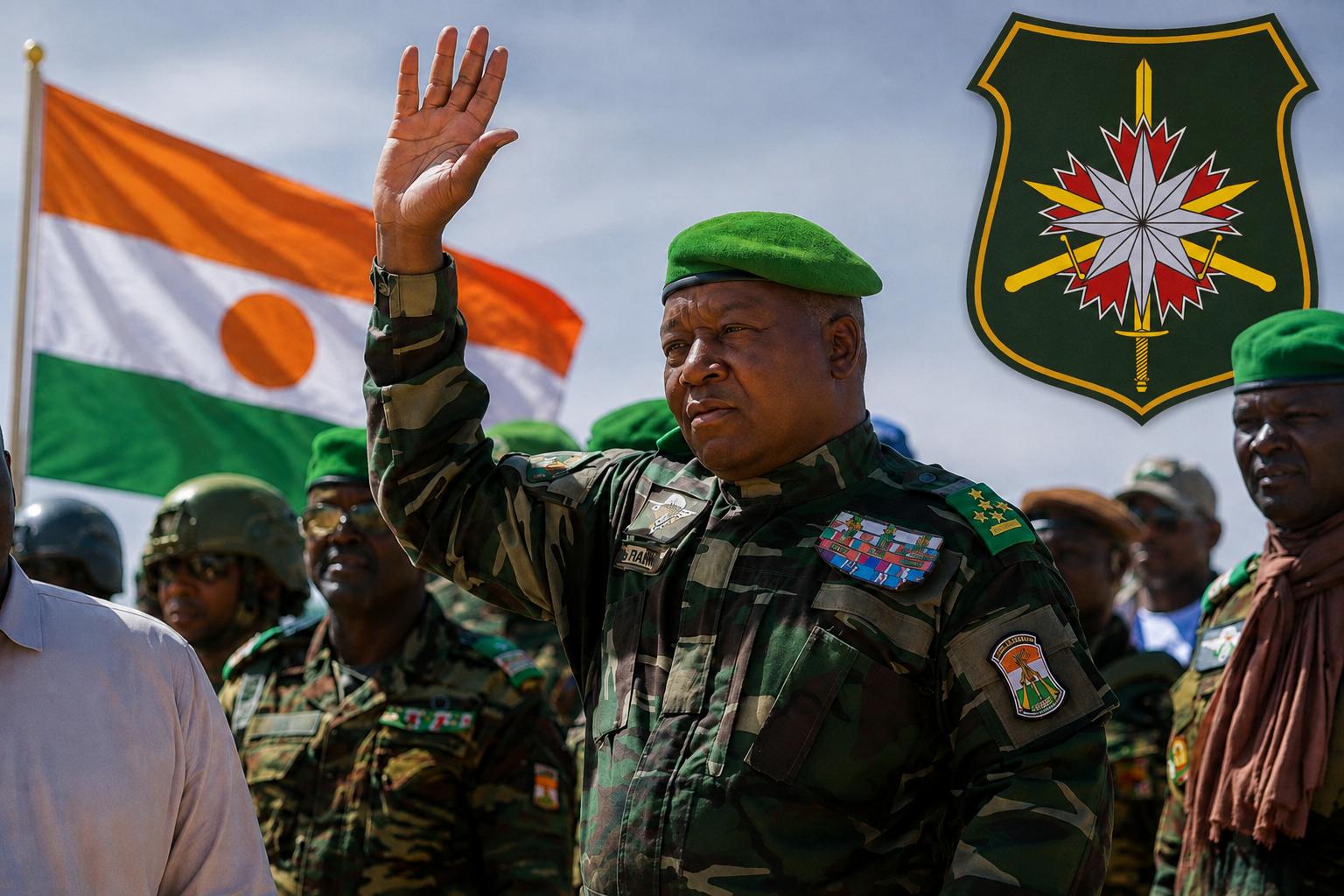
The events unfolding on August 29, 2026, at Niamey’s Air Base 101 transcended the conventional narrative of a jihadist threat. A mutiny, primarily involving elements of the Special Forces – ironically, the vanguard of counter-jihadist efforts in the tri-border region – starkly exposed the profound internal rifts plaguing the central military authority. Field losses, grievances concerning the chain of command, and operational fatigue reveal a critical erosion within the junta’s primary defense circle.
The pivotal role of Africa Corps: regime protection over national defense
The intervention of Africa Corps (formerly Wagner) to quell the mutiny at Base 101 signals a significant strategic shift. The Russian forces are no longer merely providing tactical support or training against insurgent groups; they now function as the ultimate guarantor of the Niamey regime’s survival against its own military factions. This evolving dynamic cultivates a direct dependency: the foreign contingent, comprising both instructors and combatants, has become the backbone of palace security, thereby relegating the broader protection of national territory to a secondary concern.
A striking security paradox: hyper-protection of power versus citizen vulnerability
A glaring disparity emerges between the concentrated deployment of elite resources and the daily reality faced by Nigerien citizens:
- A hyper-militarized political core: Armored vehicles and Africa Corps units can swiftly mobilize to secure the airport, safeguard the presidency, or neutralize intra-military skirmishes within the capital. This intense focus underscores a priority on controlling power.
- Porous peripheries: The attack on September 2 in Koubia, practically at Niamey’s doorstep, demonstrates the capital’s permeable security perimeter. Repeated assaults on checkpoints, including those in Koubia, Karey Gorou, and even the airport, confirm that the Russian foreign presence has not halted infiltrations nor diminished the audacity of armed groups.
- A palpable sense of citizen abandonment: While official communications champion the reclamation of sovereignty and the backing of new allies, the civilian population endures persistent insecurity just outside the city, faces road closures, and witnesses a continuous deterioration of the security climate in the Tillabéri region.
Ultimately, the deployment of Africa Corps primarily serves the imperative of regime protection. The Nigerien paradox deepens: as the central power fortifies itself with foreign troops to ward off coups and internal dissent, the actual security coverage for the populace paradoxically thins and becomes more precarious. This situation highlights a critical challenge for West Africa Sahel stability and Niamey’s internal security.