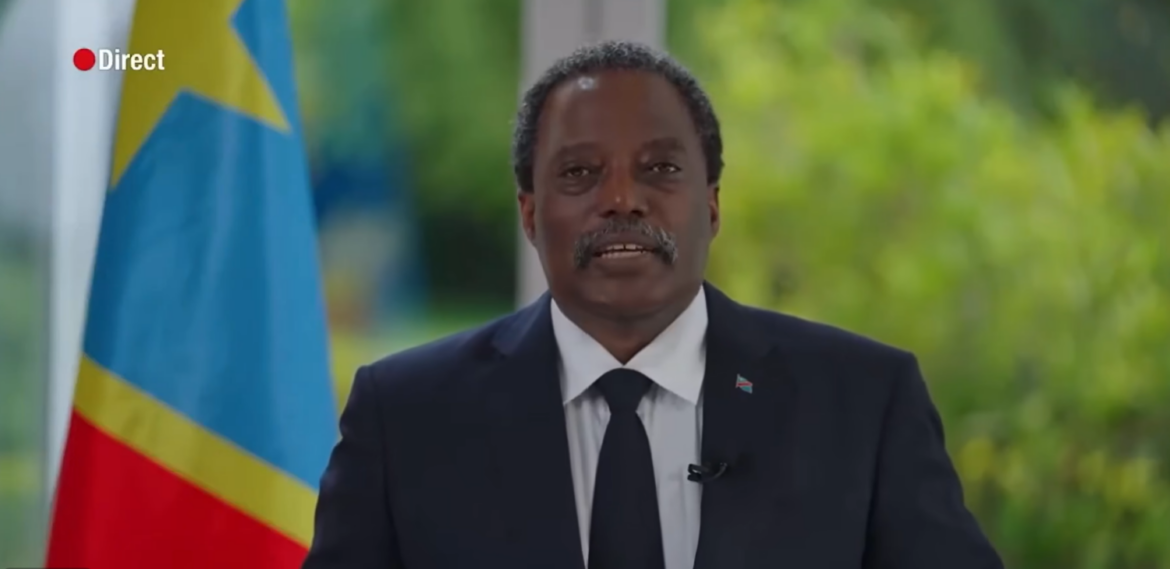
When Joseph Kabila, former president of the Democratic Republic of the Congo (2001–2019), officially assumed leadership of the Front for the Refoundation of the Nation (FRN) on October 12, 2026, he made a dramatic military comeback. This new alliance merges the M23 rebel group and the former Alliance Fleuve Congo, providing political cover for a rebellion that Kigali has long supported. While Kabila frames this as a strategic move to bypass international pressure on Rwanda’s regional proxies, the gambit risks turning Congo’s fragile stability into open warfare.
From rebellion dynasty to political maneuvering
In 1996, Laurent-Désiré Kabila—Joseph’s father—emerged from obscurity to lead the AFDL, a Rwanda-backed rebellion that toppled the Mobutu regime. Once installed in Kinshasa in 1997, Laurent-Désiré attempted to distance Congo from Kigali’s influence, sparking the Second Congo War before his assassination in 2001. Joseph, barely 29, inherited the presidency in chaos, navigating decades of regional interference, eastern militias, and Rwanda’s shifting ambitions.
Now, by openly aligning with the same proxy forces he once opposed, Kabila is rebranding a community-based insurgency as a national liberation movement. His political imprimatur could turn local skirmishes into a full-scale bid for power, with potentially devastating consequences for Congo’s 100 million citizens.
Legitimacy laundering: how Kabila transformed the M23’s image
The M23 had long been dismissed as a Rwandan-backed Tutsi militia, little more than Kagame’s proxy in eastern Congo. By lending his name and political capital to the group, Kabila cloaks the rebellion in the legitimacy of a former head of state. Analysts note this shift turns what was once seen as a cross-border proxy war into a fight for national sovereignty.
Critics argue the move simply rebrands Congo’s instability. Behind the rhetoric of liberation, observers identify entrenched international networks profiting from Congo’s mineral wealth. Rather than a struggle for justice, insiders describe a system where “institutionalized thugs” and foreign interests manipulate conflict to extract coltan, cobalt, gold, and other strategic minerals.
Congo’s wealth: a curse disguised as opportunity
The Democratic Republic of the Congo spans over 2.3 million square kilometers—nearly 90 times the size of Rwanda. Yet despite its vast territory, central authority in Kinshasa struggles to govern the resource-rich east. Provinces like North Kivu and Ituri hold some of the world’s most valuable mineral deposits: coltan for smartphones, cobalt for batteries, gold for futures markets. These riches attract predatory actors from Kigali to Beijing and beyond.
While Rwanda lacks its own coltan reserves, it controls key supply chains through proxy militias operating in Congo. This predation thrives amid perpetual insecurity—a cycle where armed groups “secure” mining zones while civilians face mass violence. As one analyst notes, “Congo’s eastern chaos is matched only by the iron grip of extraction elites who export stability—literally—while entire communities burn.”
Human cost and the failure of outsiders
Congo’s eastern conflict is a patchwork of over 150 armed groups—from self-defense militias and criminal syndicates to Ugandan ADF splinters. Civilians bear the brunt: mass atrocities, sexual violence, and displacement have become the norm. Kabila’s alliance risks escalating this tragedy, turning political ambitions into a humanitarian catastrophe.
With his name now attached to the rebellion, the former president becomes complicit in what may become Congo’s bloodiest chapter yet. International actors who profit from Congo’s minerals or turn blind eyes to Rwanda’s role must also share responsibility for the coming disaster.