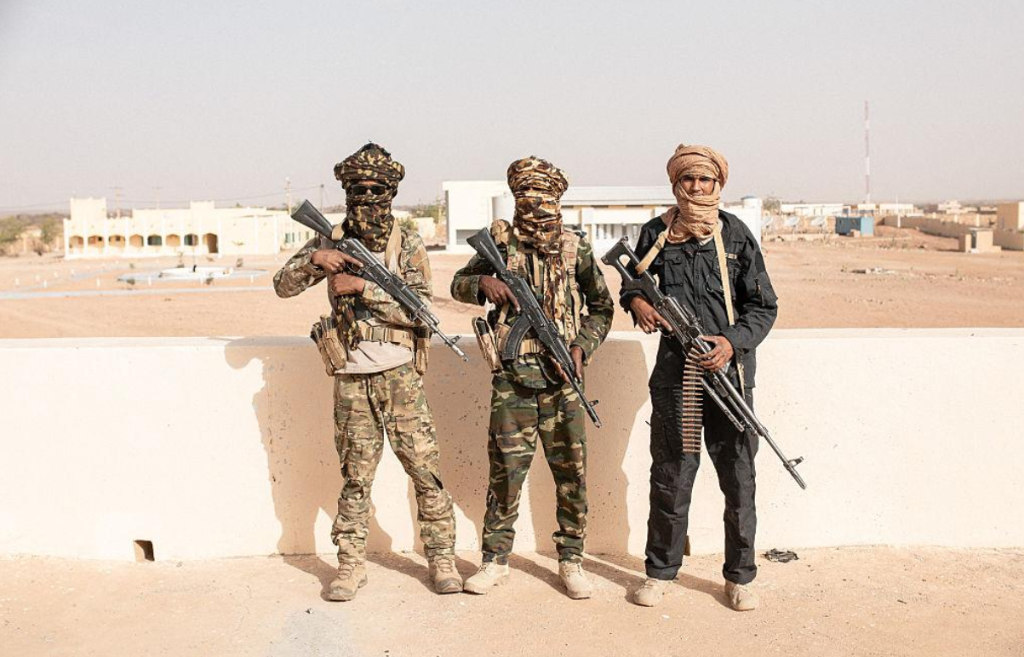
The Sahel’s shifting alliances are redefining power dynamics across Africa’s fragile heartland, where insurgent movements are increasingly turning to unconventional partners to survive. The Front de Libération de l’Azawad (FLA), a long-standing separatist group rooted in Mali’s northern deserts, has quietly pivoted toward two unlikely capitals—Benghazi and Abu Dhabi—in a desperate bid to sustain its struggle. These behind-the-scenes maneuvers reveal a deeper regional shift, one where traditional security frameworks crumble under the weight of geopolitical rivalries and waning diplomatic trust.
Why Kidal’s fall forced the FLA to look beyond its borders
The military retreat from Kidal in October 2026 marked a seismic shift in Mali’s decade-long insurgency. The strategic stronghold, once considered the unassailable symbol of the Azawad rebellion’s autonomy, was abandoned without a fight. The FLA framed its withdrawal as a tactical maneuver—a retreat designed to preserve manpower and equipment rather than risk a costly confrontation. But the reality was far simpler: the group faced untenable pressure, with Bamako’s transitional authorities leveraging the power vacuum to reassert control over the north. Without a territorial base, the FLA’s territorial ambitions suddenly seemed hollow.
Stripped of its most prized asset, the FLA found itself adrift in a sea of regional instability. The 2015 Algiers Peace Accord, once the cornerstone of its legitimacy, had collapsed after Bamako’s formal withdrawal, leaving the group without a recognized framework to negotiate or sustain itself. The loss of Kidal wasn’t just a military setback—it was a diplomatic earthquake that shattered the foundations of the group’s strategy.
Libya’s Haftar: a pragmatic lifeline for Mali’s separatists
The desert pathways connecting Mali to Libya’s eastern regions have long been conduits for smuggling, trafficking, and transnational armed movements. For the FLA, these same routes now represent a potential lifeline. Reports indicate that clandestine meetings took place in Benghazi, where FLA delegates engaged with key figures in the Libyan National Army (LNA), including Saddam Haftar, son of strongman Khalifa Haftar. While tangible military support remains elusive—no arms shipments or formal pacts have been confirmed—the outreach underscores a critical truth: the FLA is willing to cast a wide net to regain its foothold.
Geography plays a decisive role here. Libya’s porous southern borders with Algeria and Chad provide the FLA with a backdoor to escape the encirclement imposed by Bamako’s forces. The absence of a unified Libyan government further complicates oversight, allowing armed groups to exploit the chaos. For the FLA, Libya isn’t just a financial backer—it’s a strategic sanctuary where old allies and new patrons can converge without the scrutiny of Mali’s transitional leaders or international peacekeepers.
UAE’s expanding footprint: money, influence, and regional tensions
Abu Dhabi’s engagement with Sahelian insurgents is part of a broader gambit to expand its influence across Africa. The Emirates have invested heavily in infrastructure projects, trade corridors, and, according to regional observers, indirect support to non-state actors in the Horn of Africa and the Sahel. For the FLA, the UAE’s financial and logistical backing represents a high-stakes gamble—one that could breathe new life into the separatist movement but also ignite wider geopolitical fires.
Algeria, Mali’s northern neighbor and historical patron of the 2015 peace process, has reacted with alarm to reports of UAE involvement. Algerian officials see the Emirates’ diplomatic overtures as a direct threat to their own security interests, particularly along a 1,200-kilometer border where smuggling, arms trafficking, and militant movements have long destabilized the region. The Algerian government, which has watched the collapse of the Algiers Accord with frustration, now views Abu Dhabi’s maneuvers as a deliberate attempt to undermine its regional dominance. Diplomatic ties between Algiers and Abu Dhabi have frayed over competing visions for the Sahel, with Algeria accusing the Emirates of fostering instability on its southern flank.
Algeria’s counter-move: rebuilding alliances to block external interference
Faced with the specter of foreign-backed destabilization, Algeria is recalibrating its Sahel policy with a renewed vigor. The North African giant has prioritized a re-engagement with Bamako’s transitional government, despite lingering mistrust over the Algiers Accord’s collapse. The focus is twofold: restoring border security and countering the infiltration of external actors. High-level diplomatic exchanges have resumed, with a particular emphasis on joint counter-terrorism operations, anti-smuggling initiatives, and economic cooperation along the shared frontier.
The stakes are clear. Algeria’s southern territories—particularly the far-flung regions of Tamanrasset and Illizi—are vulnerable to the same trans-Saharan networks that benefit the FLA’s external sponsors. By deepening its partnership with Mali, Algiers hopes to create a buffer zone that isolates militant movements and cuts off their supply lines. But this strategy demands compromise. After years of strained relations, Bamako’s transitional leaders are being offered a lifeline—one that comes with Algerian conditions: a commitment to restoring stability in the north and severing ties with disruptive foreign powers.
Algeria’s outreach isn’t confined to Mali. Niger, too, has become a focal point of its regional diplomacy. The collapse of the 2015 peace accord in Mali has sent shockwaves across the Sahel, prompting Niamey to seek stronger partnerships with its northern neighbor. Joint security operations along the border, intelligence-sharing, and infrastructure projects are all part of a broader effort to create an arc of stability that deters external interference. For both Niamey and Bamako, Algeria’s renewed engagement offers a pragmatic alternative to the costly alliances being forged in Benghazi and Abu Dhabi.
What’s next for the FLA—and the Sahel’s fragile alliances
The FLA’s survival now hinges on two fragile pillars: Libya’s unwieldy security landscape and the UAE’s strategic interests. Neither patron offers a guarantee of long-term support. Libya remains a fractured state, where Haftar’s control over Benghazi is tenuous at best. Meanwhile, Abu Dhabi’s priorities can shift with geopolitical tides; its investments in Africa are as much about soft power as they are about direct influence. For the FLA, these alliances are a gamble—a high-risk strategy to compensate for the loss of Kidal and the erosion of its traditional support base.
The broader Sahel is caught in the middle of this geopolitical tug-of-war. Algeria, despite its waning influence in Mali, still commands significant leverage through its economic ties and historical relationships. But its ability to steer the region toward stability depends on its willingness to address the grievances of northern Mali’s communities—grievances that the FLA has long exploited. As Bamako pushes ahead with its military campaigns and Niamey tightens its border security, the FLA’s newfound patrons may find themselves entangled in a conflict with no clear exit strategy. The desert sands of the Sahel are shifting, and the alliances being forged today may crumble by tomorrow—leaving Mali’s separatists, and the region’s fragile peace, in the balance.