Morocco refuses to drop Ceuta claims as Spain faces migrant influx
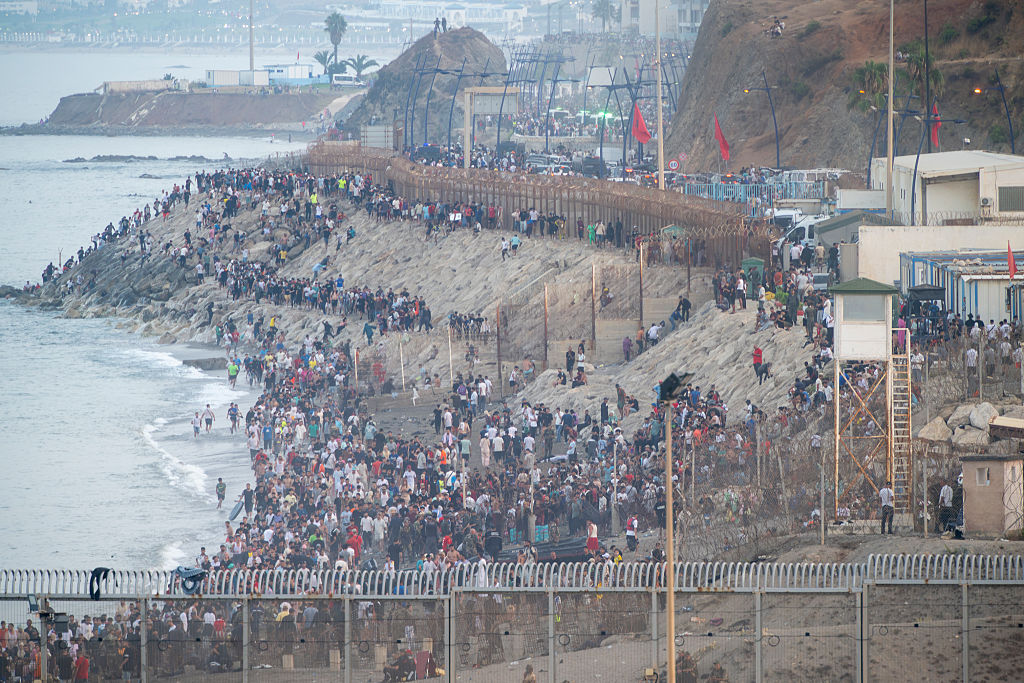
Morocco will not abandon its long-standing territorial claims over the Spanish enclaves of Ceuta and Melilla, according to a former top Spanish diplomat. The statement comes as Spain grapples with an unprecedented surge in irregular migration, with over 72,000 people arriving in Ceuta during a single week in late July.
The crisis has reignited a decades-old dispute that has strained relations between Madrid and Rabat, particularly as Spain’s left-wing government under Prime Minister Pedro Sánchez faces internal challenges. Jorge Dezcallar, a former Spanish ambassador to Morocco and former head of Spain’s intelligence agency, warned that the North African kingdom is “testing the waters” at a time when it perceives Spain’s leadership as vulnerable.
Dezcallar highlighted the delicate balance between the two nations’ deep commercial ties and their essential cooperation on migration control, counterterrorism, and regional security. “Spanish-Moroccan relations are more driven by emotion than logic, marked by sharp ups and downs,” he explained in an exclusive interview.
Ceuta and Melilla: A lingering territorial dispute
Moroccan officials and state-aligned media have intensified rhetoric around the sovereignty of Ceuta and Melilla—two territories that have been under Spanish control for centuries, predating the modern Moroccan state. “This issue remains unresolved. Every time we meet with Spanish counterparts, we raise it,” stated Justice Minister Abdellatif Ouahbi earlier this week.
“We firmly maintain our position on our territories […] It is a matter we will address through patient negotiation,” he added. His remarks echoed earlier statements by Spanish Defense Minister Margarita Robles, who reaffirmed Ceuta and Melilla’s status as “irrevocably Spanish” during a visit to the enclave.
The Spanish royal family has never visited Ceuta or Melilla, and a Spanish foreign minister made the first official trip to the cities in decades this week—a move seen as an attempt to avoid further provocation.
Migration crisis linked to legal and political tensions
Madrid and Rabat blame human trafficking networks for exploiting a July ruling by Spain’s Supreme Court, which barred the immediate repatriation of migrants arriving by sea. However, Dezcallar suggested there was at least “some level of tolerance or negligence” on Morocco’s part in allowing the surge.
He cautioned that Spain lacks the resources to counter such influxes, noting that this is not the first time Ceuta has faced a migrant wave. The diplomat pointed to a 2021 diplomatic rupture when Spain permitted the hospitalization of Sahrawi leader Brahim Ghali. Rabat responded by facilitating the arrival of nearly 10,000 migrants in Ceuta—a move condemned by Spain as “blackmail.”
“One mistake can be forgiven, but not two,” Dezcallar remarked, recalling warnings from Ceuta authorities about a gradual increase in irregular arrivals in the days leading up to the crisis. Intelligence sources recently alerted authorities to a potential new surge on August 15, with social media calls to “storm” the city. Police and Civil Guard unions have also confirmed the threat.
Ceuta’s status remains a red line for Morocco
Dezcallar’s warning was unequivocal: “Anyone who thinks Morocco will abandon its claims to Ceuta and Melilla is mistaken.”
You may also like
As donor fatigue spreads, can Benin’s €544,042 UNAIDS pledge keep the HIV response on track?
Who pays the price when Burkina Faso’s public payroll contracts? Households weigh the cost of 1,917 fewer agents
Libya pushes for direct Tripoli-Yaoundé flights as Cameroon sets up working groups
JNIM seizes three Burkinabè positions in a single day as Traoré’s security record faces hard questions
Chad condemns Ennedi-East airstrikes at un general assembly, warns of retaliation