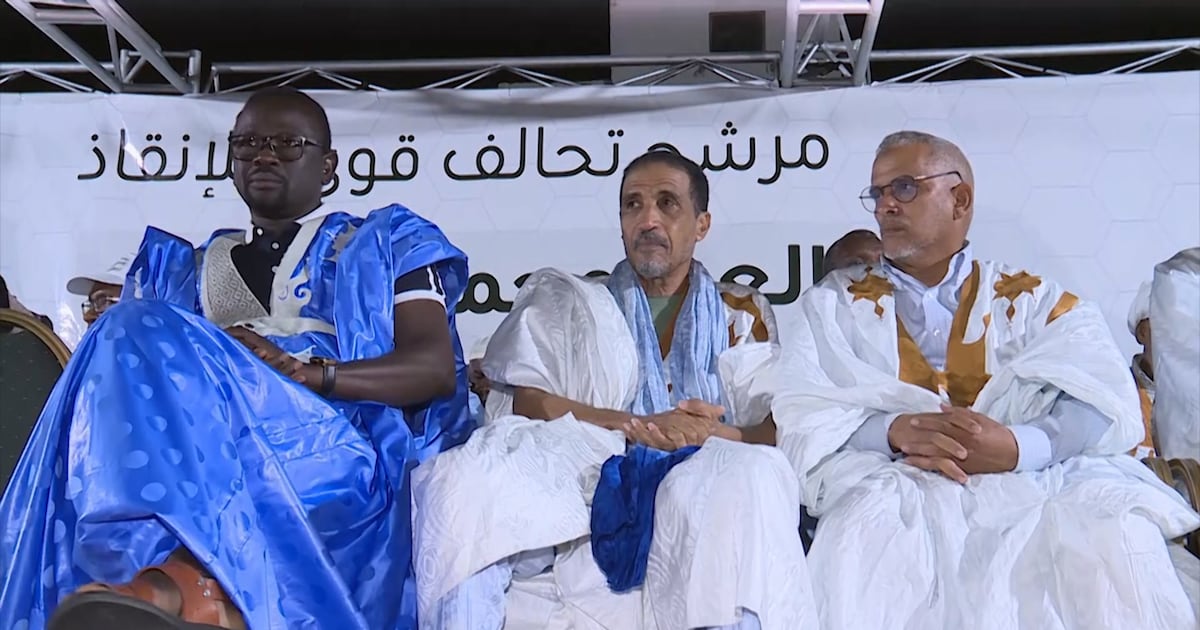
Professor Mohamed Maouloud assumes leadership of Mauritania’s largest opposition coalition at a pivotal moment, following a historic mass rally in Nouakchott that drew unprecedented crowds.
The nation grapples with a complex web of crises: a stalled national dialogue process, renewed ethnic tensions, escalating insecurity in eastern regions bordering Mali, and soaring living costs that strain ordinary citizens. These interconnected challenges form the immediate backdrop for Maouloud’s new role.
In his first public statements, the coalition chairman expressed deep concern over Mauritania’s political impasse, warning that the absence of inclusive dialogue threatens national cohesion. ‘The current deadlock prevents us from addressing core issues through consensus-building mechanisms that involve all stakeholders,’ he emphasized.
Breaking the dialogue deadlock
The stalled political negotiations top Maouloud’s agenda. He directly challenges President Mohamed Cheikh El Ghazouani to uphold constitutional limits by preventing any attempt to reintroduce the three-term presidential debate—a provision already excluded from the national roadmap. ‘The majority bloc’s obstruction of this essential conversation undermines our collective future,’ he stated.
The president of the opposition coalition also highlights an urgent need to address rising ethnic rhetoric, particularly its amplification through social media platforms. ‘This divisive discourse threatens our national unity and requires immediate, coordinated countermeasures,’ Maouloud warned.
Security and economic pressures in focus
Eastern Mauritania remains under pressure due to spillover violence from neighboring Mali, forcing thousands of refugees to seek shelter while cutting off vital cross-border migration routes for herders. Border closures have disrupted traditional transhumance patterns, pushing pastoral communities toward economic vulnerability.
At the same time, the entire country faces severe inflationary pressures that erode purchasing power and deepen social inequalities. Addressing these economic hardships is central to restoring public trust in governance.