The recent truck fires along the Sahelian border regions are far from isolated security incidents. They expose a deepening crisis along the once-reliable trade arteries connecting Mauritania, Morocco, and northern Mali. These corridors, traditionally vital for commerce, now face persistent insecurity, disrupting the supply of essential goods to communities in the north.
The commercial exchanges that once thrived between Timbuktu and Gao through Mauritanian territory have dwindled significantly. Trans-Saharan trade routes, long the lifeline for these northern regions, now endure frequent disruptions, further destabilizing an already fragile economic balance.
For years, Mauritania played a pivotal role in the trade networks linking Morocco to northern Mali. Goods flowed through its ports before reaching major cities in the north. This commerce relied on Malian merchant networks with deep roots in the region’s ancient caravan trade traditions.
Analyst Umar Al-Ansari highlights Mauritania’s critical role in Mali’s humanitarian and economic stability: “Mauritania has been the backbone of northern Mali’s security and supply chains. Beyond trade, it has served as a refuge for those fleeing conflict. Since 1991, Nouakchott has kept its borders open to waves of Malian refugees. Current estimates suggest over 300,000 Malians—refugees and asylum seekers—reside in the country’s eastern regions, particularly around the Mbera camp and surrounding villages.”
A once-strong security partnership frays
Mauritania’s open-border policy also bolstered regional border security. Observers note that Nouakchott acted early to contain armed threats and prevent their entrenchment along its frontiers. However, this cooperative dynamic has eroded as Mali’s transitional authorities, backed by foreign military partners—including Russian forces—reshaped the regional security landscape.
Border zones have increasingly become flashpoints for military operations and civilian tensions. Repeated incidents—arrests, clashes, and accusations against civilians of collaborating with armed groups—have systematically weakened traditional cross-border cooperation mechanisms. Local networks, once the backbone of frontier trade and mobility, now face collapse.
Al-Ansari warns that each episode of violence or distrust further fractures these networks: “Every kidnapping, accusation, or clash erodes the trust that sustained trade, herding, and transport for decades. This erosion creates openings for armed groups to exploit, seizing control of zones once dedicated to commerce and human movement.”
Today, the routes between Mali and Mauritania are increasingly perilous. Regular disruptions in trade flows are isolating northern Mali, deepening its vulnerability.
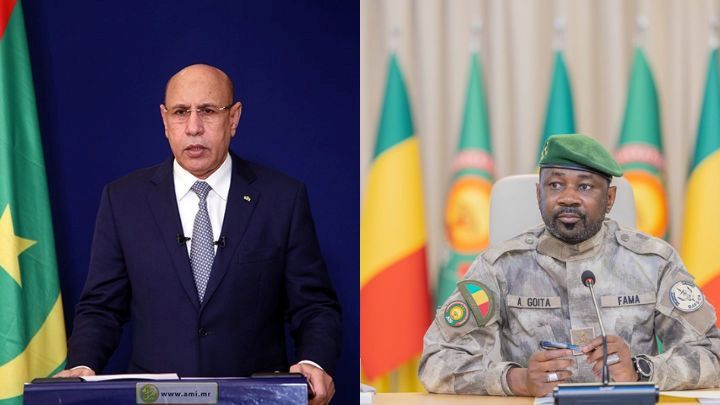
What began as a partnership of stability and mutual benefit has unraveled into a web of mistrust and diverging interests. Mauritania, once a key ally for Bamako, now stands at a distance. This shift reflects a broader realignment in regional alliances, where security concerns and shifting political calculations have redefined long-standing relationships.