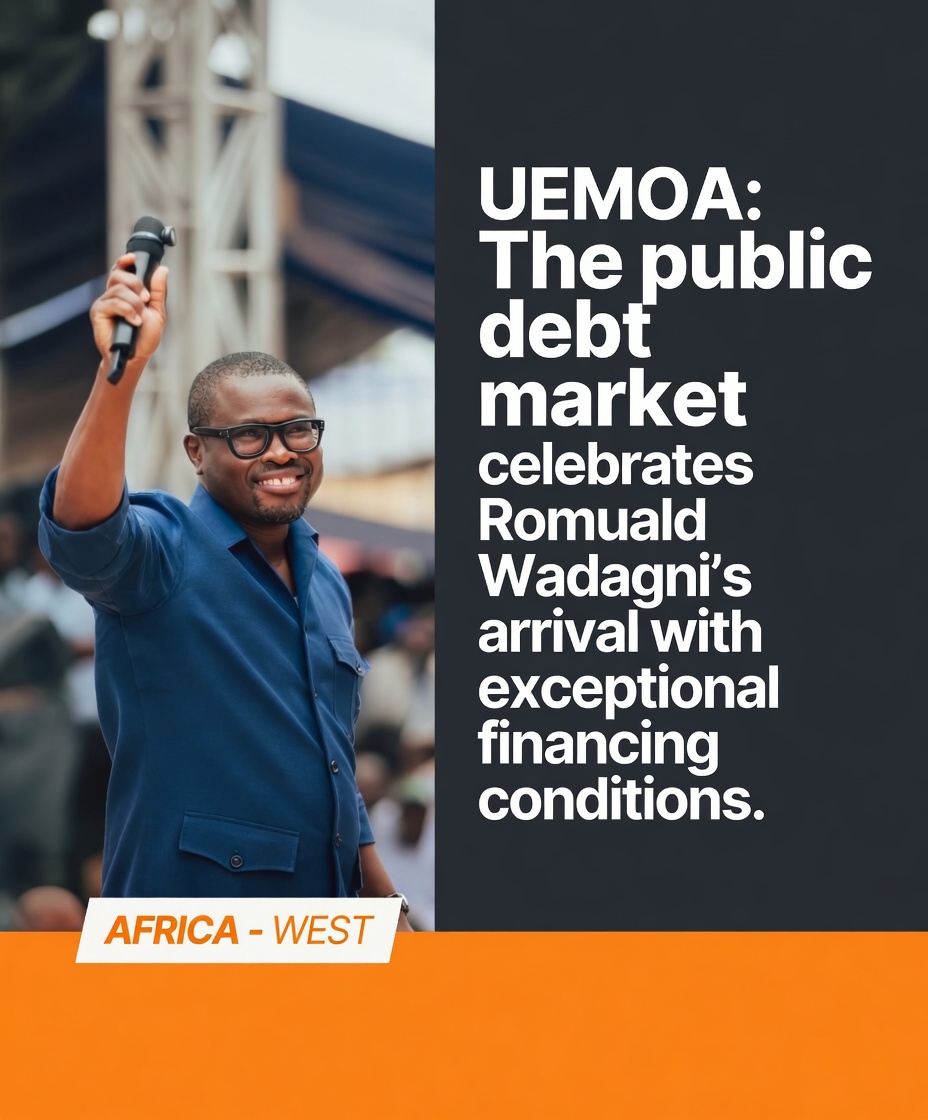
The elevation of Romuald Wadagni to the highest office in the land signifies a historic transition for the financial ecosystem in Cotonou. As the nation balances the continuation of established reforms with the hope for rapid industrial expansion, both domestic and international investors are closely observing the first signs of an administration rooted in technical mastery.
Benin has reached a milestone in its political evolution, and financial markets have reacted swiftly. The transition of a former Minister of Economy and Finance to the presidency is a rare occurrence, offering the market a highly sought-after commodity: institutional predictability.
A confidence premium in the debt markets
Immediately following the announcement of the election results, the yield indicators for Beninese sovereign bonds on the secondary market showed remarkable consistency, with some rates even trending slightly downward. Analysts view this as a “competence premium.” Having been the architect of Benin’s achievements in the Eurobond market and a leader in Sustainable Development Goal (SDG) bond issuances, Romuald Wadagni enjoys significant trust from international creditors and rating agencies such as S&P and Moody’s.
Renewed appetite for Beninese securities on the BRVM
Optimism is clearly visible at the Regional Securities Exchange (BRVM). Banking entities active in Benin are anticipating an acceleration of major infrastructure projects and a strengthening of Public-Private Partnerships (PPPs). Furthermore, investors are hopeful that this new era will facilitate the initial public offerings of leading national enterprises, thereby increasing the depth of the local capital market.
The industrial vision: FDI and the GDIZ
Beyond fiscal metrics, the financial sector is focused on the real economy. The ongoing strategy for local value addition within the Glo-Djigbé Industrial Zone (GDIZ) remains a central pillar of the economic agenda. Wadagni’s presidency is seen as a guarantee that the influx of Foreign Direct Investment (FDI) will remain uninterrupted. His profile provides multinational firms with confidence regarding the legal protection of their assets and the stability of the macroeconomic framework.
Expert perspective
“Financial markets are naturally averse to ambiguity. With Romuald Wadagni, Benin is projecting a message of rigorous fiscal oversight and a sustainable long-term vision. The primary objective now will be to convert this financial credibility into inclusive economic growth while maintaining debt levels within manageable parameters,” explains a senior fund management analyst.
Indicators to monitor (Q2 2026)
- Sovereign credit rating: A potential shift in outlook from “Stable” to “Positive” by global agencies.
- Treasury bond performance: Upcoming issuances on the UMOA market will act as a litmus test for the administration’s financial standing.
- GDIZ investment volumes: The scale of capital committed to the manufacturing sector during the first 100 days of the mandate.
As Benin embarks on this new narrative, the concept of “Wadagni-nomics” seems to have already found favor within financial hubs. The next step will be to validate this momentum through the initial fiscal and budgetary choices of his five-year term.