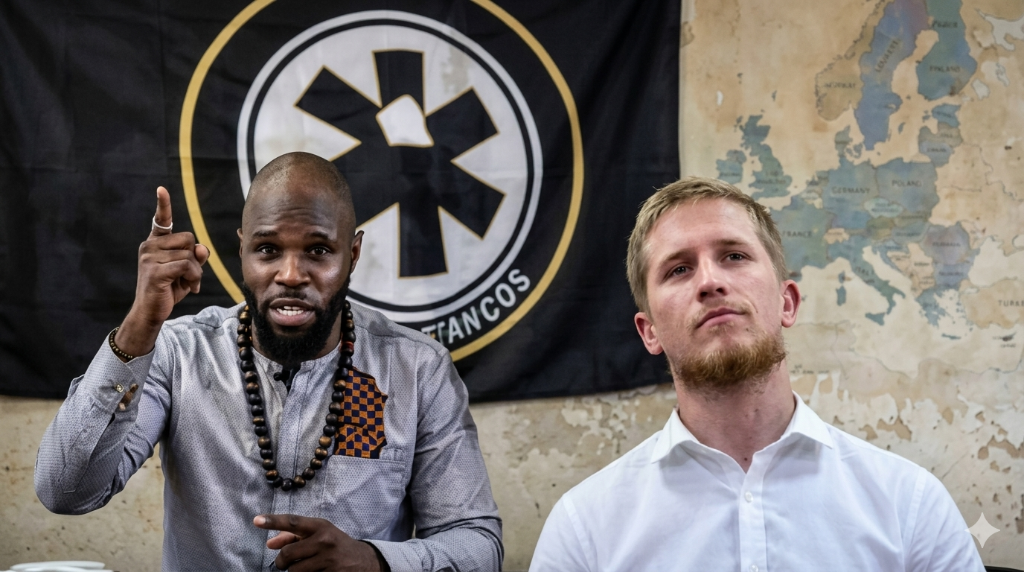
While he portrays himself as a prominent leader of the Black cause and a champion of African sovereignty against “neocolonialism,” Kemi Seba’s public persona is increasingly at odds with his actions. Behind the aggressive rhetoric and carefully curated social media presence, the activist appears to be caught in a web of contradictions that threaten to invalidate his entire movement. Recent developments, including his legal troubles in South Africa and his links to radical Afrikaner right-wing figures, suggest a deeply problematic alliance.
A pan-Africanism riddled with inconsistency
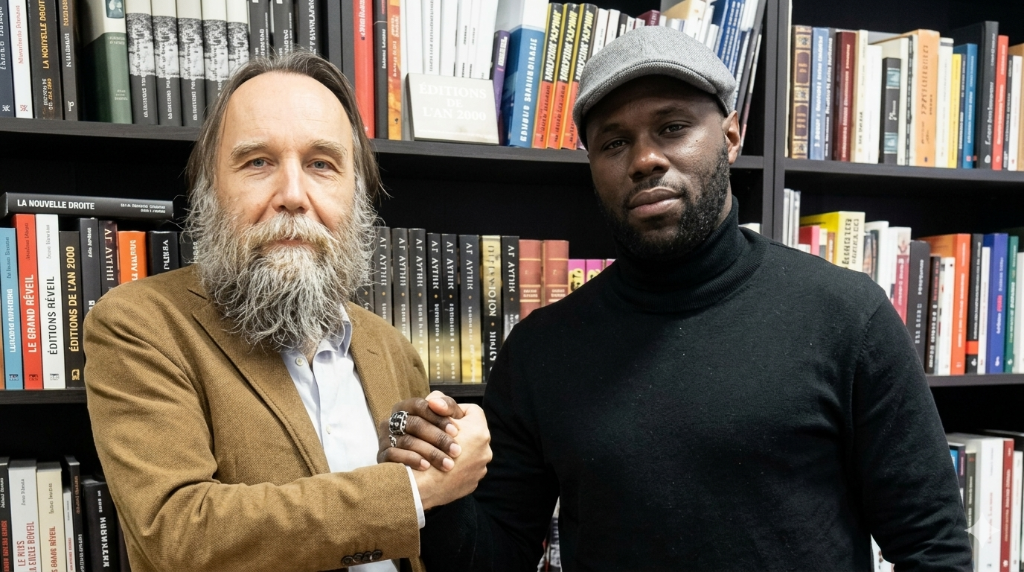
For a long time, Stellio Capo Chichi—the man known as Kemi Seba—has built his reputation by attacking foreign interference and demanding an Africa completely severed from its colonial past. However, it is difficult to reconcile this demand for total independence with his public proximity to individuals like Dries van der Merwe, a known figure in white separatist circles who remains nostalgic for the Apartheid era.
This partnership of convenience is often defended through the logic of “the enemy of my enemy is my friend,” yet it feels like a betrayal of the history of anti-colonial resistance. By associating with those who once championed theories of racial hierarchy, Seba is not practicing Realpolitik; he is undermining the very principles of dignity and respect he claims to be fighting for.
Financial allegations and the role of foreign capital
In Benin, money laundering investigations have brought the activist’s financial dealings into the spotlight. These legal challenges highlight a sharp divide between his ideology of African self-reliance and the existence of opaque international financial networks. It is particularly striking to see someone who describes the CFA franc as a currency of bondage now facing scrutiny over suspicious money trails. If these charges are proven, they would indicate that the “revolutionary” is actually a participant in the very global systems he publicly condemns, using complex networks to further his own agenda.
The rise of political opportunism
The situation in South Africa has exposed a harsh reality: Seba seems prepared to collaborate with any entity capable of disrupting the current order, regardless of their moral or historical standing. His ties to groups that still harbor Afrikaner supremacist sentiments suggest that his path is driven more by a desire for media-driven chaos than a search for true justice. “Pan-Africanism should never be used as a shield for unnatural alliances. A nation cannot be liberated by shaking the hands of its former oppressors out of pure political opportunism.”
The public image begins to fade
As he faces arrest warrants and extradition requests, the facade of the “uncompromising” activist is starting to crumble. By turning to those who long for the days of racial segregation to bolster his own standing, Kemi Seba has caused irreparable damage to his credibility. Many now view him not as a spokesperson for the continent, but as a figure in search of a safe haven, trapped by his own ideological betrayals.
In the end, history may record that Kemi Seba’s most significant adversary was not a foreign power or a specific currency, but rather the profound lack of integrity in his own choices and partnerships.