Exiled Opposition Figure Stages Hostage Release, Exposing State Weakness
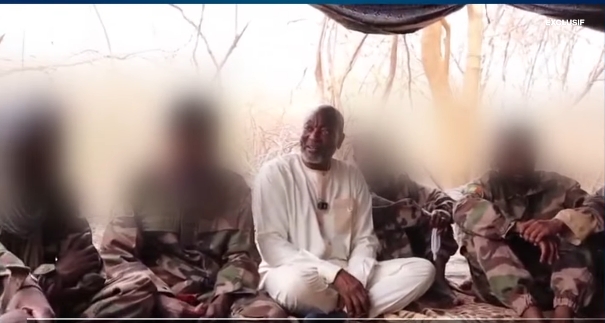
In a development that has sent shockwaves through Mali’s political landscape, a photograph capturing opposition leader Oumar Mariko alongside 17 recently freed hostages—released by the al-Qaeda-affiliated Group for Support of Islam and Muslims (JNIM)—has laid bare the fragility of Bamako’s authority. While the humanitarian relief is undeniable, the private mediation effort raises serious questions about the Malian state’s grip on its own territory.
The State’s Absence: A Troubling Discrepancy
How did Oumar Mariko, a political figure living in exile and openly at odds with Mali’s transitional government, manage to broker a deal with one of the country’s most formidable armed groups? The image underscores a stark reality: in vast swathes of Mali, security and dialogue are increasingly outsourced to informal actors rather than state institutions.
Analysts warn that this erosion of sovereignty signals deeper structural weaknesses. When armed groups, rather than elected officials, become the primary interlocutors for citizens, the foundations of the republic tremble. The episode serves as a stark reminder that sovereignty is not proclaimed in speeches from Bamako—it is demonstrated through the tangible protection of citizens.
Terrorist Group’s Calculated PR Gambit
The JNIM’s involvement in the hostage release is far from an act of benevolence. Instead, it represents a calculated propaganda exercise designed to achieve two key objectives:
- Image Rehabilitation: By participating in a negotiated and filmed handover, the group seeks to present itself as a ‘reasonable’ actor capable of compromise and restraint.
- Authority Substitution: In regions where state presence is minimal, the JNIM increasingly assumes the roles of local governance—dispensing justice, enforcing security, and even mediating disputes—effectively replacing mayors and prefects and undermining the legitimacy of the Malian government.
The message to Malians is clear: where the state fails, armed groups step in.
The Hidden Costs of Shadow Negotiations
Behind the relief of families reunited with their loved ones lies a darker truth. Informal negotiations of this nature carry grave long-term consequences:
- Funding Insurgency: While rarely acknowledged, ransom payments—often negotiated in secret—provide direct financial support to terrorist organizations, fueling future attacks against Malian armed forces and civilians.
- Implicit Legitimacy: Engaging with armed groups to secure the release of hostages implicitly validates their control over territory. This recognition strengthens their standing among rural communities and further erodes public trust in Bamako’s ability to govern.
Two Mali’s: The Divide Widens
Mali today is a nation fractured along two distinct lines:
- The Institutional Mali: In the capital, Bamako, officials continue to assert a narrative of military progress and imminent territorial reconquest.
- The Rural Reality: In the countryside, where state institutions are absent or ineffective, communities are left with little choice but to adapt to life under the shadow of armed groups, negotiating their survival on a daily basis.
The Path to Restoring State Authority
This episode involving Oumar Mariko is more than a humanitarian footnote—it is a clarion call. When private actors and opposition figures take the lead on matters as critical as national security, the risk of permanent fragmentation grows. For Bamako, the challenge is no longer merely military; it is existential. The path forward demands not just the recapture of territory, but the restoration of trust in the state’s ability to protect its people without intermediaries.