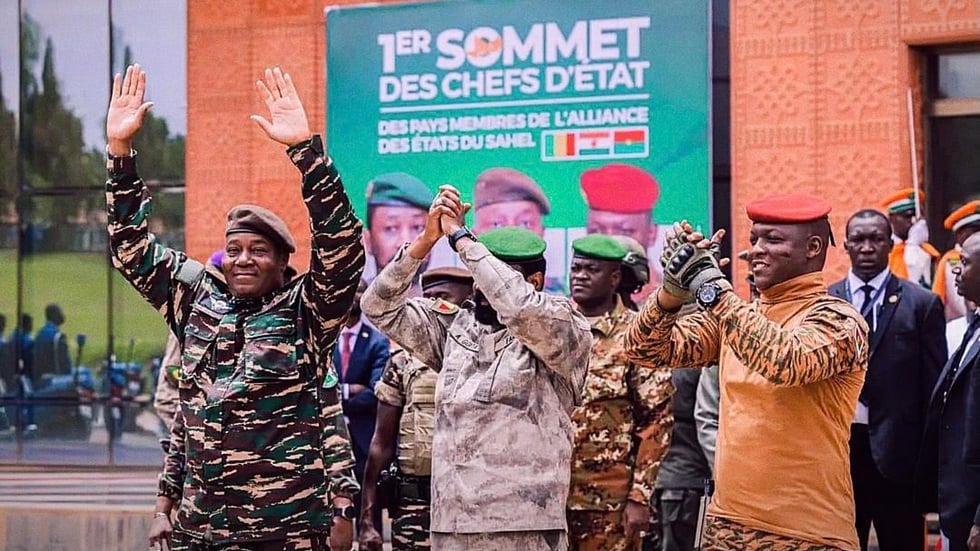
In the high-stakes chessboard of West African geopolitics, timing can mean the difference between survival and collapse. The recent withdrawal of Mali, Burkina Faso, and Niger—collectively known as the Alliance of Sahel States (AES)—from the Economic Community of West African States (ECOWAS) is increasingly looking like a high-risk move with rapidly diminishing returns. This decision, framed as an assertion of sovereignty, may instead expose these nations to deeper vulnerabilities at a time when regional stability is under siege.
when fragmentation becomes a liability
West Africa is currently facing one of its most severe security crises in decades, with extremist groups like Boko Haram and Islamic State West Africa Province (ISWAP) waging relentless campaigns across borders. In such a climate, unity is not just an ideal—it is a survival imperative. Yet, the AES bloc’s departure from ECOWAS has shifted the focus from collective defence to dangerous fragmentation. When it comes to security, such divisions are not merely inefficient; they are a direct invitation to chaos.
The AES justified its exit by accusing ECOWAS of serving as a tool of neo-colonial influence, particularly under pressure from France. While historical grievances are valid, the current moment demands pragmatic choices. Abandoning a regional security framework without a viable alternative in place does not equate to independence—it equates to exposure. The void left by ECOWAS has not been filled by a stronger, locally driven security architecture but by a reliance on external actors whose priorities may not align with the Sahel’s urgent needs.
Russia’s transactional embrace: a dangerous gamble
The AES’s pivot toward Russia as a security partner was presented as a strategic recalibration. However, the realities on the ground paint a far less reassuring picture. Russia’s engagements in Africa, much like its global posture, operate on a transactional basis. Support is extended only as long as it serves Moscow’s interests—and when those interests diverge, commitment evaporates. This is not conjecture; it is a documented pattern in regions like Syria and Libya, where Russian involvement has been marked by abrupt shifts in priorities.
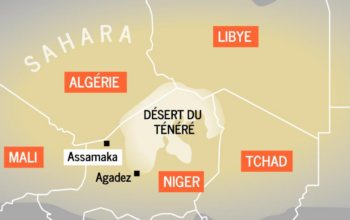
Recent coordinated insurgent attacks across key Malian cities—Bamako, Sévaré, Mopti, Tessalit, Gao, Kati, and Kidal—have laid bare the fragility of the AES’s new security arrangements. The much-anticipated protection from external alliances has proven alarmingly porous. Even more alarming is the tepid response from Burkina Faso and Niger, two fellow AES members. A coalition that cannot swiftly mobilise to defend one of its own raises serious questions about its operational coherence and long-term viability.
ECOWAS’s legacy: a model of collective resilience
History offers a stark contrast to the current fragmentation. During the 1990s, the ECOWAS Monitoring Group (ECOMOG), led by Nigeria, intervened decisively in Liberia and Sierra Leone, stabilising governments amid total collapse. Though not without flaws, ECOMOG’s efforts underscored the power of collective action rooted in shared destiny and mutual risk. The bloc’s role in resolving The Gambia’s political crisis in 2017 further cemented its reputation as a force for stability, demonstrating how regional solidarity can avert catastrophe.
The core truth of West African security is simple: geography does not negotiate. Mali, Niger, and Burkina Faso are inextricably linked by borders, cultures, and the spillover effects of instability. When one nation burns, its neighbours inhale the smoke. When another bleeds, the tremor is felt across the region. Security in the Sahel is not divisible; it is indivisible.
the iranian model: self-reliance as the ultimate safeguard
Often cited as an example of indigenous resilience, Iran’s defence strategy offers a compelling lesson for the AES. Rather than relying on foreign mercenaries or shifting alliances, Tehran invested in building robust domestic military capabilities, intelligence networks, and technological innovation. The result? A nation besieged and isolated managed to withstand intense aerial confrontations with two of the world’s most formidable military powers—Israel and the United States—for weeks on end. The message is clear: self-reliance, not strategic dependency, is the bedrock of true sovereignty.
For the Sahel, this means prioritising home-grown solutions: developing local intelligence networks, rapid-response units, and cross-border early warning systems in collaboration with neighbouring states. Terrorist groups like Boko Haram, ISWAP, and Lakurawa do not recognise AES or ECOWAS boundaries; they exploit the gaps between them. Closing those gaps requires unity, not division.
a path forward: sovereignty through solidarity
The AES’s future hinges on a dual strategy: aggressively investing in indigenous security capabilities and re-engaging with ECOWAS—not as a subordinate, but as a strategic partner. Collaboration does not negate sovereignty; it reinforces survival. For its part, ECOWAS must address perceptions of external influence, improve internal governance, and reaffirm its role as an authentically African institution prioritising regional interests over foreign agendas.
This is not a call to revert to the past. It is a call for a smarter equilibrium—one that harmonises sovereignty with solidarity, independence with interdependence. The Sahel does not need isolation; it needs alignment with its immediate neighbours, who share its risks, realities, and ultimately, its fate.
time for a prodigal return
The parable of the prodigal son serves as a timely metaphor. Leaving in arrogance may lead to hardship, but returning in humility offers redemption. The AES must reconsider its withdrawal from ECOWAS. There is no shame in admitting a miscalculation; there is only shame in persisting with a failing strategy while cities burn. ECOWAS, in turn, must extend an olive branch without punitive conditions. A united West Africa has navigated civil wars and coups; divided, it will fall to a common enemy that fears no flag—French, Russian, or otherwise.
The AES must retrace its steps, place its faith in home-grown solutions, and rebuild the collaborative frameworks that only neighbours can provide. There is no alternative path to security in the Sahel.