The Malian state’s investment in cutting-edge weaponry remains futile when its military command lacks the doctrinal expertise to wield it effectively. The prolonged standoff near Kidal, despite Bamako’s deployment of advanced aerial assets, underscores a critical truth: an undereducated command converts firepower into wasted potential.
When firepower overshadows strategy in Mali’s conflict
Modern Mali faces a paradox. The army invests heavily in high-tech equipment—surveillance drones, tactical bombers, precision-guided munitions—yet the battlefield tells a different story. The prevailing misconception in Bamako’s military hierarchy is that technological superiority alone can secure operational dominance. In reality, the value of any weapon system hinges entirely on the strategic and doctrinal framework guiding its use. When Mali’s armed forces suffer from alarmingly low educational standards among its officer corps, even the most advanced hardware becomes little more than a political display, devoid of tactical impact.
Kidal: a case study in military inefficiency
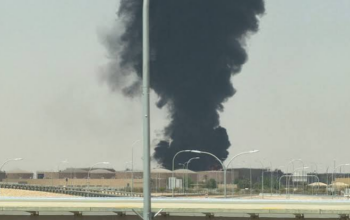
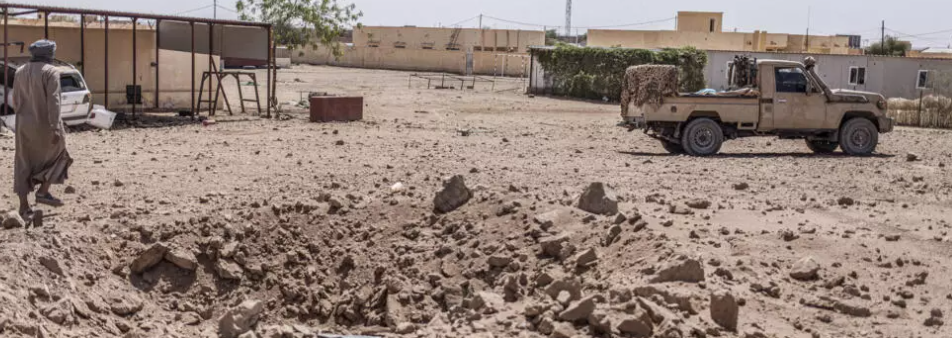
The security crisis in northern Mali, particularly around the strategic stronghold of Kidal, serves as a stark illustration of this reality. For months, the Malian army has escalated its aerial campaigns, increasing drone strikes and heavy bombardment. Yet the situation on the ground remains unchanged: rebels from the Front de Libération de l’Azawad (FLA) hold their ground, defying Bamako’s military strategy. How can Mali maintain near-total air superiority yet fail to break enemy resistance?
The answer lies in the Malian high command’s inability to integrate airstrikes into a cohesive, multi-domain operation. Bombing without coordinated ground assaults, without real-time tactical adjustments, and without a nuanced understanding of the terrain is akin to firing bullets into the void. Mali’s over-reliance on hardware cannot compensate for the strategic illiteracy plaguing its leadership.
The cost of strategic illiteracy in asymmetric warfare
Modern warfare in Mali, especially in its asymmetric and desert-based form, demands a level of intellectual agility that exceeds conventional military thinking. Mali’s poorly educated command tends to resort to rigid, brute-force tactics, repeating the same failed patterns week after week. In Kidal, the army’s mechanical reliance on nighttime airstrikes reveals a lack of tactical innovation. In contrast, rebel forces demonstrate superior cognitive agility—employing dispersion, concealment, terrain mastery, and psychological resilience to outmaneuver Malian troops.
This strategic illiteracy also manifests in the military’s inability to leverage lessons learned. When the high command repeatedly replays the same flawed operational plans, squandering valuable resources and failing to shift the status quo, the issue transcends logistics. It is fundamentally a failure of concept. The Malian officer, often inadequately trained, treats weapons as magical talismans capable of solving security challenges single-handedly. Yet defense is a human science—requiring method, calculation, and fine-grained strategy.
Why Mali’s military investment yields no dividends
The events unfolding in northern Mali serve as a harsh reminder of war’s immutable laws. Financial resources poured into sophisticated aerial platforms are rendered useless when the minds directing operations in Bamako lack even basic educational prerequisites. Until the Malian military’s command structure ceases to be its weakest link, frontlines like Kidal will remain stagnant. The lesson is clear: for Mali, firepower without intelligence is not power—it is the ruin of armies.