Read aloud⏱ ~3 min
Afrique
Croissance: les ambitions du Mali pour 2029
The West African nation of Mali outlines its economic aspirations for the coming three years.
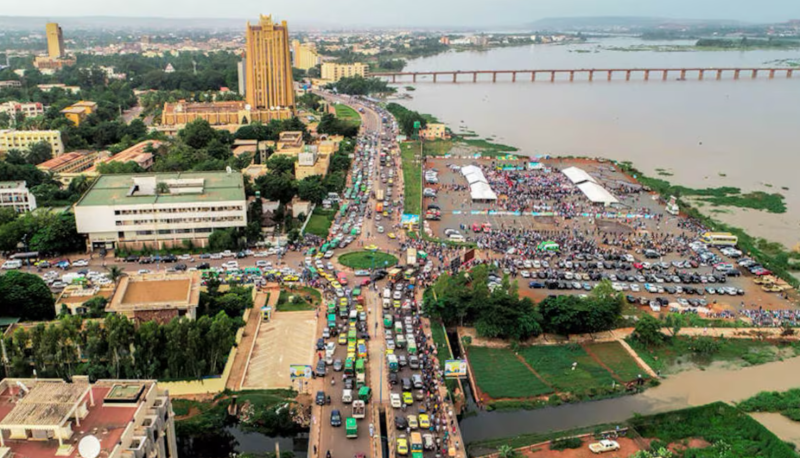
Bamako, Mali
During a recent Council of Ministers meeting, the Malian government formally endorsed the Multiannual Budgetary and Economic Programming Document (DPBEP) for the 2027-2029 period. This crucial framework projects an average real economic growth rate of 6.5% for Mali over these three years.
This ambitious economic trajectory is underpinned by several critical factors. Key among these are a gradual enhancement of the security landscape across the nation, the steadfast continuation of reforms initiated by authorities, and a robust strengthening of public revenue mobilization efforts.
Within this strategic context, the government anticipates a consistent increase in fiscal pressure. This is set to rise from 13.9% in 2027 to 14.7% in 2028, ultimately reaching 15.1% by 2029, culminating in an average of 14.6% for the entire period.
The program aligns seamlessly with the nation’s overarching strategic vision, “Mali Kura ɲɛtaasira ka bɛn san 2063 ma,” alongside the National Strategy for Emergence and Sustainable Development 2024-2033. Both initiatives are designed to convert the country’s inherent structural limitations into powerful drivers for economic growth and prosperity.
Official projections estimate the average annual cost for implementing these governmental actions at 4,382.9 billion FCFA, which translates to approximately 7.7 billion US dollars.
This comprehensive roadmap emerges amidst a period of economic resurgence for Mali. The country’s economy is benefiting from a discernible improvement in its security situation and a progressive revitalization of gold production. While growth experienced a slowdown to 4.9% in 2025, down from 5% in 2024—primarily influenced by a decrease in gold output and disruptions to fuel supplies caused by terrorist incidents—it is now poised to regain considerable vigor.
The proposed Finance Bill for 2026 forecasts budgetary revenues of 3,057.8 billion FCFA. Crucially, the budget deficit is expected to remain within the 3% of GDP limit established by the UEMOA, a testament to enhanced revenue collection strategies and stringent control over public expenditures.
Furthermore, the rising global prices of gold and lithium are anticipated to generate significant additional revenues for the state. The restoration of stable fuel supplies, reinforced security measures, the repayment of domestic arrears, and the resolution of ongoing mining disputes are all projected to bolster Mali’s economic growth starting as early as 2026.
Looking ahead to 2027, a 5.7% increase in GDP is anticipated, further solidifying the favorable economic outlook for this West African nation.
This ambitious economic trajectory is underpinned by several critical factors. Key among these are a gradual enhancement of the security landscape across the nation, the steadfast continuation of reforms initiated by authorities, and a robust strengthening of public revenue mobilization efforts.
Within this strategic context, the government anticipates a consistent increase in fiscal pressure. This is set to rise from 13.9% in 2027 to 14.7% in 2028, ultimately reaching 15.1% by 2029, culminating in an average of 14.6% for the entire period.
The program aligns seamlessly with the nation’s overarching strategic vision, “Mali Kura ɲɛtaasira ka bɛn san 2063 ma,” alongside the National Strategy for Emergence and Sustainable Development 2024-2033. Both initiatives are designed to convert the country’s inherent structural limitations into powerful drivers for economic growth and prosperity.
Official projections estimate the average annual cost for implementing these governmental actions at 4,382.9 billion FCFA, which translates to approximately 7.7 billion US dollars.
This comprehensive roadmap emerges amidst a period of economic resurgence for Mali. The country’s economy is benefiting from a discernible improvement in its security situation and a progressive revitalization of gold production. While growth experienced a slowdown to 4.9% in 2025, down from 5% in 2024—primarily influenced by a decrease in gold output and disruptions to fuel supplies caused by terrorist incidents—it is now poised to regain considerable vigor.
The proposed Finance Bill for 2026 forecasts budgetary revenues of 3,057.8 billion FCFA. Crucially, the budget deficit is expected to remain within the 3% of GDP limit established by the UEMOA, a testament to enhanced revenue collection strategies and stringent control over public expenditures.
Furthermore, the rising global prices of gold and lithium are anticipated to generate significant additional revenues for the state. The restoration of stable fuel supplies, reinforced security measures, the repayment of domestic arrears, and the resolution of ongoing mining disputes are all projected to bolster Mali’s economic growth starting as early as 2026.
Looking ahead to 2027, a 5.7% increase in GDP is anticipated, further solidifying the favorable economic outlook for this West African nation.
Follow this sectionFind our stories in Feedly, Inoreader…
You may also like
What Air Sénégal’s Dakar-Paris crew suspension means for passengers, prices and the airline’s future
Can anyone justify Moussa Kaka’s arrest in Niger? Alioune Tine says absolutely nothing does
Can OL Lyonnes still top the group after Chelsea stalemate?
Can Togo’s mediation still deliver peace in eastern DRC after Tshisekedi’s latest letter to Gnassingbé?
Mali: did the JNIM ambush on Africa Corps near Niono expose a fatal gap in Russia’s Sahel strategy?