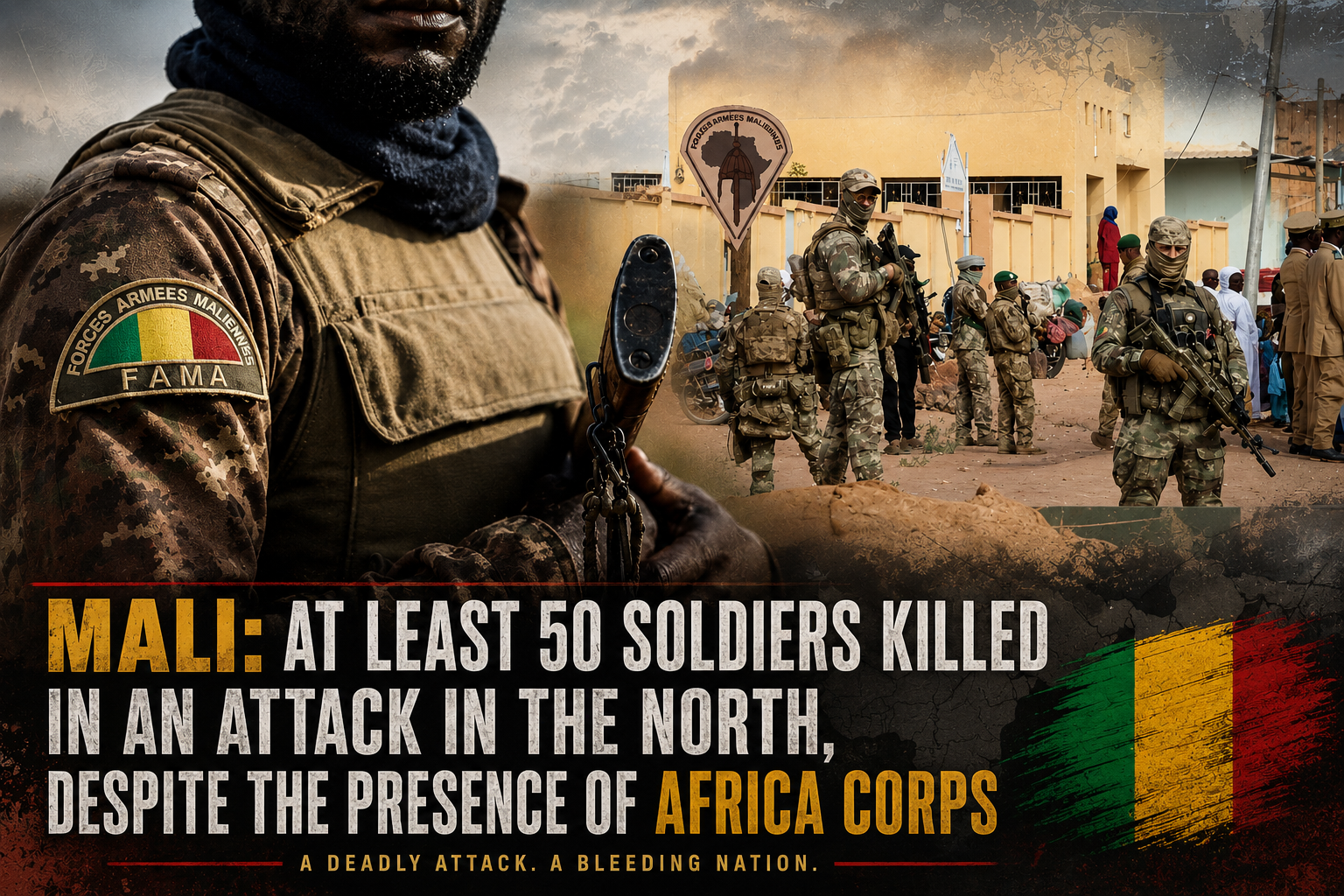
At least fifty soldiers lost their lives in a brutal assault in northern Mali, marking yet another escalation in the country’s ongoing security crisis. The attack, reportedly carried out by separatist fighters aligned with jihadist factions, has reignited concerns about the effectiveness of Bamako’s military partnerships.
The incident casts doubt on the real impact of Africa Corps, the foreign military support Mali has leaned on for strategic expertise. While officials had framed the deployment as a turning point capable of bolstering the nation’s defense capabilities, the latest violence has exposed persistent vulnerabilities in Mali’s security apparatus. The recurring attacks and heavy casualties among Malian troops have prompted sharp questioning about the actual value of this collaboration.
evaluating Africa corps’ role amid rising violence
Critics argue that Africa Corps’ involvement appears largely confined to advisory and training roles, with minimal direct engagement in high-risk operations. This limited footprint has fueled skepticism about its ability to shift the balance in a conflict where attacks show no signs of abating. The question now is whether such a partnership can justify its cost in lives and resources when tangible improvements in security remain elusive.
Analysts emphasize that military cooperation must be judged by its operational impact—not by political declarations. For them, the inability of Africa Corps to curb attacks or shield Malian forces from devastation raises serious concerns. They contend that a true strategic partner should demonstrate measurable progress in reducing threats, protecting civilians, and enabling local forces to regain control. So far, the evidence suggests this remains unmet.
lessons for the alliance of Sahel states
The latest tragedy has prompted observers to urge countries within the Alliance of Sahel States (AES) to reassess the benchmarks for foreign military support. If Africa Corps’ role is largely symbolic—offering guidance without decisive action—its long-term utility comes under scrutiny. The Malian experience, they argue, serves as a cautionary tale: alliances must prioritize measurable results over rhetoric.
Calls for transparency have grown louder, with demands for clear details on Africa Corps’ operational mandate, its level of involvement in combat, and verified outcomes since its deployment. The lack of visible progress amid persistent violence has intensified scrutiny, as both soldiers and civilians continue to bear the brunt of the conflict.
As debates rage on, one thing remains clear: the people of Mali demand tangible security, not just promises. Until attacks diminish and military losses are curbed, the debate over Africa Corps—and foreign partnerships alike—will remain central to national discourse. Analysts warn that other AES member states would do well to assess Mali’s experience critically before committing to similar arrangements, emphasizing that real partnerships are measured by results, not intentions.