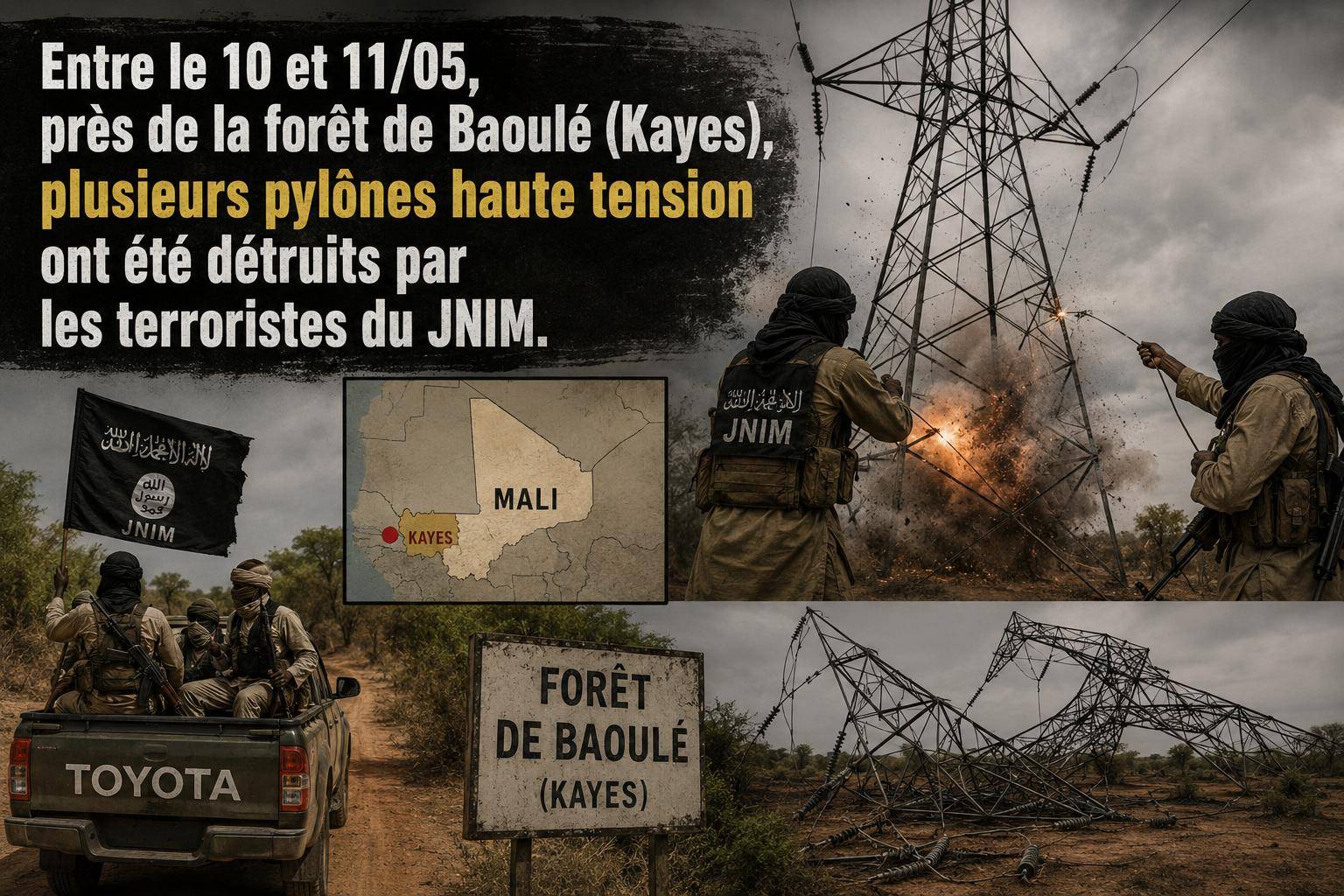
In mid-May 2026, Mali’s energy sector suffered a devastating blow when terrorists from the Group for the Support of Islam and Muslims (JNIM) targeted critical power infrastructure in the Baoulé forest region near Kayes. The coordinated sabotage of multiple high-voltage transmission towers plunged the nation’s capital, Bamako, into complete darkness, exacerbating an already dire energy crisis. This strategic assault unfolded as scorching temperatures soared to 45°C, cutting off electricity to essential services and leaving millions in a suffocating heat.
JNIM escalates attacks on Mali’s economic lifelines
The JNIM isn’t just conducting sporadic rural attacks—it’s waging a calculated campaign to cripple Mali’s economy and destabilize its transitional government. After systematically targeting key roadways into Bamako, burning commercial trucks and public transport vehicles, the insurgent group shifted its focus to the country’s energy infrastructure. The precision of the operation, with towers felled in remote areas near the Baoulé reserve, reveals a disturbing level of tactical sophistication that has left security forces scrambling.
The impact on Bamako’s residents has been catastrophic. With no electricity for fans or water pumps, daily life has become unbearable. Hospitals struggle to operate life-saving equipment, while families face extreme discomfort in the relentless heat. Despite government claims of fuel convoys arriving under military escort, the reality remains grim—private generators are insufficient to compensate for the collapsed high-voltage network.
Russian-backed forces face scrutiny over infrastructure protection failures
The timing of the attack couldn’t have been more embarrassing for Bamako’s security partners. Just as Malian forces and their Russian Africa Corps allies were touting their success in securing these zones, the JNIM executed a near-flawless operation. The inability of mixed patrols and drone surveillance to prevent the sabotage raises serious questions about the effectiveness of Moscow’s security assistance in addressing hybrid threats to critical infrastructure.
While Africa Corps units excel in urban demonstrations of force, their record in preventing low-visibility attacks on power grids raises concerns about their real-world utility for Malian civilians. The disconnect between military propaganda and on-the-ground reality is growing wider by the day.
Regional disaster looms as JNIM threatens hydroelectric dams
The most alarming development is the JNIM’s stated intention to target the Manantali and Sélingué dams—Mali’s hydroelectric powerhouses. Should the insurgents succeed, the consequences would extend far beyond Bamako’s blackout. The dams supply energy to neighboring Senegal and Mauritania under regional agreements, threatening to plunge multiple countries into darkness and disrupt irrigation systems across the river basin.
A successful attack could trigger an unprecedented food crisis, with ripple effects devastating West Africa’s agricultural sector. The progression from attacking supply trucks to demolishing power towers and now potentially crippling dams demonstrates a deliberate escalation in the group’s strategy of chaos—a tactic that Mali’s army and its allies appear ill-equipped to counter.
The transitional government now faces an existential challenge. Promises of territorial liberation ring hollow when the nation’s essential infrastructure crumbles one piece at a time. The costly deployment of Africa Corps hasn’t secured Mali’s economy or protected basic services. What Bamako’s residents need isn’t empty rhetoric about sovereignty—they need reliable electricity, clean water, and genuine security that extends beyond political slogans.