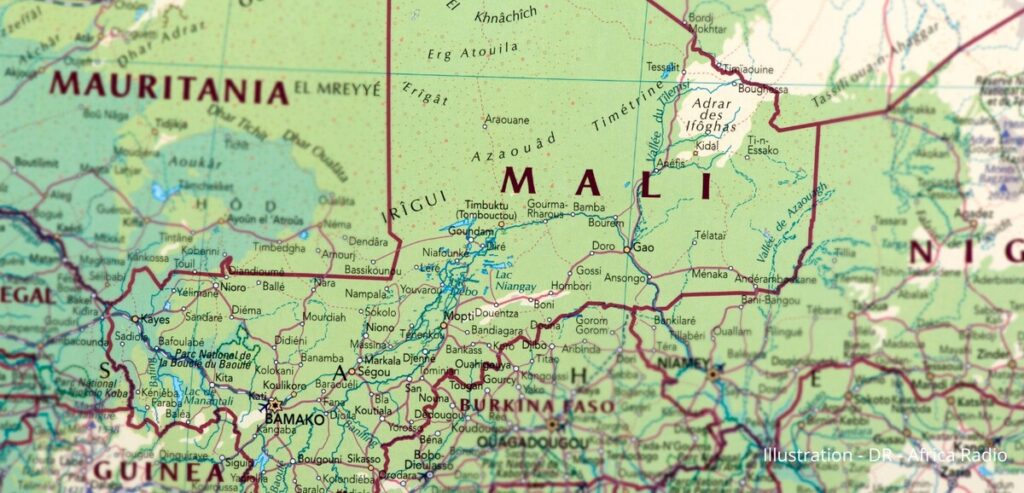
Since late April, Mali has witnessed a sharp escalation in violence, forcing nearly 40,000 people to abandon their homes. The surge in clashes and airstrikes has driven families from their villages, with Gao and Ménaka emerging as primary destinations for those seeking safety. Over 15,000 internally displaced persons (IDPs) have already arrived in these northern regions in recent months.
Local leaders in Gao report receiving more than 7,000 new arrivals in just three months, underscoring the unprecedented scale of this displacement wave.
Kidal becomes the epicenter of renewed attacks
The crisis stems from a deteriorating security situation, as a coalition of jihadist groups—including the Group for the Support of Islam and Muslims (JNIM)—joined forces with Tuareg separatists from the Azawad Liberation Front (FLA). Their coordinated offensive has overwhelmed security forces, culminating in the capture of Kidal, a key northern city. Fighting has since intensified around Anéfis, another strategic location, leaving civilians trapped between relentless violence and dwindling access to essential services.
Airstrikes trigger fresh waves of displacement
Over the past two weeks, Malian military airstrikes have intensified in areas surrounding Kidal, particularly near Tinzawatene. While reports suggest these bombardments have damaged critical infrastructure, including health centers, the exact scope of destruction remains unverified due to restricted access. What is clear, however, is the growing exodus of civilians fleeing combat zones for urban centers already struggling to accommodate new arrivals.
Gao and Ménaka face mounting humanitarian strain
The influx of nearly 40,000 displaced individuals is placing immense pressure on local authorities and aid organizations in Gao and Ménaka. Most arrivals originate from Kidal and surrounding areas, where conditions have deteriorated sharply since April. These families require urgent shelter, food, clean water, medical care, and child protection services. Mali already hosts over 400,000 internally displaced persons—a figure aid workers believe is likely an undercount. This latest displacement surge threatens to further destabilize an already fragile humanitarian landscape in the north and central regions.
A decade of insecurity: Mali’s enduring crisis
Mali has grappled with deepening insecurity since 2012, as jihadist factions linked to Al-Qaeda and the Islamic State, alongside armed communal and separatist groups, expanded their influence. The 2020 and 2021 military coups reframed national priorities, with transitional authorities prioritizing territorial control and security restoration. Yet the recent resurgence of violence exposes the limits of these efforts.
For northern communities already familiar with years of displacement, the latest surge is another stark reminder of the region’s instability. Residents of conflict zones now face a grim question: how long can they remain in their homes before fleeing becomes their only option?
You may also like
Northern Niger’s unanswered question: can Tiani’s government deliver water and power where it matters most?
Can Air Sénégal survive the Interpol smuggling probe? The stakes for crew, passengers and the airline’s future
As donor fatigue spreads, can Benin’s €544,042 UNAIDS pledge keep the HIV response on track?
Who pays the price when Burkina Faso’s public payroll contracts? Households weigh the cost of 1,917 fewer agents
Libya pushes for direct Tripoli-Yaoundé flights as Cameroon sets up working groups