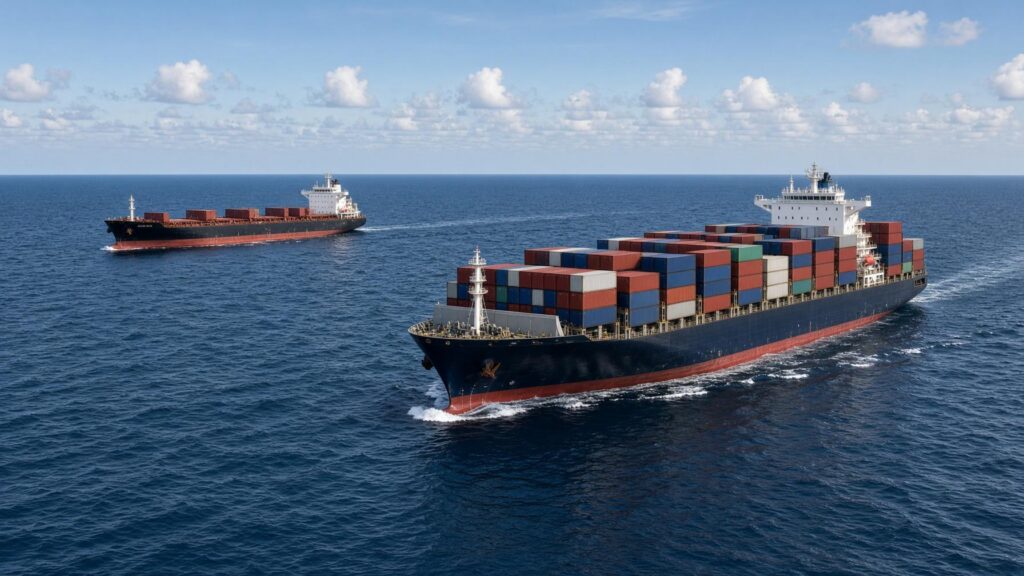
Iran delivers seven-day Hormuz reopening plan to Washington
Iranian foreign minister Abbas Araghchi has formally handed the United States a proposal to restore maritime traffic through the strait of Hormuz within one week. The offer, transmitted on the sidelines of the UN General Assembly in New York, puts the decision squarely in the White House’s hands. Tehran has disrupted shipping in the strategic waterway for weeks, and its new plan sets a tight timeline to defuse a crisis that threatens to push the global economy into a deep downturn.
Terms of the deal: what Tehran wants in return
The full text remains confidential, but Araghchi made clear the reopening would not be unconditional. Iran is demanding an immediate halt to strikes on its strategic infrastructure, targeted relief from economic sanctions, and firm guarantees on the withdrawal or redeployment of Western naval forces in the Gulf. For Tehran, control of Hormuz has once again become its ultimate deterrent — a way to turn military isolation into political leverage. “We are not seeking to keep the strait closed permanently, but the security of our waterways is inseparable from the overall security of our nation,” the minister told reporters.
Oil prices surge as shipping grinds to a halt
The offer comes at a critical moment. Since the progressive blockade began, the world economy has taken a heavy hit. At its narrowest point, the strait of Hormuz is just 33 kilometres wide, yet roughly 20% of global crude oil consumption and a third of liquefied natural gas normally pass through it every day. The disruption has triggered immediate and devastating consequences:
- Energy prices spike: Brent crude has jumped sharply in a matter of days, crossing alarming thresholds. Fears of a prolonged supply cut are feeding speculation, raising the spectre of an oil shock comparable to the 1970s.
- Transport and insurance costs soar: Facing threats of attacks, ship seizures and missile fire, maritime insurers have raised war-risk premiums to prohibitive levels — when they do not refuse to cover tankers outright.
- Costly rerouting around Africa: To avoid the Gulf, many shipowners have ordered vessels to sail around Africa via the Cape of Good Hope. The detour adds at least two weeks to journeys, generating huge fuel costs and tying up the global fleet.
- Rising inflation risk: The combined rise in fuel and freight prices is already feeding into global supply chains. For consuming countries, especially in Europe and Asia, the prospect of a new wave of inflation and fuel shortages at the pump is becoming very real.
Washington’s strategic dilemma
The Iranian proposal puts the US administration in a tough spot. Rejecting it would mean owning an energy crisis that destabilises both the American and global economies at a politically delicate time. Accepting Tehran’s terms within seven days, however, could be seen by regional allies as caving to maritime blackmail. So far, US diplomacy has not publicly reacted to the details of the plan sent to Steve Witkoff. International capitals — particularly in Asia, where China, Japan and South Korea are the top buyers of oil passing through the strait — are ramping up pressure on both sides to find a compromise without delay.
What happens next
The coming week will be decisive. Between hopes of a rapid diplomatic de-escalation in New York and fears of a prolonged conflagration in the Gulf, the fate of the global economy now hinges on a few nautical miles.
You may also like
As donor fatigue spreads, can Benin’s €544,042 UNAIDS pledge keep the HIV response on track?
Who pays the price when Burkina Faso’s public payroll contracts? Households weigh the cost of 1,917 fewer agents
Libya pushes for direct Tripoli-Yaoundé flights as Cameroon sets up working groups
JNIM seizes three Burkinabè positions in a single day as Traoré’s security record faces hard questions
Chad condemns Ennedi-East airstrikes at un general assembly, warns of retaliation