Industrialisation: the critical path to Ivory Coast’s economic transformation
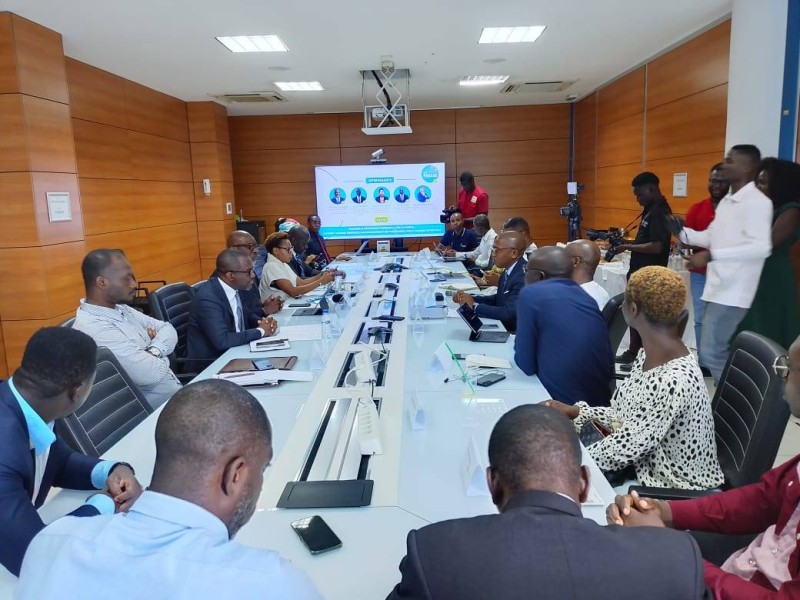
The industrialisation of Ivory Coast took center stage during a press luncheon held in Abidjan-Plateau on May 8, 2026. Paul-Harry Aithnard, Ecobank Côte d’Ivoire CEO and UEMOA Regional Director, shared his vision on why industrialisation is non-negotiable for Ivory Coast’s economic advancement. Acknowledging the nation’s current GDP of $100 billion—equivalent to Malaysia’s GDP 25 years ago—Aithnard emphasized that Ivory Coast must follow Malaysia’s footsteps to achieve similar exponential growth.
From raw materials to high-value production: the industrial imperative
Aithnard argued that Ivory Coast’s economic transformation hinges on moving beyond primary commodity exports. “The leap from a $100 billion economy to $400 billion, as Malaysia achieved, requires industrialisation,” he stated. “Only through industrial development can Ivory Coast scale its economy meaningfully within the next two decades.”
Digital inclusion: the backbone of industrial growth
The Ecobank executive stressed that industrialisation cannot occur in isolation. It must be supported by a robust digital ecosystem that enables financial inclusion. “We need to empower citizens to save, transact, and invest through accessible financial services,” he explained. Digitalisation emerges as the cornerstone for achieving this inclusion, making financial services accessible to all segments of the population.
The pivotal role of infrastructure financing
Aithnard highlighted the critical contribution of the private sector—particularly the banking industry—in financing large-scale infrastructure projects. “At Ecobank, we’ve deliberately chosen to invest in infrastructure development,” he noted, underscoring how such investments catalyze industrial growth.
Government’s responsibility: energy and education
The vision for industrialisation extends beyond private sector initiatives. Aithnard emphasized the government’s crucial role in two key areas:
- Energy sector development: Reliable electricity supply is fundamental to industrialisation. While Aithnard commended Ivory Coast’s impressive energy production growth in recent years, he called for continued expansion to meet growing industrial demands.
- Education reform: A skilled workforce is indispensable. Aithnard praised recent educational reforms focusing on science, technology, and management, noting that these fields are essential for building a competitive industrial base.
In conclusion, Aithnard’s message was clear: Ivory Coast’s path to economic emergence is inextricably linked to its industrialisation journey. By embracing digital transformation, investing in infrastructure, and fostering human capital development, the nation can position itself among the world’s leading economies.