Gabon’s Oligui Nguema outlines bold economic and political vision
Libreville, Wednesday, June 3, 2026 — Gabonese President Brice Clotaire Oligui Nguema has used a high-profile interview to unveil his administration’s strategic roadmap, emphasizing economic sovereignty, gradual reforms, and a decisive break from past political practices.
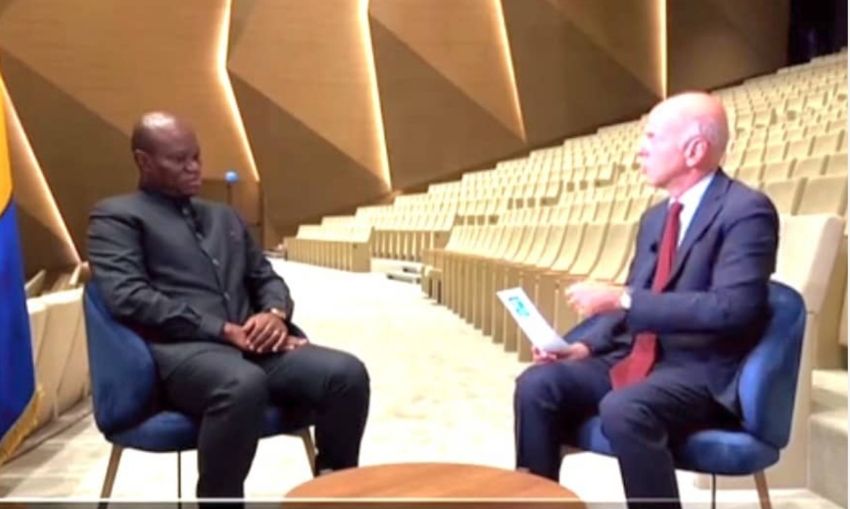
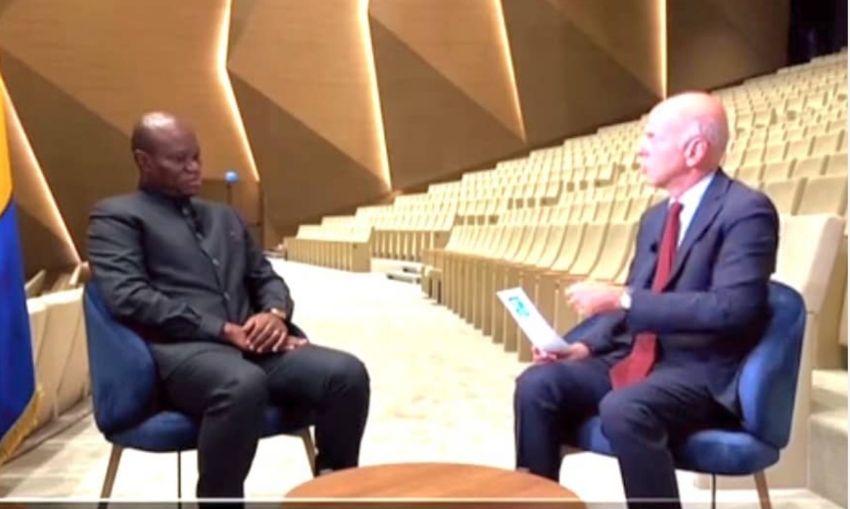
In a carefully staged appearance on an international news platform, the head of state defended his administration’s three-year track record, outlined his vision for Gabon’s economic future, and addressed pressing national and global issues with unwavering clarity. The exclusive conversation, held at the Congrès Hall of the Cité de la Démocratie in Libreville, marked a pivotal moment in his presidency, signaling a new phase of engagement with both domestic and international stakeholders.
The president’s discourse revealed a coherent political doctrine: one that prioritizes long-term structural transformation over short-term gains, insists on economic independence despite foreign corporate pressures, and seeks to redefine Gabon’s global partnerships without resorting to isolationism.
Progress over promises: the reform agenda
Addressing criticism about the pace of development—particularly in access to clean water and reliable electricity—the president acknowledged the challenges faced by citizens but framed the government’s actions within a seven-year mandate. With over 800 billion CFA francs already committed to energy infrastructure, he stressed that meaningful change cannot be measured in months or even a single year.
Oligui Nguema’s message was clear: Gabon is not chasing quick wins. Instead, it is building a sustainable foundation for prosperity through deliberate, phased reforms. This philosophy now defines his administration’s communication strategy and public expectations.
Economic sovereignty as a guiding principle
The most consequential announcements came in the realm of economic policy. Regarding negotiations with the International Monetary Fund, the president confirmed Gabon’s intention to engage, but only after a thorough audit of public finances—ensuring national interests are safeguarded before any commitments are made.
This cautious yet assertive approach extends to the mining sector. The landmark decision to ban the export of raw manganese starting in 2029 sends a powerful signal: Gabon will no longer be a passive exporter of raw materials. Instead, it will process more of its natural wealth locally, creating jobs and boosting domestic value. The directive to French multinational Eramet is unambiguous—processing facilities must be operational by the deadline, or the ban will take effect.
By asserting control over its mineral wealth, the government aims to shift the balance of power in favor of the nation, reducing dependency on foreign actors and fostering sustainable economic growth.
Balanced diplomacy: partnership without subordination
On the international stage, President Oligui Nguema underscored that asserting sovereignty does not equate to isolation. He reaffirmed an upcoming state visit to France in July, emphasizing strong, cooperative ties between Libreville and Paris. The symbolic return of Camp de Gaulle to Gabonese authorities was presented not as a confrontation, but as a collaborative milestone in bilateral relations—distinct from the confrontational approaches seen elsewhere in the region.
Similarly, when discussing a recent U.S. proposal to relocate migrants to Gabon, the president firmly stated that such an arrangement would not serve the country’s interests, reaffirming his commitment to prioritize national priorities in all international engagements.
Breaking the cycle: rejecting dynastic rule
The interview also addressed the legacy of former President Ali Bongo Ondimba. While acknowledging his predecessor’s health challenges, Oligui Nguema shifted focus to systemic accountability, implying that responsibility for past governance failures lies beyond individual figures. But the most significant pledge came on the future of power in Gabon.
In a region where political dynasties and extended mandates are common, the president declared unequivocally: no political dynasty bearing his name will ever take root in Gabon. He reaffirmed that the seven-year term, renewable only once, is a permanent pillar of the constitutional framework—a commitment to democratic alternation and institutional renewal.
The test of implementation
Beyond rhetoric and media strategy, this interview reveals the pillars of Gabon’s evolving governance model: economic self-determination, local resource transformation, balanced international relations, incremental infrastructure development, and a firm commitment to democratic turnover.
Yet, the true measure of success will not be found in speeches or plans, but in tangible outcomes. With significant political capital still intact, the administration faces immense social expectations. Gabonese citizens are watching closely—not for declarations, but for delivery.
A year into his presidency, Brice Clotaire Oligui Nguema has staked his legacy on a simple but powerful promise: to restore Gabon’s control over its economic and political destiny. Whether this vision can be translated into lasting reality remains the defining question of his mandate.