Gabon strengthens public revenue collection through customs-tax cooperation
Libreville, Sunday, July 19, 2026 — A nation’s capacity to finance its development hinges on its ability to secure steady revenue streams. In Gabon, this principle is taking on new urgency. By aligning the strategic agendas of the Customs and Tax administrations, authorities are forging a unified approach to public finance management that promises greater efficiency, transparency, and resilience against financial leakage.
More than a routine administrative alignment, this initiative signals a fundamental shift in public governance. When two core financial institutions collaborate closely, they create a powerful tool for strengthening budgetary sovereignty, enhancing economic transparency, and dismantling fraud networks that drain vital resources from the state.
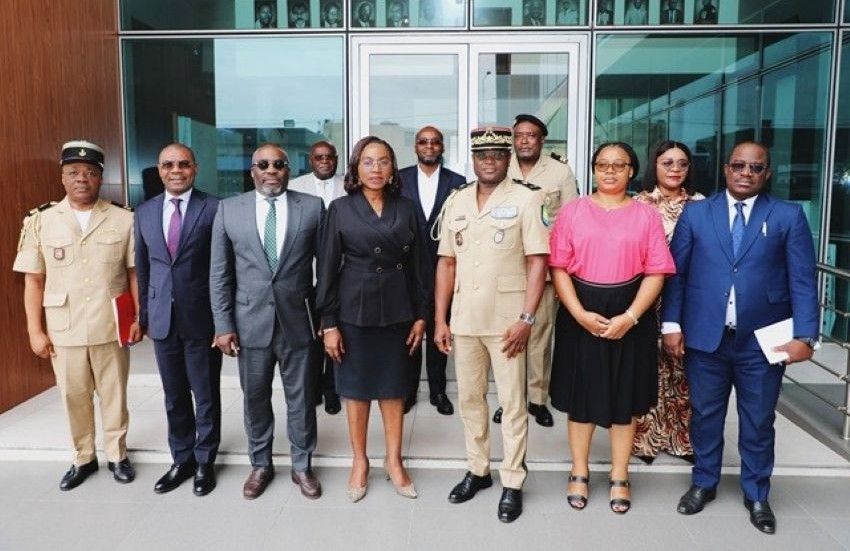
On July 14 in Libreville, the Director-General of Customs and Indirect Taxes, Brigadier General Hugues Modeste Odjangou, and the Director-General of Taxes, Édith Laure Oyaya épouse Mbiguidi, convened to lay the groundwork for deeper operational integration between Gabon’s two primary revenue-collection agencies. This move comes as the government elevates domestic resource mobilization to the top of its strategic priorities, aiming to fund major infrastructure projects, improve public services, and drive economic diversification.
A unified doctrine for public revenue management
Across modern economies, fiscal and customs authorities no longer operate in silos. Data sharing, cross-referenced intelligence, and coordinated enforcement have become standard practices that not only boost tax yields but also shrink the space for fraud. Gabon is now adopting this proven model to institutionalize collaboration between its tax and customs sectors.
During their working session, the two directors identified several priority areas: integrating fiscal and customs data systems, harmonizing field inspection protocols, pooling operational resources, and launching joint anti-fraud initiatives targeting tax evasion, customs violations, and illicit trafficking.
This coordinated approach aligns directly with the vision of President Brice Clotaire Oligui Nguema, who has consistently called for a more agile, results-driven administration capable of delivering tangible outcomes.
In an era where every public franc counts, safeguarding revenue streams has become a cornerstone of effective governance.
Institutional framework reinforces new revenue strategy
This transformation is not merely political will—it is now enshrined in law. The two administrations emphasized that Joint Commission Order No. 073/MEFDPLVC of April 10, 2026, which establishes the Tax-Customs Joint Commission, now serves as the legal backbone of this collaboration. The framework mandates joint audits under CEMAC customs regulations and facilitates seamless information exchange between the two agencies.
Gabon’s move mirrors successful reforms in other African nations. Lessons from Rwanda, Morocco, and Côte d’Ivoire show that close fiscal-customs cooperation can significantly improve budget performance while curbing tax evasion and informal economic activity.
Upcoming technical meetings will focus on activating the joint commission, ensuring rigorous follow-up on decisions, and coordinating future operational initiatives.
Beyond revenue agencies: a broader public transformation
This initiative marks a turning point in Gabon’s approach to public administration. Long seen as separate entities with distinct mandates, Customs and Tax are now embracing a shared mission. Together, they account for the bulk of state revenue, making their integration a strategic lever to expand fiscal space without overburdening compliant taxpayers.
The real beneficiaries of this alliance will be honest businesses and citizens, while fraudsters, false declarations, shadow trade networks, and other illicit practices that divert public funds will face tougher scrutiny.
This institutional partnership also sends a strong signal to international partners, investors, and financial agencies. It demonstrates Gabon’s commitment to modernizing its economic governance, securing internal resources, and enhancing the credibility of its financial administration.
Ultimately, this cooperation is part of a larger ambition: building a state that protects its resources more effectively, funds national priorities from domestic revenue, and fosters an administration that is efficient, transparent, and results-oriented. Seen in this light, the union of Gabon’s Customs and Tax authorities is not just an administrative alignment—it is a foundational pillar of the country’s new financial architecture.